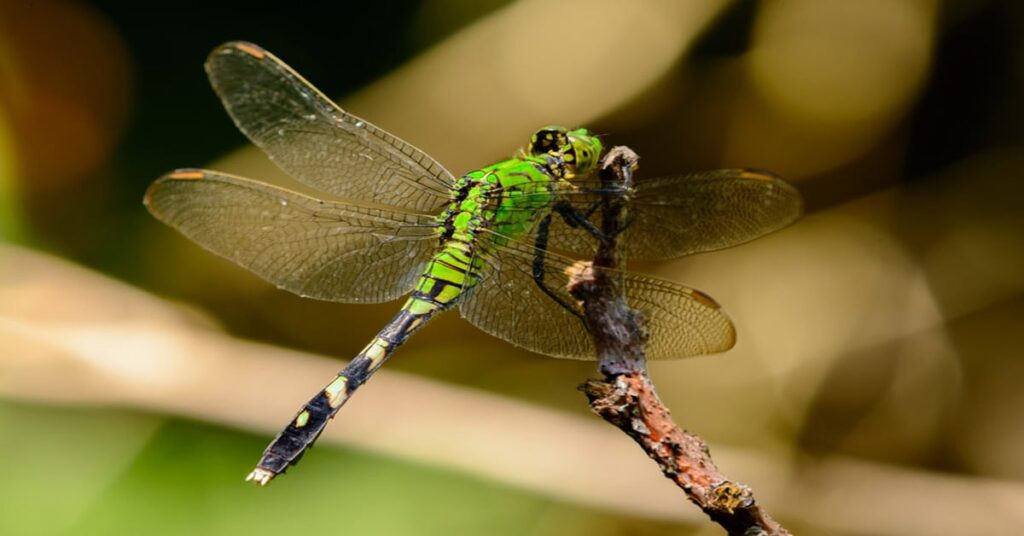
The Eastern Pondhawk, also known as the common pondhawk, is found throughout the eastern United States and in southern Ontario and Quebec, Canada.
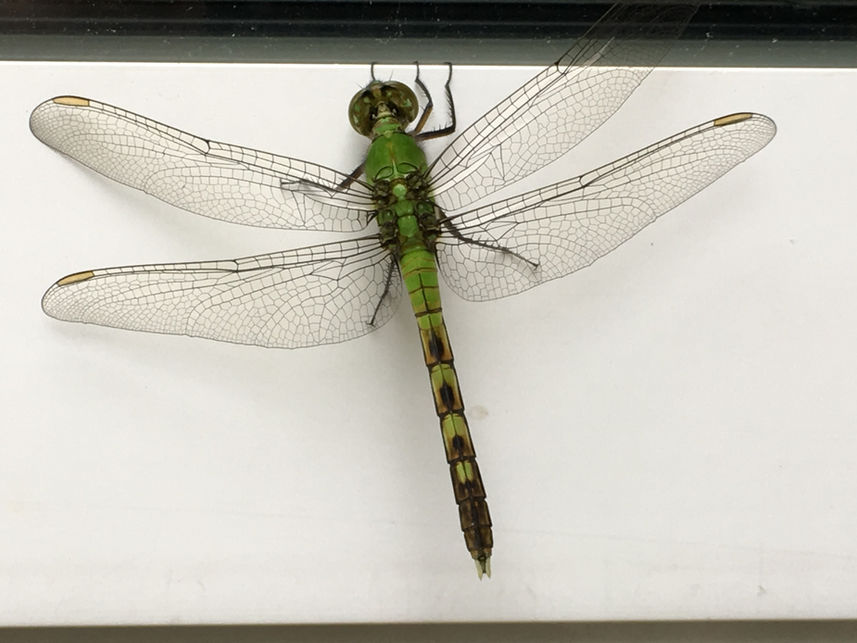
This species is a powerful, agile flier that hunts damselflies and other insects in midair. Between hunts, it rests on vegetation, taking off instantly whenever prey appears. Newly emerged adults often begin hunting away from the water.
Eastern pondhawks are among the most aggressive dragonflies in the Mississippi National River and Recreation Area—but only toward other insects, never people.
They frequently launch from a perch, seize their prey, and carry it to a convenient spot to feed. Their long, spined legs form a secure “basket” that helps them hold struggling insects, even those nearly as large as themselves—including other dragonflies.
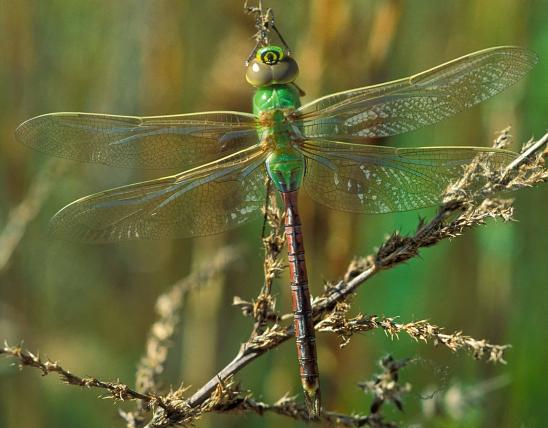
Do they bite people?
Like other dragonflies, Eastern pondhawks are not aggressive toward humans. They may bite if handled, but most individuals are too small to break human skin. Larger dragonflies can occasionally draw blood, and many can pinch surprisingly hard.
Behavior
Males often chase one another just inches above the water, switching positions as the lead dragonfly periodically falls back.
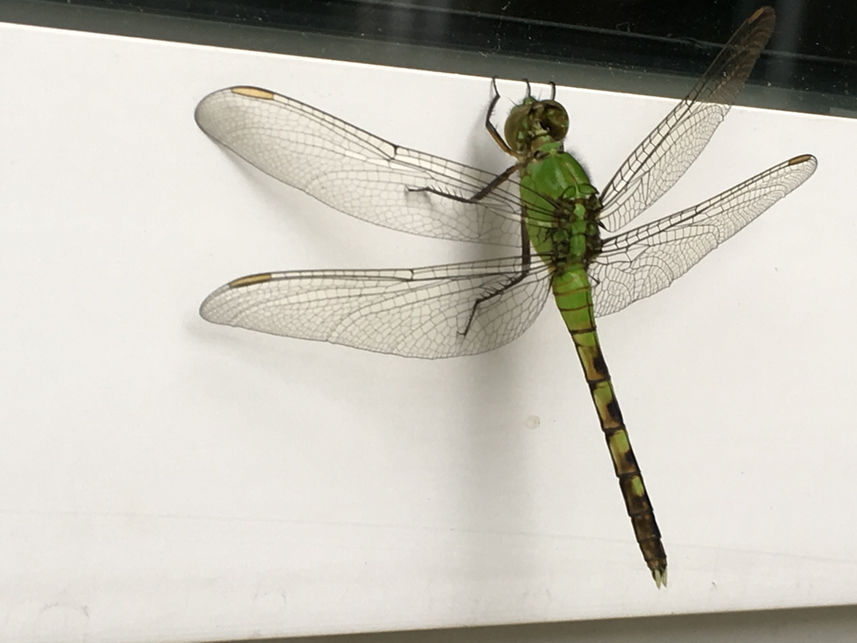
Key ID features:
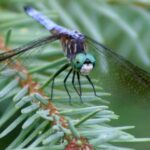
- Adult males are powder-blue across the thorax and abdomen.
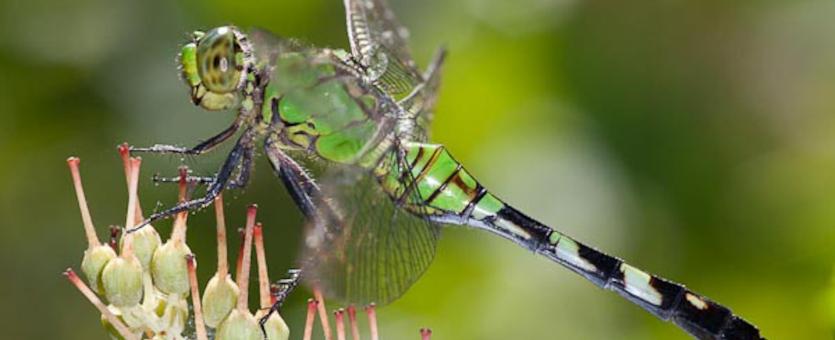
- Females are bright green with black abdominal markings.
Seasonal presence: Late May through early September; abundant in some areas. Pickerel Lake in Lilydale Regional Park is an excellent location to observe them.
Habitat: Ponds and lakes.
Family
Libellulidae (skimmers), order Odonata (dragonflies and damselflies)
Description
The Eastern Pondhawk is a familiar dragonfly of ponds and other still waters, belonging to the large skimmer family.
- Females and young males are green with square black abdominal spots.
- Mature males develop a powder-blue abdomen and retain a green face and thorax.
- This species appears early in spring and remains active until fall.
Males frequently engage in aerial sparring as they defend their territories around the water’s edge.
Pondhawks hunt with the same agility that inspired their name. They are strong predators capable of catching insects as large as themselves and sometimes eat their own species. Males and females differ noticeably in color: mature males are powdery blue with a yellow-tipped abdomen, while females are bright green with dark spots. Young males resemble females until they mature and turn blue.
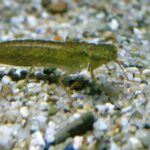
Males vigorously defend territory along sunny shorelines dotted with floating vegetation. They patrol constantly, resting on the ground or nearby branches. Females drop fertilized eggs into still, warm water, where fewer predators lurk. The aquatic larvae, or naiads, feed on other aquatic insects until they are ready to crawl ashore and molt into adults.
What to Look For
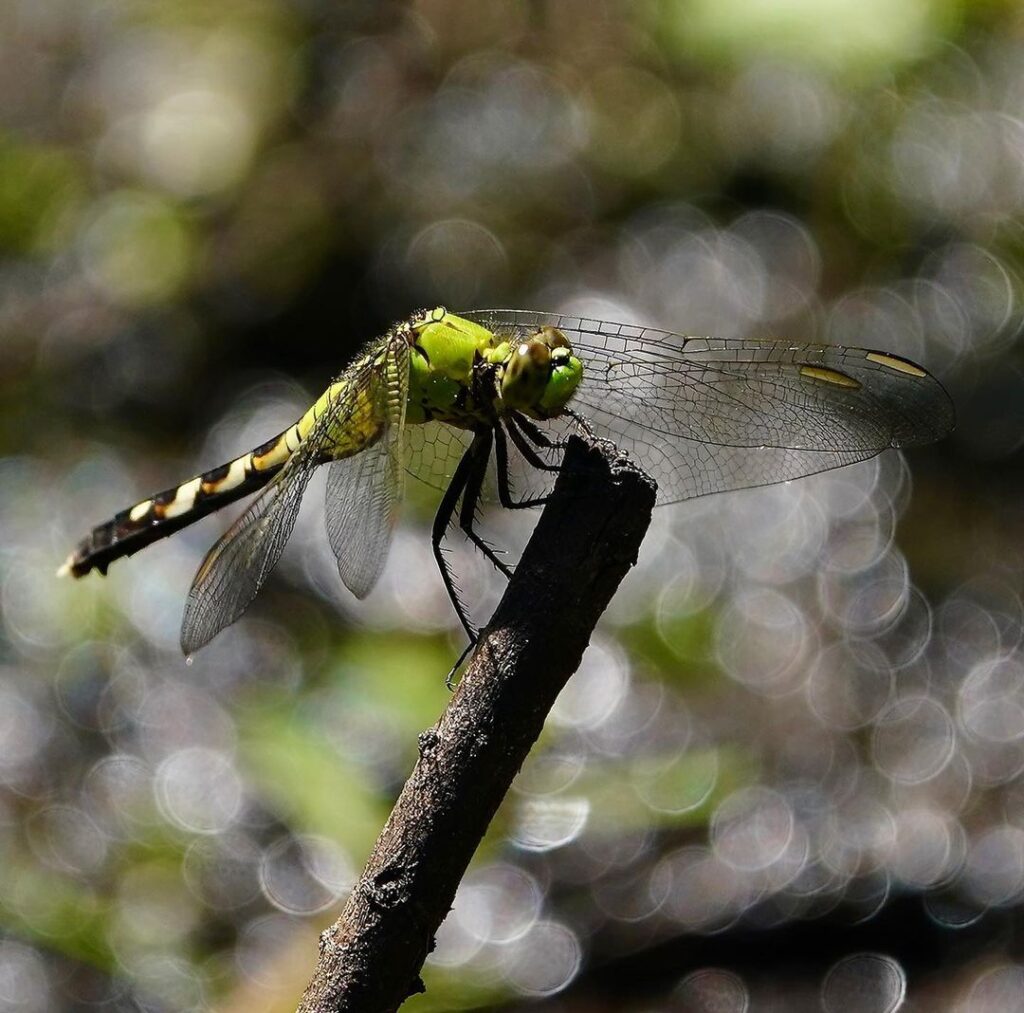
- Bright green females or pale blue males.
- Males have powder-blue thorax and abdomen with green eyes and face.
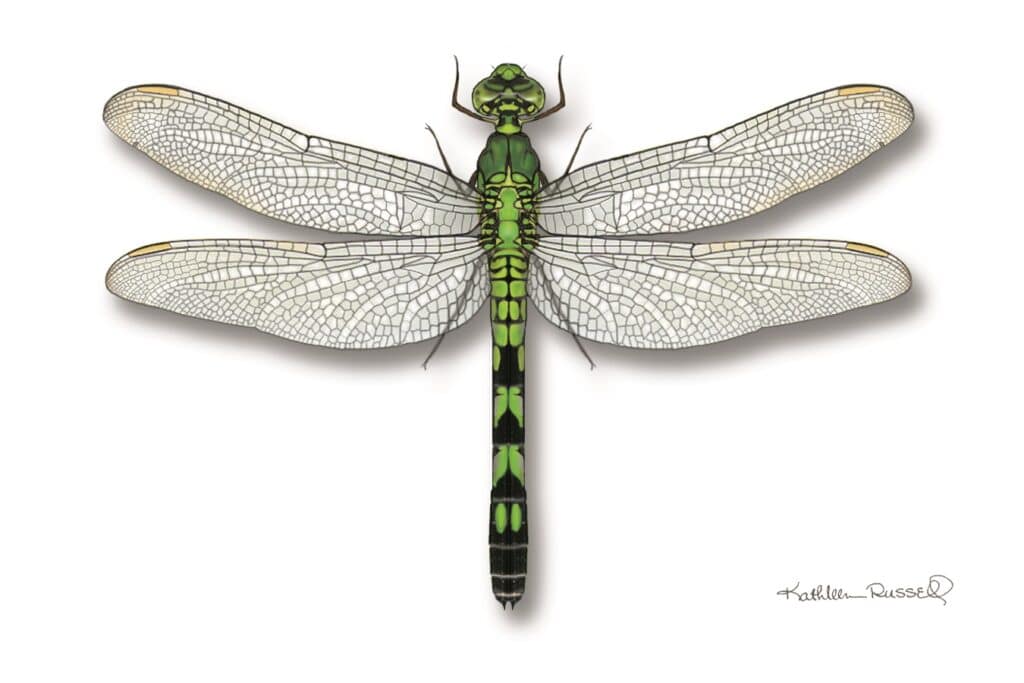
- Females are vivid green with black abdominal bands and brown eyes.
- Wings are clear except for their veins and flexion lines, resembling stained glass.
- Long leg spines form a basket used to trap prey.
Where to Find Them (Carillon Stonegate Pond)
Eastern Pondhawks appear from May through September. Look for them near the water’s edge, perched on rocks, logs, the ground, or even house exteriors.
Size
About 1⅔ inches long with a wingspan of roughly 1¼ inches.
Flight
Strong and athletic but not long-distance fliers.
Additional Behaviors
Territories typically span about five square yards of algae or floating plants. Males show a distinctive “leap-frogging” behavior during territorial chases, repeatedly swapping positions beneath one another. They hunt from low perches, darting out to catch large flying insects—including damselflies, butterflies, and even dragonflies their own size.
Range
Widely distributed across the eastern United States and southern Canada. They prefer sunny pond and lake edges with abundant floating vegetation and are among the most common dragonflies in Illinois.
Breeding
Males establish territories early in the breeding season. Females visit to mate and may lay up to 900 eggs, dropping them into calm, warm water. Larvae feed on aquatic insects for up to two years before emerging to molt into adults.
Migration
They do not migrate.
Sounds
None.
Interesting Facts
- Eastern Pondhawks belong to the skimmer family (Libellulidae), a diverse group of common pond-dwelling dragonflies.
- They are also known as the green dragon, green jacket skimmer, and green jacket.
- Males rely heavily on color cues when defending territory, responding to the intruder’s appearance rather than its behavior.
- Dragonflies are ancient insects, first evolving around 300 million years ago, with some early species having wingspans up to two feet.
- Over 5,000 species of dragonflies exist today, all in the order Odonata, meaning “toothed one,” referring to their serrated jaws.
- Larvae are aquatic and eat almost anything—tadpoles, mosquito larvae, small fish, other insects, and even each other.
- Dragonflies have remarkable vision: their enormous compound eyes cover nearly the entire head and allow them to see in almost every direction except straight behind.