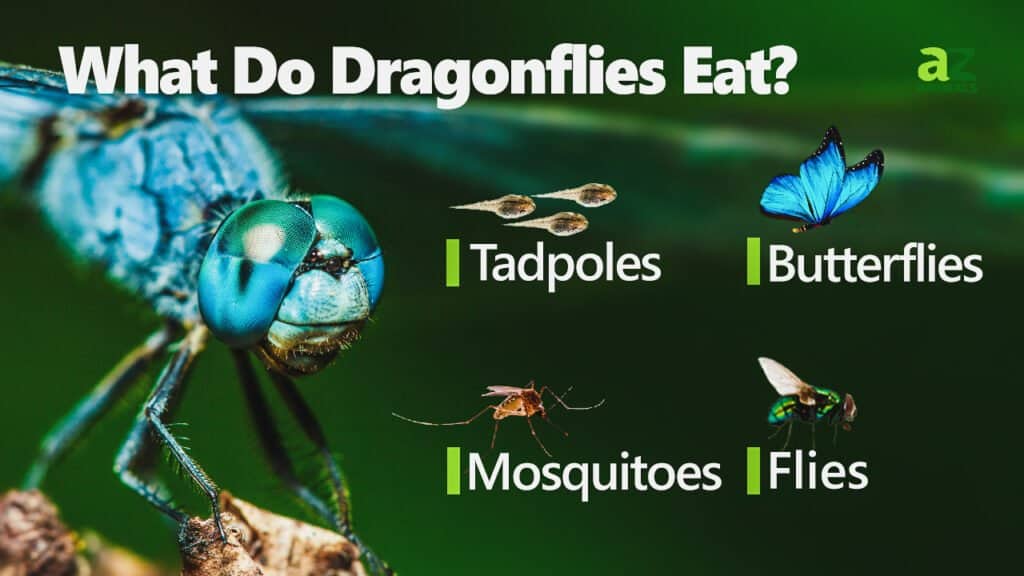
What Do Dragonflies Eat? Brightly colored and exceptionally fast, dragonflies are among the most fascinating insects in the natural world. These agile hunters are not just beautiful—they are also highly efficient predators. Let’s explore their diet and uncover what makes them such formidable “mini-beasts.”
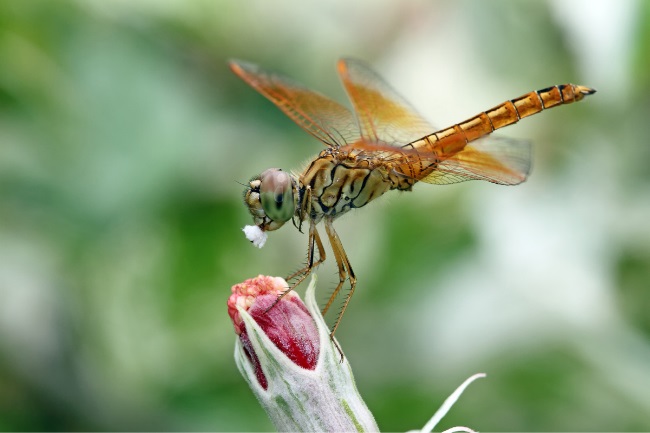
Dragonfly Diet: What Do They Eat?
Dragonflies primarily feed on other insects. Their diet includes:
- Flies
- Midges
- Mosquitoes
- Butterflies
- Even smaller dragonflies
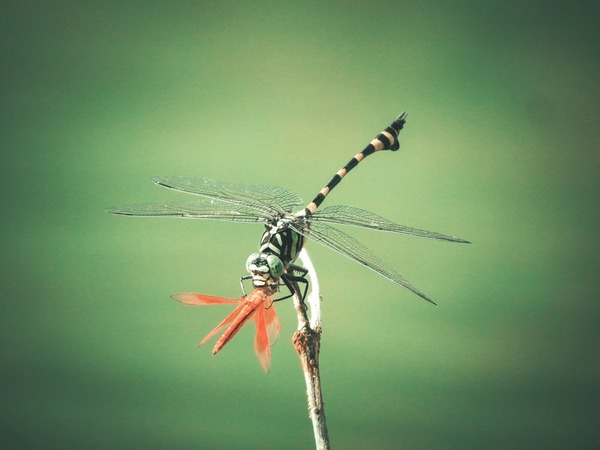
They usually catch their prey in mid-air, using their long, spiny legs like a basket to trap insects while flying. Once captured, the prey is carried to a perch, where the dragonfly consumes it.
Dragonfly Nymphs vs. Adults: Different Diets
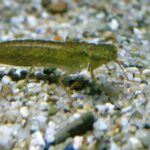
While many people recognize adult dragonflies, fewer are aware of their juvenile stage. Dragonfly larvae, known as nymphs, live in water and are just as predatory—if not more so—than adults.
Both nymphs and adult dragonflies are equipped with excellent vision, allowing them to see nearly 360 degrees around them. This gives them a major advantage when hunting.
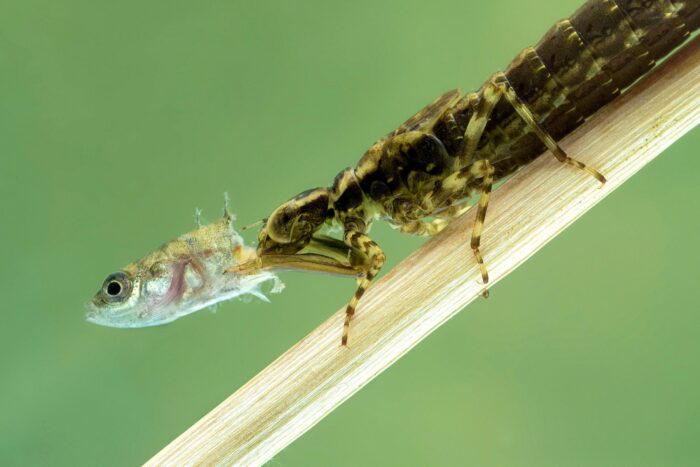
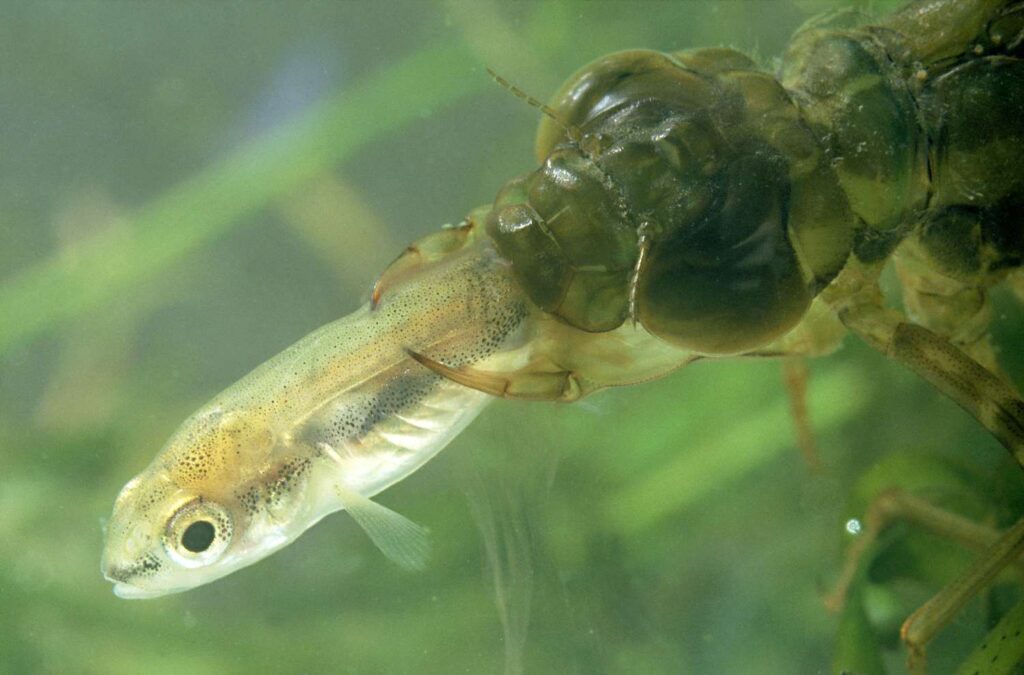
However, nymphs possess an even more unusual adaptation: a retractable lower jaw (called a labium). This specialized mouthpart can rapidly extend to grab prey underwater, making them highly effective aquatic hunters.
What Do Dragonfly Nymphs Eat?
Dragonfly nymphs mainly consume aquatic organisms, such as:
- Insect larvae
- Aquatic insects
- Small crustaceans
- Occasionally tadpoles and small fish
They are ambush predators, waiting patiently before striking with incredible speed.
What Do Adult Dragonflies Eat?
Adult dragonflies hunt in the air and feed on a wide variety of insects, including:
- Flies
- Mosquitoes
- Moths
- Beetles
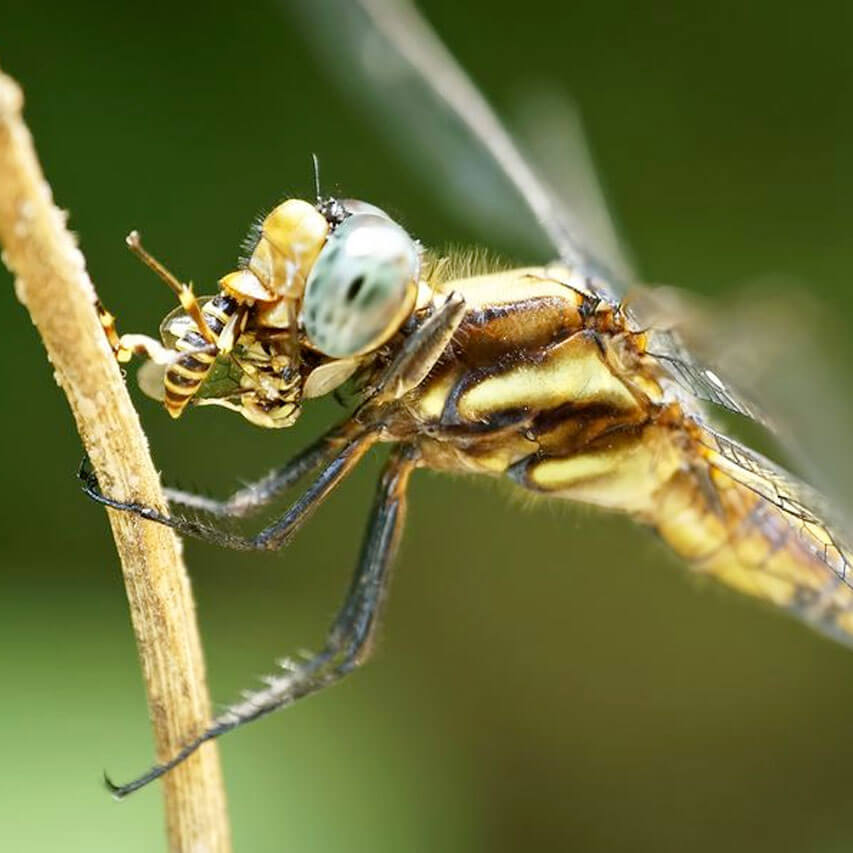
- Wasps
- Bees
- Other dragonflies
Their role as aerial predators helps maintain ecological balance by controlling insect populations.
Do Dragonflies Eat Mosquitoes?
A common question is whether dragonflies help control mosquito populations. The answer is yes—but with a nuance.
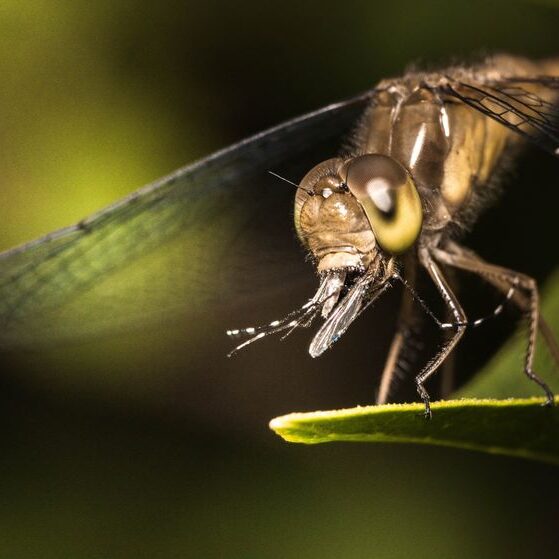
Adult dragonflies do eat mosquitoes, but they are not their primary food source. However, dragonfly nymphs play a more significant role. Living in water, they feed on mosquito larvae, reducing mosquito numbers before they reach adulthood.
A Natural Pest Control System
Dragonflies are part of a larger ecosystem. In aquatic environments like ponds, multiple predators contribute to controlling mosquito populations. For example, ducks also feed on mosquito larvae and other aquatic invertebrates as part of their natural diet.
The Diet of Dragonflies: What Do Dragonflies Eat?
Dragonflies, those agile acrobats of the sky, play a crucial role in the ecosystem, primarily through their diverse diet. These insects are known for their voracious appetites and their essential role in controlling the population of many smaller species.
But what do dragonflies eat exactly? The diet of dragonflies is mainly composed of flying insects, which are abundant around water bodies like ponds and lakes. Understanding their feeding habits offers insight into their ecological importance and their interaction with nature.
Let’s explore how dragonflies consume their prey, which often includes insects similar to, yet distinct from, damselflies.
Understanding Their Role in the Ecosystem
Dragonflies serve an essential function in maintaining ecological balance. By preying on smaller flying insects, they help regulate insect populations that could otherwise threaten agricultural productivity and natural habitats.
This ecological service renders them invaluable within wildlife ecosystems. Dragonflies and their close relatives, damselflies, belong to the order Odonata, which is characterized by a reliance on water for breeding. These insects are frequently observed near ponds and other water bodies, where they feed and lay eggs, thereby contributing to the ecosystem’s complexity.
Dragonflies function as apex predators within the insect world, with larger species occupying the top of their respective food chains. Their presence near water sources is essential, as these areas serve as primary hunting grounds.
The evolutionary history of dragonflies, extending over 300 million years, demonstrates their adaptability and resilience across diverse environments. Their capacity to consume large numbers of insect pests, including mosquitoes, underscores their role in disease control and their indirect benefits to human populations.
Observation of dragonfly diets provides researchers with valuable insights into ecosystem health. Fluctuations in dragonfly populations often reflect changes in environmental conditions, such as pollution and water quality.
Consequently, dragonflies serve as bioindicators, signaling shifts within their habitats that may require ecological intervention. Analysis of dragonfly feeding behavior reveals broader environmental interactions and illustrates the interconnectedness of ecological systems.
Diverse Prey: Flying Insects and More
Dragonflies are primarily aerial predators, spending significant time in flight to capture prey. Their diet consists mainly of flying insects, which they skillfully capture mid-air. This demonstrates their notable speed and maneuverability. Common prey includes mosquitoes, flies, and other small insects found near ponds and water bodies.
As opportunistic feeders, dragonflies consume a wide range of available flying insects. They often target multiple prey during a single hunting period.
Dragonfly hunting strategies are characterized by evolutionary precision and speed. Their large compound eyes provide nearly 360-degree vision, facilitating effective prey detection and tracking.
Larger dragonflies employ direct flight paths to intercept prey mid-air, using their powerful legs to form a basket-like structure for capture. This hunting efficiency establishes them as highly successful predators. The ability to capture and consume prey in flight distinguishes dragonflies from other insects, such as damselflies, which may lack comparable agility.
In addition to flying insects, dragonflies occasionally consume small aquatic organisms and terrestrial insects that approach their habitats. For example, when perched near water, they may capture ants or bees that enter their territory.
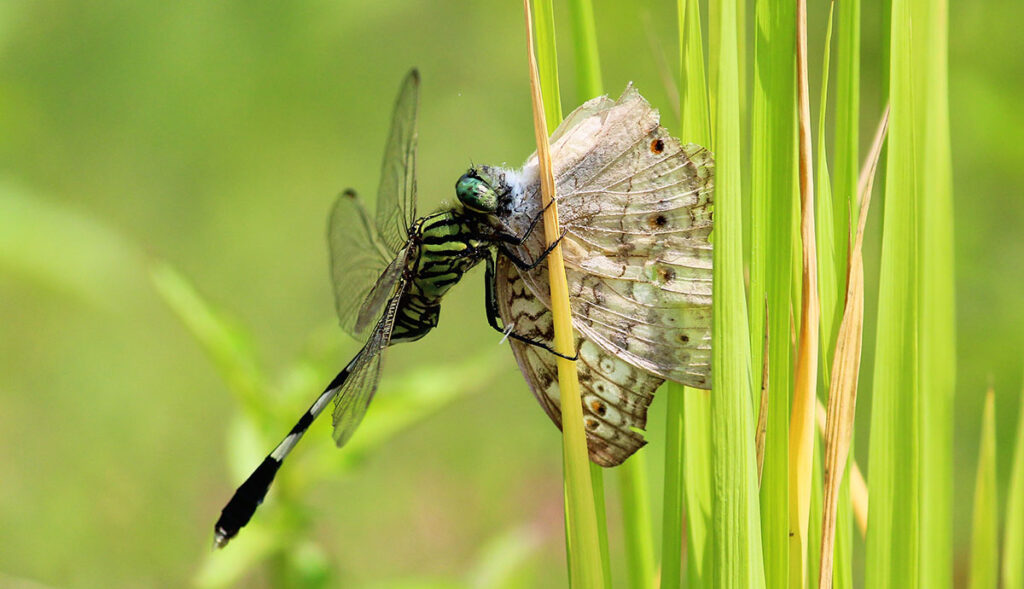
This dietary diversity demonstrates their adaptability and highlights their dual role as both predator and prey within ecosystems, as they are also targeted by larger predators. Examination of dragonfly diets reveals their significance as insect population regulators and their essential position within the food web.
The adaptability of the dragonfly diet underscores its survival strategy, enabling persistence in diverse and changing environments. Their feeding habits exemplify the delicate balance within ecosystems, demonstrating that each species contributes to ecological stability.
Analysis of dragonfly diets enhances understanding of the complex interactions that define global biodiversity.
Diverse Dragonfly Species and Their Dietary Preferences
Dragonflies display a wide range of dietary preferences, reflecting their diversity and adaptability. Each species exhibits distinct hunting techniques and prey selection, shaped by evolutionary processes.
Understanding these differences is essential for appreciating the ecological roles of these aerial predators. Larger dragonflies often capture sizable prey, while others employ stealth and precision. Examination of feeding habits reveals how dragonflies thrive in various environments and how dietary diversity supports balanced ecosystems.
Variation in Hunting Techniques
Dragonflies rank among the most proficient insect hunters, a distinction attributed to their advanced hunting techniques and acute sensory abilities. Each species has developed specific methods for securing prey.
For example, hawkers patrol large territories in search of moving prey, while darters use short bursts of speed to capture insects. Larger dragonflies often rely on strength and extensive flight capabilities to overpower prey. Adult dragonflies utilize swift aerial maneuvers and large compound eyes, which provide nearly 360-degree vision for detecting prey at considerable distances.
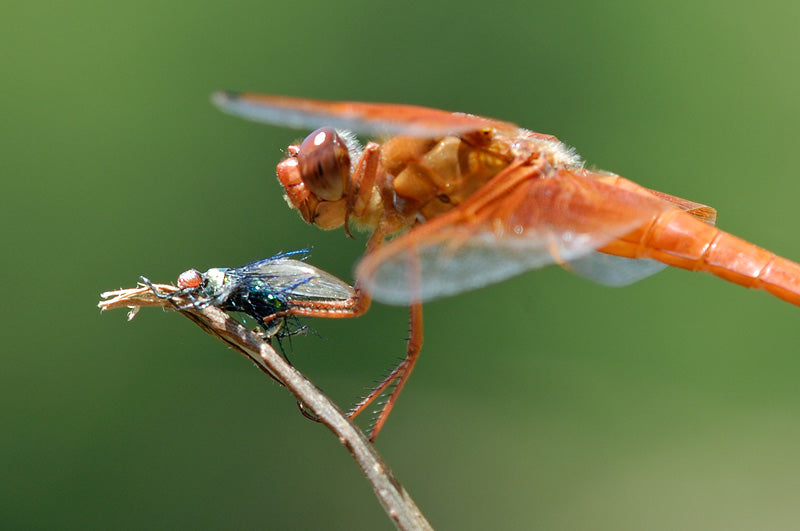
Dragonflies employ powerful mandibles to secure and consume prey mid-flight, demonstrating a level of precision uncommon among insects. Their legs form a cradle-like structure to prevent prey escape.
Hunting techniques vary not only by species but also in response to environmental factors. For instance, skimmers often use perch-and-wait tactics to ambush prey. Dragonfly larvae, or nymphs, exhibit contrasting strategies; they reside underwater, camouflaged among aquatic vegetation, and capture passing microorganisms or smaller larvae with remarkable speed.
Adaptability is fundamental to dragonfly survival. The diversity of hunting techniques reflects evolutionary responses to habitat-specific pressures, such as the need for stealth in woodlands or speed in open fields.
This variation underscores their adaptability and contributes to their success as apex insect predators, reinforcing their role in maintaining ecological balance.
Dragonflies possess a diverse dietary repertoire that varies among species, influenced by geographic location and habitat conditions. Understanding specific prey preferences reveals the complex relationships between dragonflies and their ecosystems.
Some species exhibit specialized prey selection, while others are opportunistic, feeding on a broad range of insects. This dietary flexibility or specificity shapes their roles in pest control and biodiversity maintenance.
Many dragonflies primarily capture mosquitoes, flies, and other small aerial prey, playing a significant role in managing pest populations. Larger species, such as the Emperor or Dragonhunter, are capable of capturing larger insects, including butterflies and smaller dragonflies, demonstrating their status as top predators.
However, these dietary preferences are flexible, and many adult dragonflies adjust their intake based on prey availability within their territories.
Dragonfly larvae, the juvenile stage of the species, feed on aquatic organisms such as tadpoles and small fish, with prey selection often varying by location. This adaptability in dietary habits serves as an ecological indicator; changes in prey availability frequently reflect environmental shifts and habitat quality disturbances.
Monitoring these patterns provides scientists with essential data for assessing ecosystem health and developing conservation strategies.
This extensive dietary diversity significantly contributes to the sustainability and health of dragonfly habitats. Dragonfly feeding behavior supports the coexistence of multiple species within ecosystems.
The evolution of diverse feeding strategies among dragonfly species over millennia demonstrates their evolutionary success. Their continued presence enhances regional biodiversity, underscoring their importance in ecological research and conservation initiatives. Their hunting skills allow dragonflies to swiftly catch agile prey in the air.
Where Dragonflies Live: Habitats and Their Impact on Diet
Dragonflies are versatile insects that inhabit a wide range of environments and have developed unique feeding strategies to thrive in diverse habitats. Their habitats include ponds, streams, and other aquatic environments, each of which influences their diet and feeding behavior. Understanding dragonfly habitats is essential for comprehending their survival and development across life cycle stages, as they rely on water sources such as ponds and rivers. These environments provide critical resources that shape their diet and feeding strategies. Examination of habitat diversity reveals how environmental factors impact dragonfly diets and adaptation to ecological niches.
| Environment Type | Key Features | Diet and Prey | Adaptations |
| Freshwater Lakes | Still water, aquatic vegetation | Small fish, aquatic insects | Elongated bodies for swift movement |
| Rivers and Streams | Flowing water, varied plant life | Caddisfly larvae, mayflies | Strong wings for agility |
| Wetlands | Rich biodiversity, humid climate | Mosquitoes, flies | Camouflage coloring |
| Forests | Diverse canopy, shaded water bodies | Moths, butterflies | Enhanced eyesight |
This table illustrates the diverse ecological niches dragonflies inhabit and how these environments shape their adaptations and feeding strategies.
The Influence of Environment on Feeding Habits
Dragonfly habitats exert a direct and significant influence on their feeding habits. These environments are primarily aquatic, as water bodies provide essential conditions for all life cycle stages.
Dragonflies typically inhabit areas near ponds, lakes, marshes, and streams, which offer abundant prey such as mosquitoes, flies, and other small insects. The high prey density in these locations supports the active hunting and energy requirements of dragonflies.
Additionally, larger species are capable of capturing larger prey, including butterflies and small moths, demonstrating their adaptability.
Adapting to Different Ecological Niches
Dragonflies demonstrate exceptional adaptability to different ecological niches, enabling them to colonize a variety of aquatic environments, from still ponds to fast-flowing streams. Each habitat presents distinct challenges and opportunities, prompting adjustments in hunting strategies and dietary preferences.
In stagnant water habitats, such as ponds and marshes, dragonflies may encounter high competition and respond by enhancing agility and speed. In contrast, those in fast-moving waters, such as rivers and streams, may develop streamlined bodies for efficient navigation.
This adaptability encompasses both physical and behavioral traits, allowing dragonflies to exploit available resources and thrive under diverse conditions.
Dragonflies Eat: Techniques and Strategies
Dragonflies exhibit advanced flight and hunting abilities that are essential for survival. They employ sophisticated techniques to thrive in natural habitats.
A primary hunting strategy involves utilizing speed and agility to capture prey mid-air. Their large, multifaceted eyes provide nearly 360-degree vision, which is critical for detecting prey or predators at significant distances.
When targeting prey, dragonflies use a direct, rapid approach and employ their six legs to form a basket-like structure, minimizing the chance of prey escape.
Dragonflies consume a variety of insects, including mosquitoes, flies, and occasionally smaller dragonflies or damselflies, reinforcing their status as top insect predators. This dietary versatility supports survival in diverse environments.
In addition to aerial hunting, some species employ sit-and-wait strategies, perching on vantage points before capturing prey. This ambush behavior is common in areas with high insect density, where it may be more effective than active pursuit.
Environmental factors, such as wind, also influence hunting techniques; for instance, dragonflies may fly lower and use ground cover to ambush prey in windy conditions.
The nymph stage of dragonflies also presents a fascinating array of hunting techniques. Dragonfly nymphs, the aquatic juvenile stage, employ a range of hunting techniques.
They utilize camouflage among aquatic plants and rely on the element of surprise to capture small fish, tadpoles, or other nymphs using specialized extendable jaws. This developmental stage is critical for acquiring the nutrition required for metamorphosis into agile adults.
Adaptability during both nymph and adult stages enables dragonflies to occupy new habitats and ecological niches, maintaining their role as key predators within ecosystems. They consume a variety of prey, ranging from mosquitoes to small fish, proving their adaptability and importance in maintaining ecological balance.
Encouraging dragonfly habitats can benefit gardens and local ecosystems by reducing pest numbers naturally. With their vibrant colors and agile flight, dragonflies are not only fascinating to observe but also vital allies in preserving biodiversity.
Embracing their presence can lead to healthier, more balanced environments, making dragonflies more than just a captivating sight in the natural world.