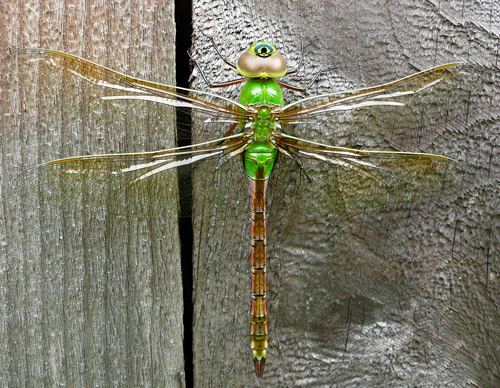
A dragonfly is a predatory, non-stinging insect (suborder Anisoptera) known for its long body, two pairs of transparent wings, and agile flight, usually found near water. Symbolically, it represents transformation, adaptability, joy, and courage, while historically associated withboth prosperity and, in European folklore, sinister omens.
A dragonfly is a predatory, non-stinging insect (suborder Anisoptera) known for its long body, two pairs of transparent wings, and agile flight, usually found near water. Symbolically, it represents transformation, adaptability, joy, and courage, while historically associated withboth prosperity and, in European folklore, sinister omens.
What does it mean when you see a dragonfly? It means many things because of what the dragon fly symbolizes.
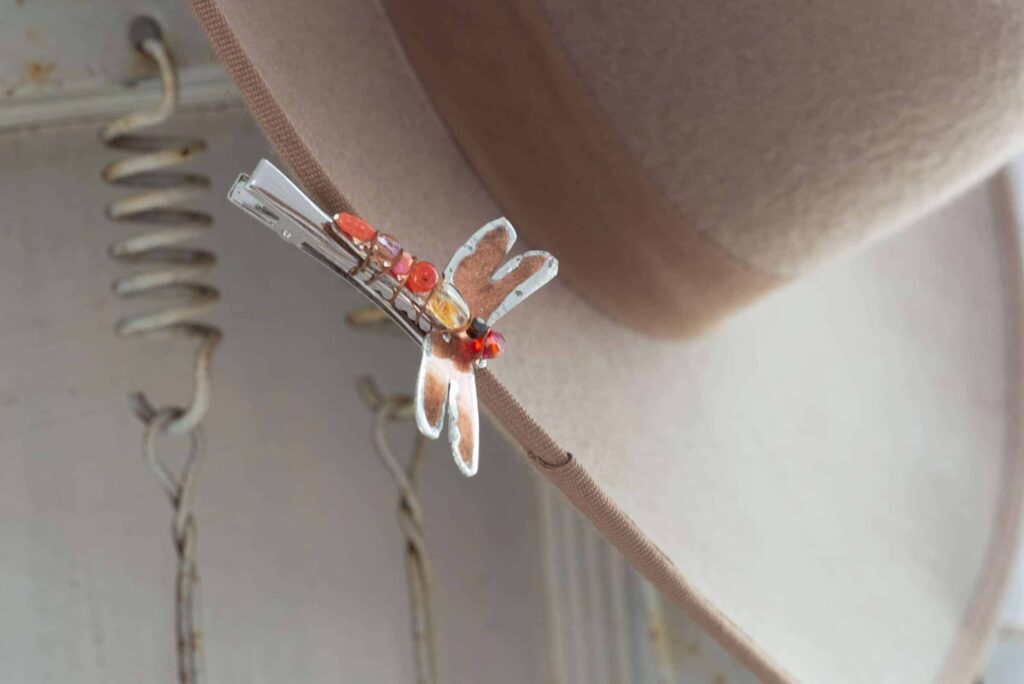
The dragonfly is an ancient creature that’s gone through many changes in the past 300 million years making them the perfect symbol for transformation and change. This winged insect is one of the oldest species on earth.
The modern dragonfly goes through many transformations throughout its life. There’s a reason why you often see dragonflies near lakes or ponds – they start their life in water. Female dragonflies deposit their eggs on the surface of the water. Once hatched the young dragonfly lives of aquatic invertebrates. Then after molting up to 15 times, the dragonfly nymph is ready for adulthood and crawls out of the water to shed its last immature skin.
Dragonflies are incredible flying machines. They can move each of their four wings independently, can flap them up and down and forward and back. This flying machine can fly very quickly, vey high, forwards and backwards, change flight directions at full speed and hover like a helicopter.
What does it mean when you see a dragonfly?
A dragonfly represents change and transformation and is a gentle reminder for you to shed more light and joy in your life. When you see a dragonfly, it means:
It’s the right time to make changes.
A transformation to improvement is happening.
You are deeply connected to nature.
Remember to live life to the fullest
And a reminder to lighten your mind, heart and thoughts.
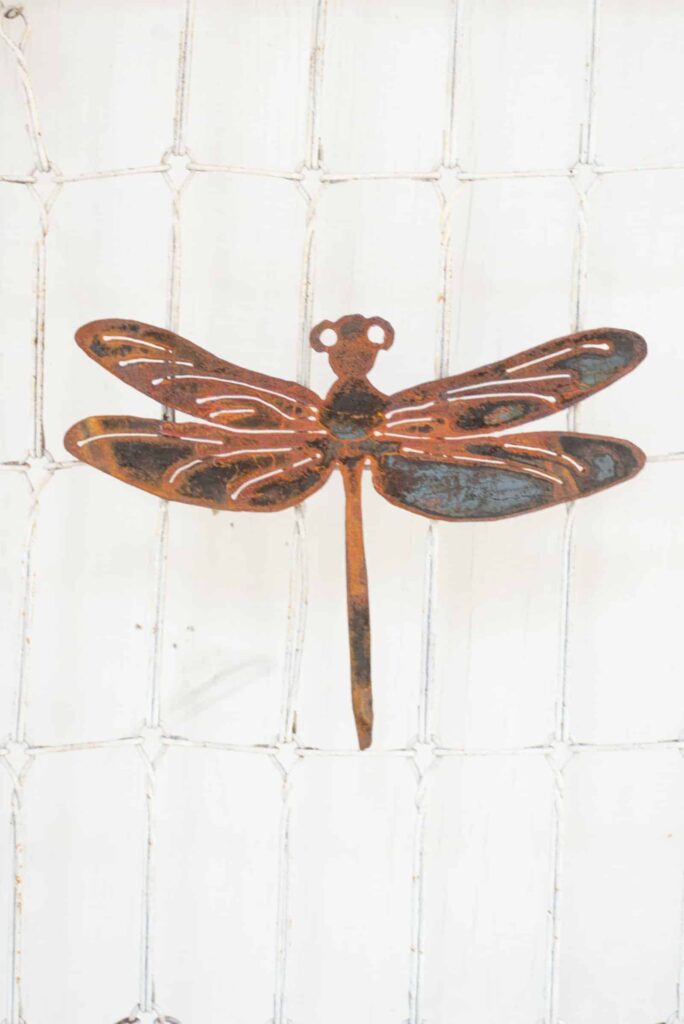
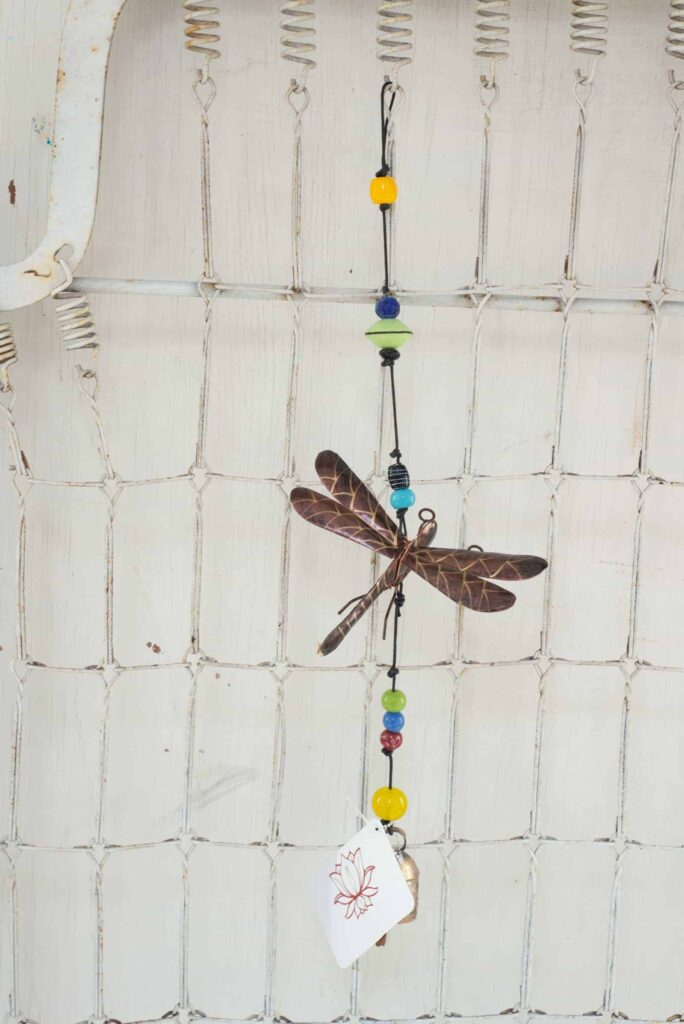
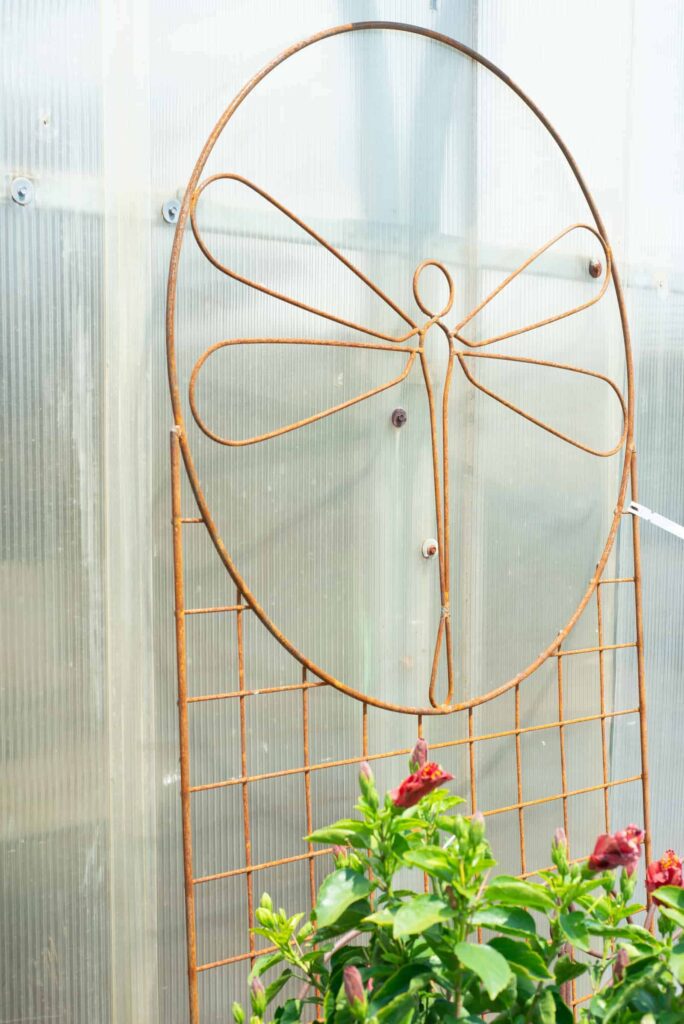
We love our collection of dragonfly symbols that will remind you of positive change and growth! And if you check in our butterfly garden, you might see a live dragonfly or two!
What Does The Dragonfly Symbolize?
I love dragonflies. I think they’re beautiful and graceful and I love the transparency of their wings. This is a somewhat recent fascination for me. I know that I was drawn to them because they represent transformation. And, holy shit, there’s some major transformation going on in my life.
Dragonfly Wisdom
The dragonfly symbolizes wisdom, change, transformation, light and adaptability in life. It shows up in people’s lives to remind them that they need to bring a lightness and joy to their life.
The dragonfly is also a symbol of the “realm of emotions” from joy and happiness to melancholy, sadness, anger, jealousy and all of the other emotions. It´s also considered a symbol of transformation because of the way that it grows.
Dragonfly Insights & Inspiration
Dragonflies are born in the water and begin to grow there, but then they move into the air and learn to fly. Dragonflies also have incredible flight patterns and are able to change their direction of flight quickly without much effort. They look effortless as they glide and fly through the air.
This is meant to inspire and motivate people to be flexible and adaptable in the situations that they come across in life.
A person who has the dragonfly as their spirit animal or totem will be most inclined to delve into their emotions and show their truest colors. This person will also tend to keep a light positive outlook even when things look grim and dark.
When a person feels stuck in a situation or needs to find a new perspective then they should call on the dragonfly spirit animal and the dragonfly power.How do you feel about dragonflies? Do you believe in spirit animals?
What Does a Dragonfly Symbolize in Japanese Culture?
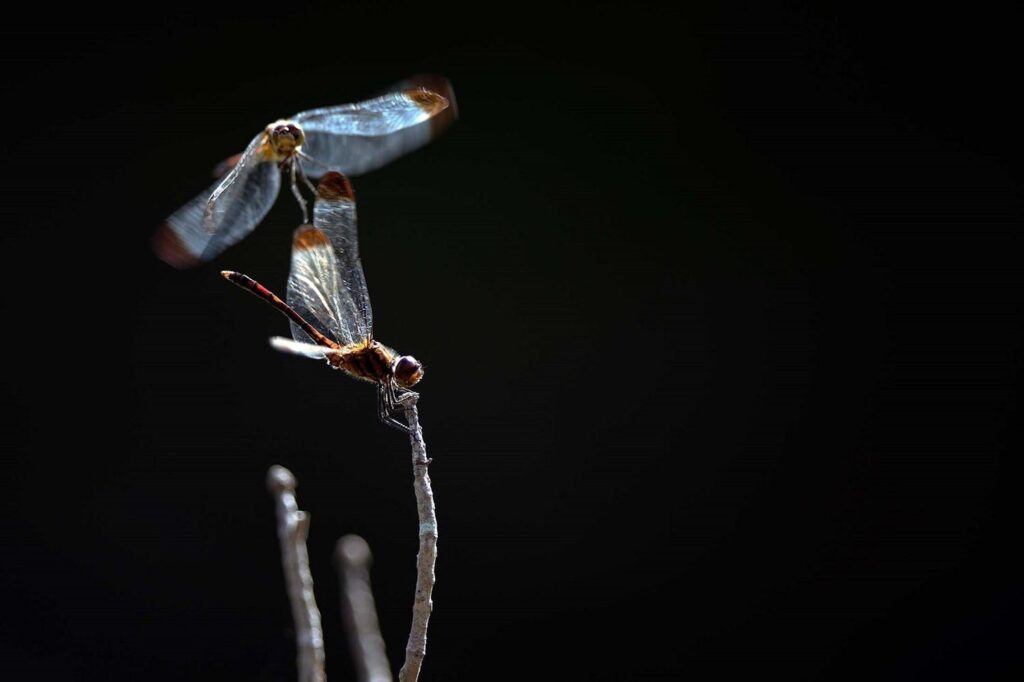
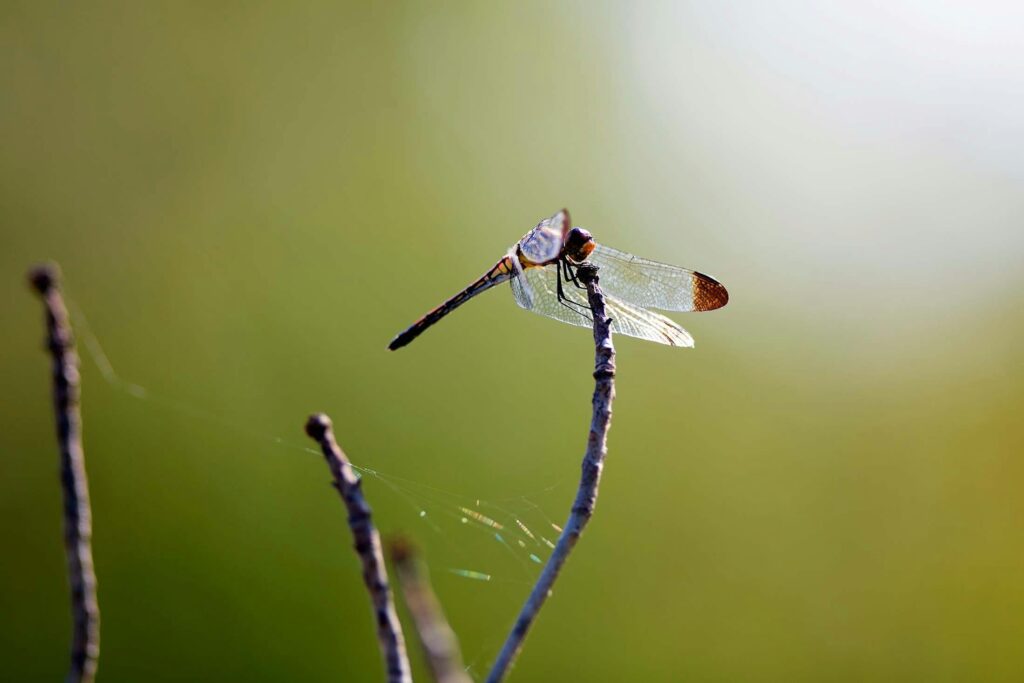
One autumn day, I was sitting outside at a cafe table in Tokyo, drinking coffee. A dragonfly landed on my crumpled napkin. Its body gleamed a vermillion red with an abdomen tufted with brown. The wings glittered in the sun. Like stained glass, they were webbed with sections and filled with transparent gossamer that glinted in each tiny pane, going clear to blue to pink and back as the sunlight refracted on them. We seemed to acknowledge each other, me with my contact lenses and it with its enormous goggles. The moment made me wonder: What does a dragonfly symbolize in Japanese culture?
Dragonfly nation
For more than a millennium, dragonflies have captured the Japanese imagination. With their iridescent wings and jewel-toned bodies, they have long been an object of fascination. Throughout the island of the dragonfly, this curious insect has inspired poets, geishas, artists and warriors for centuries.
In Japan, dragonflies are loved for their beauty, their place in nature and as a harbinger for the seasons — especially autumn. The dragonfly has inspired countless poems and songs. Dragonfly symbolism in Japan is also at the heart of many “kacho-ga,” or bird and flower paintings, by such famous artists as Kitagawa Utamaro and Katsushika Hokusai. And the samurai-turned-poet Yayu Yokoi wrote this haiku in the 1700s:
“A dragonfly
settles down to sleep
on the rod of an unskillful angler.”
Perhaps they have been so celebrated because there are so many species of dragonflies in Japan, wrote Irish writer and folklorist Lafcadio Hearn, who lived in Japan in the late 1800s. He named more than 30 types in his book “A Japanese Miscellany,” which has a chapter dedicated to dragonflies. Modern surveys like the guide “Dragonflies in Japan” estimate the count is even higher with more than 200 types of dragonflies.
Dragonflies are now generically called “tombo” in Japan, but this name is relatively new. An archaic name for dragonflies is “akitsu.” The country’s oldest history book from approximately A.D. 700, the Kojiki, even refers to Japan as “Akitsushima,” or dragonfly island. According to legend, the mythological Emperor Jimmu ascended a mountain some 2,600 years ago and declared that Japan resembled a dragonfly. Today, the traditional Japanese gardens that scatter the country symbolize the significance of nature in the nation’s culture and provide perfect dragonfly habitats.
What does a dragonfly symbolize in Japanese culture? It depends.
Symbol of the Japanese Samurai
Another old name for dragonfly is “katsumushi” — winning bug or victory insect. According to Ian Ropke, author of “Historical Dictionary of Osaka and Kyoto,” that’s because they’re known for their deft killing of their enemies. “They come quickly on a straight line to the pests they kill, and they don’t retreat,” he adds.
“Dragonflies symbolize agility, determinedness and victory for samurai warriors,” says Akihito Nakanishi, the Director of Programming for the Portland Japanese Garden in Oregon. My own samurai ancestors may have worn dragonfly motifs on their armor as they marched into battle. Some of these remaining suits are on display in museums, adorned with metalwork dragonflies melded to the helmets or painted onto the breastplate.
The meaning of dragonfly symbolism in Japan is so potent in the culture, in fact, that numerous brands have incorporated “tombo” into their moniker, borrowing the steadfast image of the beautiful bug. The most famous of these is probably Tombow Pencil Company, maker of one of Japan’s most popular and well-known writing implements that is found in every house. There are also companies that manufacture harmonicas, machine parts, tools, clothing and more, all bearing some form of the dragonfly’s name and symbol.
Speaking of everyday objects, I have my grandmother’s old coin purse, which is covered in a pattern of dragonflies. The company that made it, Inden-ya, has been in operation since 1582. “Inden” is a more than 400-year-old craft that uses Japanese paper and “urushi” lacquer to apply patterns to leather, and the technique was historically used to decorate samurai armor; today, it’s applied to wallets and luggage. The dragonfly is one of the brand’s traditional patterns. Tadatoshi Dezawa, from the associated Inden Museum, confirmed the dragonfly’s association with Japanese samurai.
Beloved by Japanese children
While the dragonfly is forever linked to Japan’s most famous warriors, this multifaceted insect also has a gentler side. “The dragonfly is cherished in Japan as an insect that protects babies,” adds Dezawa. “That’s because even if you didn’t have a mosquito net, if a dragonfly were present, it would eat any pests that came around, acting as guard to the baby.”
It makes sense, therefore, that dragonflies are beloved by children, too. Nearly a hundred years ago, poet Rofu Miki wrote “Akatombo,” or “red dragonfly,” that has since become a popular children’s song, named in 1989 as Japan’s favorite song, according to a poll by NHK, Japan’s public broadcaster. The song’s lyrics, translated from Japanese, begin, “Red dragonflies in the sunset/When was it that I watched them on someone’s back?/In mountain fields we gathered mulberries in little baskets/Was it just a dream?”
Children learn this song at school, and some towns even play it over loudspeakers to signal the end of the workday. Even dogs love it: I was visiting a friend in her city when the song came on at 5 p.m., and her dog Oribaa began howling, too. “He likes to sing along,” she said.