Dragonflies are among the most noticeable insects around ponds, lakes, wetlands, gardens, and slow-moving streams. They dart through the air with remarkable speed, hover briefly over the water, and often return to the same perch again and again. For beginners, however, identifying them can feel difficult because many dragonflies are small, fast, and brightly colored.
The good news is that you do not need to be an expert to begin recognizing common dragonfly species. Many familiar dragonflies have clear field marks: a red body, a green thorax, dark wing patches, a wide abdomen, or a habit of flying low over water. Once you know what to look for, dragonfly identification becomes much easier and more enjoyable.
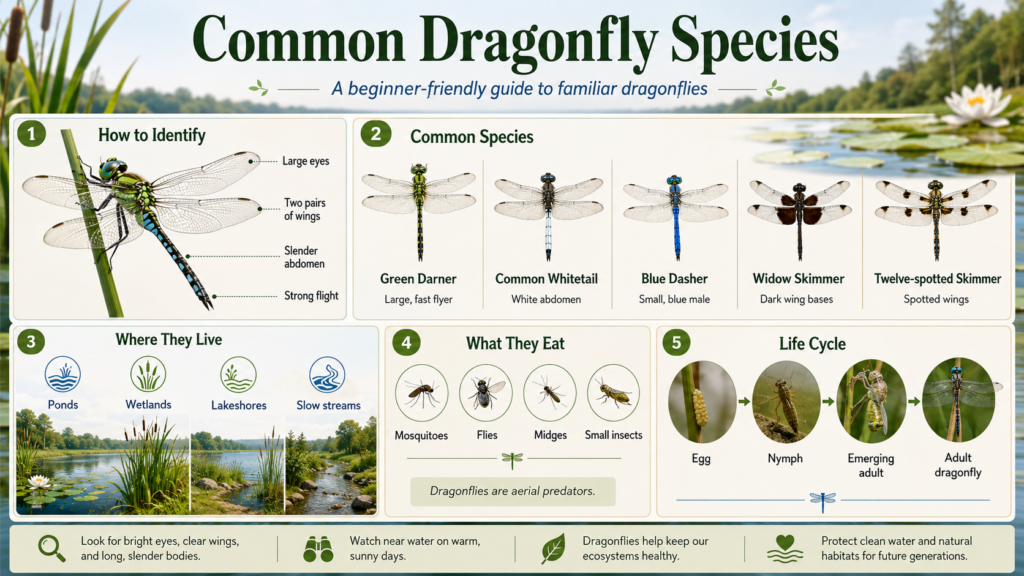
This guide introduces common dragonfly species and species groups that beginners are likely to notice, along with simple identification clues, habitat notes, and behavior tips.
What Makes a Dragonfly Easy to Identify?
Before looking at individual species, it helps to understand the main features used in dragonfly identification.
Body Color
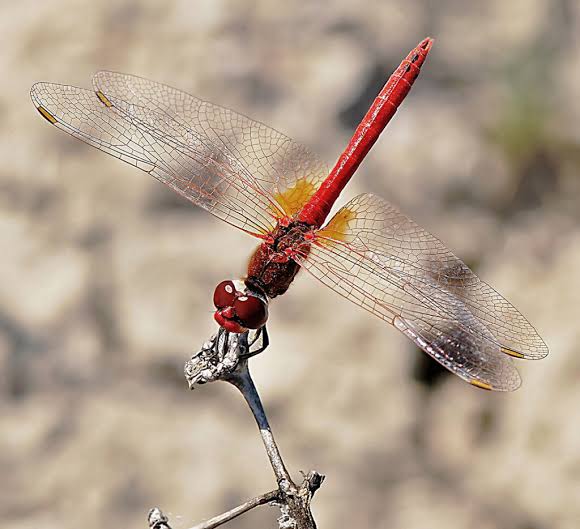
Color is often the first thing people notice. Some dragonflies are bright red, blue, green, black, brown, or yellow. However, color can change with age and sex. Males are often more colorful, while females may be brown, yellow, or patterned for camouflage.
Wing Shape and Wing Markings
Dragonflies hold their wings open when resting. Some species have clear wings, while others have dark patches, amber coloring, or colored bands. Wing markings are especially useful for identifying skimmers and some larger dragonflies.
Body Shape
Some dragonflies are long and slender, while others are broad-bodied and sturdy. A thick, flattened abdomen can point toward certain skimmer species, while a long, narrow body may suggest darners, clubtails, or emeralds.
Perching Behavior
Many dragonflies return to the same twig, reed, rock, or plant stem after hunting. Watching where and how a dragonfly perches can help with identification. Some perch horizontally, some hang vertically, and some rarely perch at all.
Habitat
Habitat is one of the most practical clues. Some dragonflies prefer still ponds, others prefer streams, marshes, temporary pools, or open lakes. If you know where you saw the dragonfly, you already have an important identification clue.
Common Dragonfly Species and Groups Beginners Often See
The species listed below are examples of dragonflies that are widespread, familiar, or representative of commonly seen groups. Exact species vary by region, but these examples will help you recognize the major types of dragonflies you are likely to encounter.
1. Green Darner
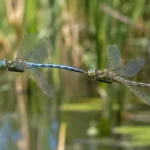
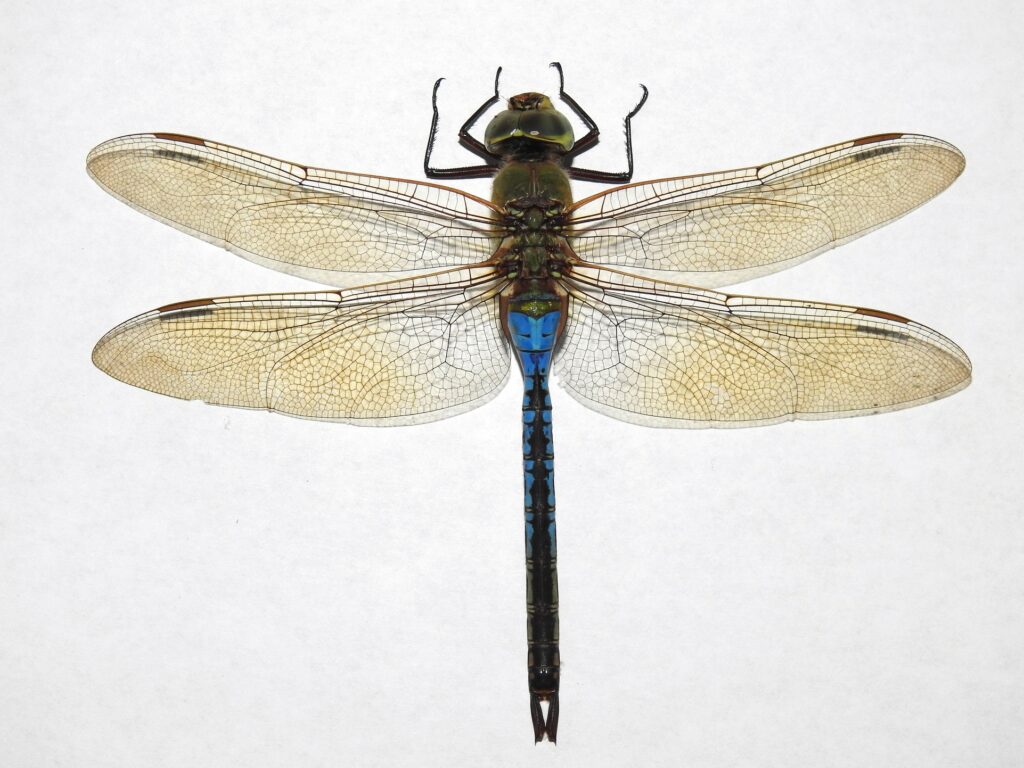
The green darner is one of the best-known dragonflies in North America and a useful species for beginners to learn. It is large, fast-flying, and often seen patrolling ponds, wetlands, fields, and open areas.
How to Recognize It
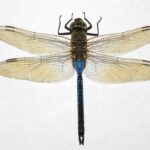
Green darners usually have a bright green thorax and a long abdomen that may appear blue, purple, brown, or dark depending on sex and age. Their large size and powerful flight make them stand out from smaller pond dragonflies.
Where You Might See It
Look for green darners near ponds, marshes, lakes, and open wetland edges. They may also appear away from water during migration or while hunting.
Beginner Tip
If you see a large dragonfly flying strongly back and forth over open water without resting often, it may be a darner. Darners are among the most active and powerful flyers in the dragonfly world.
2. Common Whitetail
The common whitetail is one of the easiest dragonflies for beginners to recognize, especially the male. It is often found around ponds, slow streams, and open muddy areas.
How to Recognize It
Male common whitetails have a pale, whitish abdomen and dark patches on the wings. Females look different, usually with brownish bodies and patterned wings. This difference between males and females is common in dragonflies and can confuse beginners at first.
Where You Might See It
Common whitetails often perch on the ground, rocks, logs, or low vegetation near ponds and wetlands. They are usually easy to observe because they frequently return to the same perch.
Beginner Tip
A dragonfly with a bright white abdomen and dark wing markings near a pond edge is a strong candidate for common whitetail.
3. Blue Dasher
The blue dasher is a small to medium-sized dragonfly often seen around ponds, lakes, ditches, and garden water features. It is one of the most familiar summer dragonflies in many areas.
How to Recognize It
Mature males often have a bluish body, pale face, and greenish eyes. Females and younger individuals are more yellow and brown with patterned bodies. Blue dashers often perch with the abdomen slightly raised.
Where You Might See It
Blue dashers are common around still or slow-moving water, especially where there is sunny vegetation along the edge.
Beginner Tip
Watch for small blue dragonflies that perch repeatedly on plant tips near pond margins. Their habit of lifting the abdomen slightly can be a useful clue.
4. Twelve-Spotted Skimmer
The twelve-spotted skimmer is a striking dragonfly with patterned wings. It is often seen around ponds, marshes, and slow-moving water.
How to Recognize It
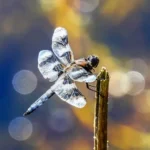
This species gets its name from the dark spots on its wings. Mature males also have pale whitish wing patches between the dark markings, giving the wings a bold, checkered appearance. Females usually lack the same strong white patches but still show the dark wing spots.
Where You Might See It
Twelve-spotted skimmers are often found flying over ponds, wetlands, and open areas near water.
Beginner Tip
If the wings look boldly patterned rather than clear, slow down and observe carefully. Wing patterns are among the easiest features to use for skimmer identification.
5. Widow Skimmer
The widow skimmer is another common dragonfly with noticeable wing markings. It is often confused with other spotted-wing skimmers, but its dark wing bases are a useful clue.
How to Recognize It
Widow skimmers have broad dark patches near the base of the wings. Males may also show pale whitish wing patches and a bluish-white abdomen. Females are usually brownish with dark basal wing markings.
Where You Might See It
This species is often found around ponds, lakes, marshes, and slow waters with plenty of vegetation.
Beginner Tip
Look for broad dark patches close to the body on the wings. This feature can help separate widow skimmers from species with spots farther out on the wings.
6. Eastern Pondhawk
The eastern pondhawk is a common and active dragonfly often seen around ponds, gardens, and sunny wetland edges. It is also a good example of how male and female dragonflies can look very different.
How to Recognize It
Mature males are usually powdery blue with a green face. Females are bright green with dark markings on the abdomen. Young males may look more like females before becoming blue as they mature.
Where You Might See It
Eastern pondhawks are often found near ponds and open sunny habitats. They may perch on the ground, low plants, or floating vegetation.
Beginner Tip
A bright green dragonfly near a pond may be a female eastern pondhawk. A powdery blue dragonfly in the same area could be the male of the same species.
7. Flame Skimmer
The flame skimmer is a bold orange to red dragonfly often seen in western parts of North America. It is especially noticeable because of its warm body color and sometimes orange-tinted wings.
How to Recognize It
Males are usually bright orange-red, often with orange coloring extending into the wing bases. Females are generally duller, with golden or brownish tones.
Where You Might See It
Flame skimmers are often seen around ponds, streams, warm wetlands, and even ornamental garden ponds in suitable regions.
Beginner Tip
Bright red or orange dragonflies are eye-catching, but several species can be red. Check the wings, size, and habitat before deciding on an identification.
8. Common Baskettail
Baskettails are medium-sized dragonflies that often fly continuously over open water or along woodland edges. The common baskettail is a familiar species in many areas of eastern North America.
How to Recognize It
Common baskettails are usually brownish with clear wings, though some individuals may have small dark marks at the wing bases. They can be harder for beginners because they often keep flying instead of perching.
Where You Might See It
Look for them near ponds, lakes, wetlands, and woodland edges, especially in spring and early summer.
Beginner Tip
Not every dragonfly will sit still for identification. If a dragonfly keeps flying in loops over a pond and rarely lands, pay attention to size, flight path, and season.
9. Clubtails
Clubtails are a large group of dragonflies named for the widened tip of the abdomen found in many species. They are common in many regions but can be challenging to identify to exact species.
How to Recognize Them
Many clubtails have black and yellow or black and green patterns, separated eyes, and a slightly enlarged “club” at the end of the abdomen. They often look more angular and less brightly colored than skimmers.
Where You Might See Them
Clubtails are often associated with rivers, streams, sandy banks, and clean flowing water, though habitat varies by species.
Beginner Tip
If you see a dragonfly with a narrow body and a noticeably widened tail tip near a river or stream, it may be a clubtail.
10. Emerald Dragonflies
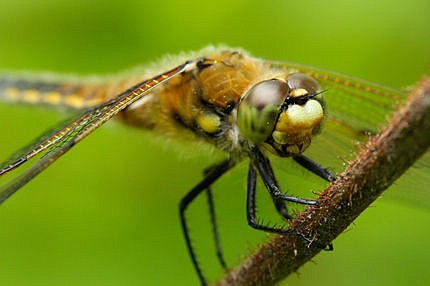
Emeralds are named for their often brilliant green eyes. They are beautiful dragonflies, but they can be difficult for beginners because many species are similar and active in flight.
How to Recognize Them
Emerald dragonflies often have dark bodies with metallic green or bronze tones and bright green eyes. Some have yellow markings or ring patterns on the abdomen.
Where You Might See Them
They may occur near bogs, ponds, marshes, woodland pools, or wetlands, depending on the species.
Beginner Tip
Green eyes are a useful clue, but not enough for exact identification. For beginners, it is often better to identify these as “emerald-type dragonflies” unless you have a clear photo.
How to Identify Common Dragonfly Species in the Field
Dragonfly identification becomes easier when you follow a simple process rather than trying to memorize every species at once.
Step 1: Notice the Size
Is the dragonfly large and powerful, medium-sized, or small and delicate? Darners are often large, while many skimmers are medium-sized and perch more often.
Step 2: Look at the Wings
Are the wings clear, spotted, banded, amber-tinted, or dark at the base? Wing patterns are among the most reliable beginner clues.
Step 3: Check the Abdomen
Is the body thick, thin, club-shaped, white, blue, red, green, or patterned? The abdomen often gives strong hints about the group or species.
Step 4: Observe the Habitat
Was it near a pond, river, marsh, garden, or woodland pool? Habitat can quickly narrow your choices.
Step 5: Watch the Behavior
Does it perch often? Does it patrol open water? Does it chase other dragonflies? Does it return to the same branch? Behavior is part of the identification process.
Step 6: Take a Photo If Possible
A clear side photo and top-view photo can be very helpful. Try to capture the wing markings, body color, eyes, and abdomen shape.
Dragonflies vs. Damselflies: A Quick Beginner Note
Many beginners confuse dragonflies and damselflies. They are closely related, but they are not the same.
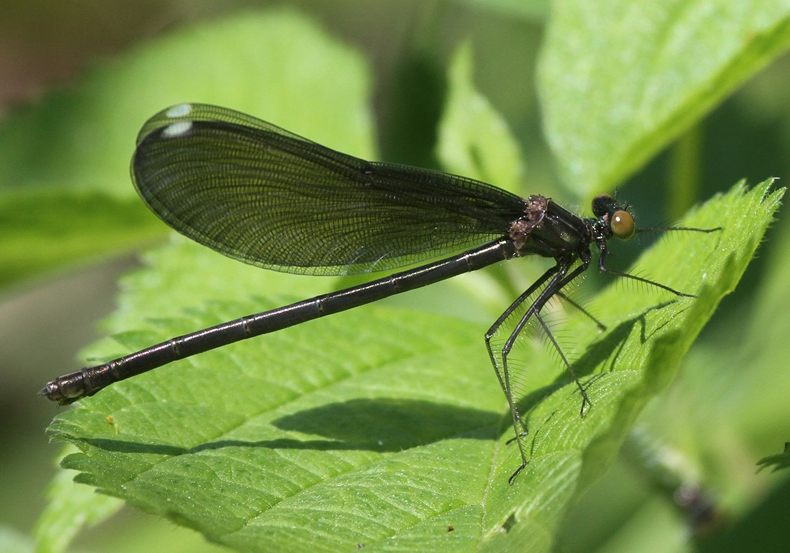
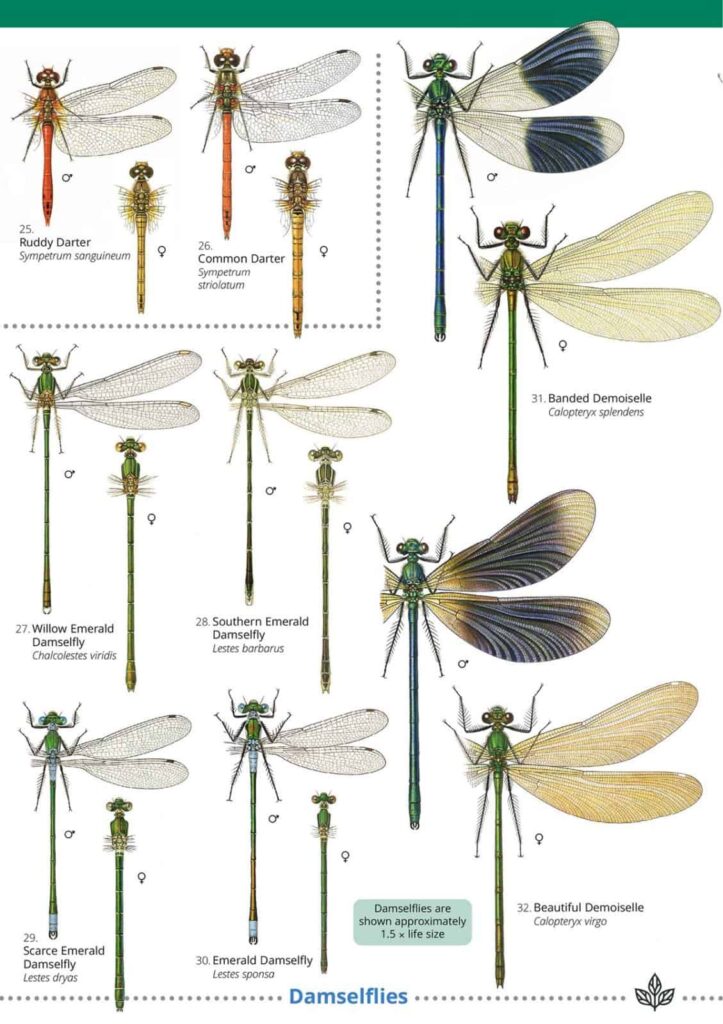
Dragonflies usually have stronger bodies, larger eyes, and wings held open when resting. Damselflies are usually more slender and often hold their wings together or partly closed over the body when at rest.
This distinction matters because many “small dragonflies” people notice near water are actually damselflies.
Why Common Dragonflies Matter
Dragonflies are more than beautiful insects. They are predators, both as aquatic nymphs and as flying adults. Young dragonflies live in water and feed on small aquatic animals. Adults catch mosquitoes, flies, midges, and other small insects in the air.
They are also connected to healthy wetland habitats. While the presence of dragonflies does not automatically prove that a habitat is perfect, many species depend on clean water, aquatic vegetation, and suitable breeding areas.
For nature education, dragonflies are excellent beginner subjects because they are visible, colorful, active during the day, and closely tied to water ecosystems.
Common Mistakes Beginners Make
Relying Only on Color
Color is useful, but it is not always enough. Males, females, and young dragonflies can look very different.
Ignoring Wing Markings
Wing spots, dark bases, and colored bands are often more reliable than body color alone.
Forgetting About Region
A species common in one country or state may not occur in another. Always consider your location when identifying dragonflies.
Expecting Every Dragonfly to Match One Photo
Dragonflies change as they age. Lighting, angle, and sex can also make individuals look different from field guide images.
Confusing Similar Species
Some dragonflies require close examination for exact identification. It is perfectly acceptable for beginners to identify them to a group, such as “skimmer,” “darner,” or “clubtail,” before learning exact species.
Conclusion
Learning common dragonfly species is a practical first step into dragonfly identification. Start with the dragonflies you see most often near ponds, gardens, wetlands, lakes, and streams. Pay attention to body color, wing markings, size, habitat, and behavior.
You do not need to identify every dragonfly perfectly at first. Begin with recognizable species such as green darners, common whitetails, blue dashers, twelve-spotted skimmers, widow skimmers, eastern pondhawks, and flame skimmers. Over time, you will start noticing the small details that separate similar species.
The more you observe, the easier it becomes. Dragonflies are fast, beautiful, and ecologically important insects—and learning their names can make every walk near water more interesting.
FAQ
What are the most common dragonfly species?
Common dragonfly species vary by region, but familiar examples include green darners, common whitetails, blue dashers, twelve-spotted skimmers, widow skimmers, eastern pondhawks, flame skimmers, baskettails, clubtails, and emerald dragonflies.
How can I identify a dragonfly?
Start by looking at size, body color, wing markings, abdomen shape, habitat, and behavior. A clear photo can help you compare the dragonfly with a regional field guide or identification resource.
Are red dragonflies always the same species?
No. Several dragonfly species can appear red, orange, or reddish-brown. Males are often brighter than females, and color can vary with age. Wing markings, body shape, and location are also important.
Where are dragonflies most commonly found?
Dragonflies are usually found near water, including ponds, lakes, marshes, streams, rivers, ditches, and wetlands. Adults may also hunt in gardens, meadows, fields, and woodland edges.
What is the difference between a dragonfly and a damselfly?
Dragonflies are usually stronger-bodied and hold their wings open when resting. Damselflies are usually slimmer and often hold their wings together or partly closed over the body.
Why do dragonflies keep returning to the same perch?
Many dragonflies use favorite perches to watch for prey, defend territory, or look for mates. This behavior can make them easier to observe and photograph.
Are dragonflies good for the environment?
Yes. Dragonflies are natural predators of many small insects and are part of aquatic and wetland food webs. Their life cycle connects water habitats with the air above them.
Do dragonflies bite people?
Dragonflies do not sting and are not aggressive toward people. A large dragonfly might pinch if handled roughly, but they are harmless when observed respectfully.