Scientific food-web answer
Dragonflies are exceptionally effective hunters, but hunting skill alone does not make an animal an apex predator.
Direct answer
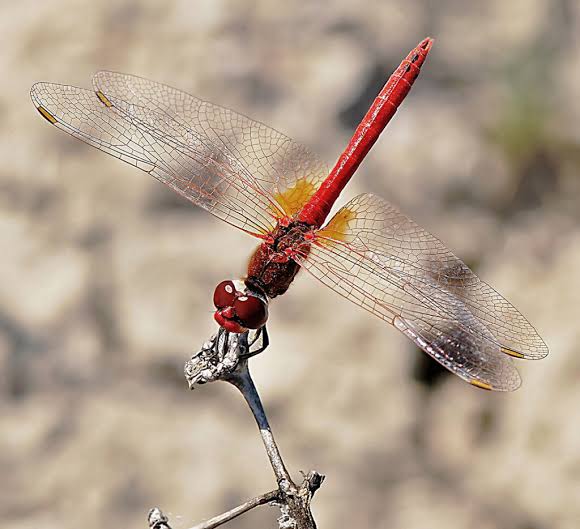
Are dragonflies apex predators? Usually, no. Adult dragonflies and aquatic nymphs are high-level predators, but both are regularly eaten by larger animals. In broad food webs, they are better described as mesopredators or high-ranking insect predators. Large nymphs may function as local top invertebrate predators in some fishless ponds or temporary pools, but that limited role does not make every dragonfly an apex predator in every ecosystem.
What does “apex predator” mean?
An apex predator occupies the highest trophic position in a defined food web and is not regularly preyed upon by other animals in that system. The phrase describes an ecological position, not simply speed, aggression, body size or the percentage of attacks that end in capture.
This distinction matters because dragonflies are both predators and prey. Adults hunt flying insects, while aquatic nymphs attack other freshwater animals. Yet adults can be captured by birds, spiders, robber flies and larger dragonflies, and nymphs are eaten by fish, amphibians, waterbirds and larger aquatic invertebrates. A predator with several regular predators above it is not a universal apex predator.
| Question | Efficient predator | Apex predator |
|---|---|---|
| What does the term measure? | How effectively an animal detects, pursues and captures prey | Its position at the top of a particular food web |
| Can it have predators of its own? | Yes | Not regular natural predators within the defined system |
| Does the term apply to dragonflies? | Yes—many are highly efficient hunters | Only in limited, local and carefully defined circumstances |
Most accurate wording: dragonflies are high-level insect predators. In wider terrestrial and freshwater food webs, they usually occupy an intermediate predatory position rather than the absolute top.
Where do dragonflies sit in a food web?
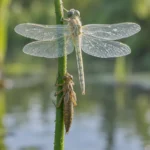
Dragonflies occupy two connected food webs because their life cycle crosses water and land. The nymph is an aquatic predator. After emergence, the adult becomes an aerial predator and also transfers energy from freshwater habitats into terrestrial food webs.
A simplified aquatic food chain
A simplified terrestrial food chain
The arrows above are intentionally simplified. Real food webs contain many overlapping links, including cannibalism, intraguild predation and changes in prey choice as a dragonfly grows. The same species can therefore occupy different trophic positions at different ages or in different habitats.
Why are dragonflies such efficient hunters?
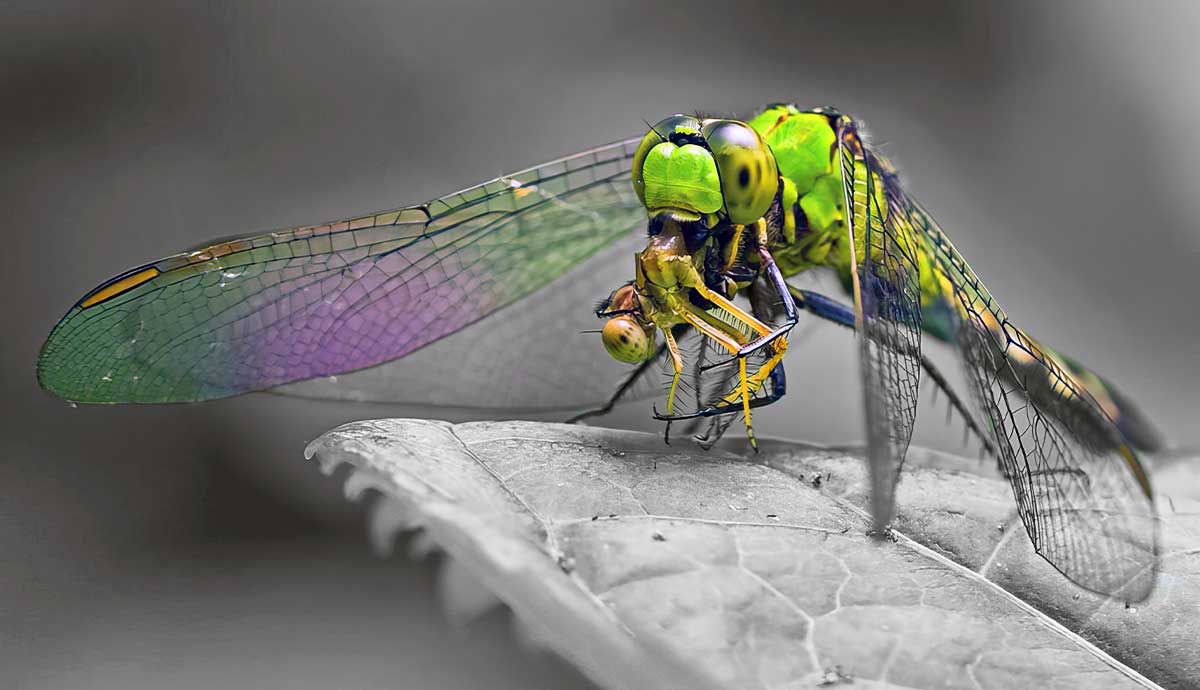
Dragonflies combine specialized vision, fast neural processing, maneuverable flight and prey-catching legs. Research on adult dragonflies shows that they do not merely chase the point where prey is currently located. They can steer along an interception path, keeping the target in a controlled region of the visual field while adjusting head and body orientation.[2][3]
Visual target detection
Large compound eyes give dragonflies extensive visual coverage. Specialized descending neurons encode the direction of a small moving target and relay that information toward flight-control centers.[4]
Predictive interception
High-speed recordings support the use of internal control models during aerial attacks. This helps a dragonfly correct its course without simply copying every turn made by the prey.[3]
Independent wing control
The forewings and hindwings can be controlled in ways that support rapid acceleration, braking, hovering and sharp changes of direction.
A spiny capture basket
The legs form a basket beneath the body, helping trap prey during flight before the mandibles begin feeding.
Is the famous 95% capture rate true?
Some experimental studies have reported capture success approaching roughly 95–97% for particular dragonflies pursuing selected prey under controlled or semi-controlled conditions.[1] That result demonstrates exceptional performance, but it should not be presented as a fixed success rate for every species, prey type, habitat or weather condition.
It is also misleading to place one dragonfly percentage beside a lion or shark percentage and declare a universal winner. Studies often define an “attempt,” “pursuit” and “capture” differently, and they may observe animals under very different ecological conditions. Capture efficiency and apex status answer different questions.
Evidence-based correction: say that some dragonflies achieved very high capture rates in specific experiments. Do not say that all dragonflies always catch 95% of everything they attack.
Are dragonfly nymphs top predators in ponds?
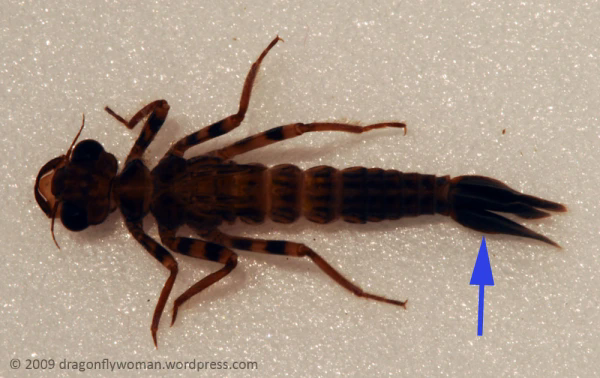
Dragonfly nymphs are formidable aquatic predators. Their hinged lower mouthpart, the labium, can extend rapidly to seize prey. Depending on the species and the nymph’s size, prey may include aquatic insect larvae, small crustaceans, worms, tadpoles and small fish.
In a small fishless pond, a large dragonfly nymph may be among the dominant invertebrate predators. In that restricted sense, it can occupy the top invertebrate tier of the local food web. However, the same nymph may still be eaten by frogs, newts, waterbirds, larger odonate larvae or other aquatic predators. When fish are present, they often become important predators of dragonfly nymphs and can influence which dragonfly species persist in the habitat.[6]
The most defensible conclusion is therefore conditional: some dragonfly nymphs can function as local top predators in small, fishless aquatic systems, but they are not automatically apex predators in every pond.
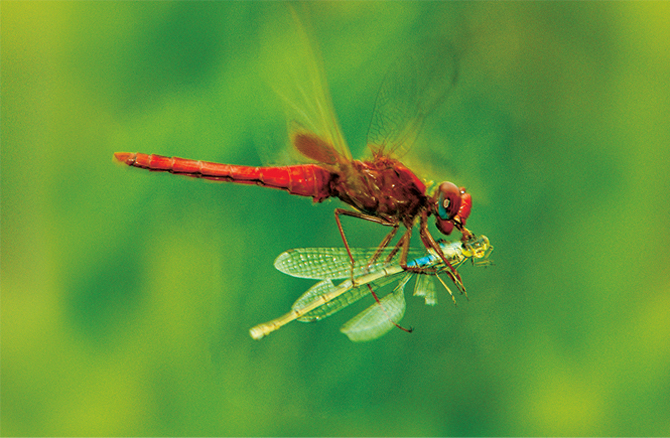
What animals eat dragonflies?
The clearest reason dragonflies are not universal apex predators is that many animals eat them. The predator list changes between the aquatic nymph and flying adult stages.
Predators of dragonfly nymphs
- Fish
- Frogs, toads and newts
- Ducks, herons and other waterbirds
- Larger dragonfly nymphs
- Predatory aquatic insects and water spiders
Predators of adult dragonflies
- Insect-eating birds
- Spiders, especially around vegetation and webs
- Robber flies and other large predatory insects
- Larger dragonflies
- Frogs and fish when adults fly or emerge close to water
Dragonflies may also prey on other dragonflies. This is intraguild predation: one predator consumes another predator that uses some of the same food resources. Cannibalism can occur in both larval and adult odonates, further showing that “top predator” is not a simple species-wide label.
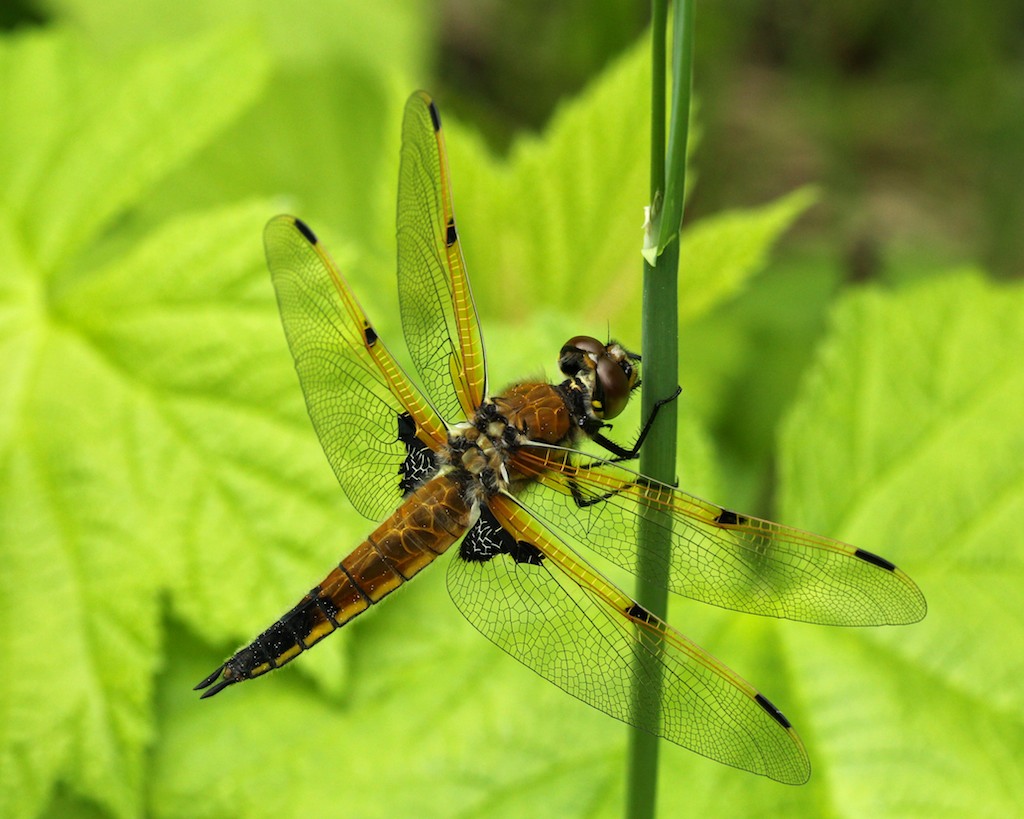
Do dragonflies control mosquito populations?
Dragonflies do eat mosquitoes. Adults capture flying mosquitoes and other small insects, while nymphs may eat mosquito larvae in freshwater. This makes dragonflies part of the natural predator community that acts on mosquitoes.
However, claims such as “one dragonfly eats 100 mosquitoes every day” should not be treated as a universal biological rule. Feeding rates vary with dragonfly species, body size, temperature, prey density, habitat and alternative prey. Midges and other flies may be more abundant than mosquitoes and can form a substantial part of the diet.
Dragonflies can contribute to mosquito mortality, but their presence does not guarantee population control at a human-relevant scale. Habitat management and removal of unwanted standing water remain more reliable than depending on a single predator species.
Accurate wording: dragonflies are natural mosquito predators, but they are generalist hunters rather than dedicated mosquito-control agents.
What do dragonflies reveal about ecosystem health?
Dragonflies depend on freshwater during their immature stage, and different species require different combinations of water flow, vegetation, temperature, chemistry and substrate. For that reason, odonate communities can be useful in freshwater assessment and conservation research.[5]
A single adult flying through a garden is not proof that nearby water is clean. Strong ecological interpretation usually requires species-level identification, repeated surveys and habitat data. The value comes from the composition of the community and its change over time, not from a simple “dragonflies present equals healthy water” rule.
Dragonflies also connect aquatic and terrestrial ecosystems. Nymphs consume aquatic prey; emerging adults carry biomass onto land; and adults then become prey for terrestrial predators. Their ecological importance comes partly from being both consumer and food source.
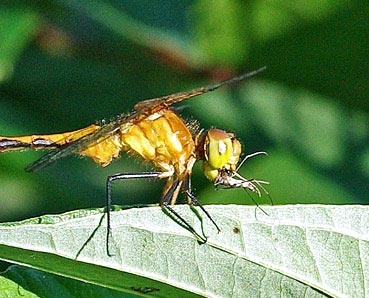
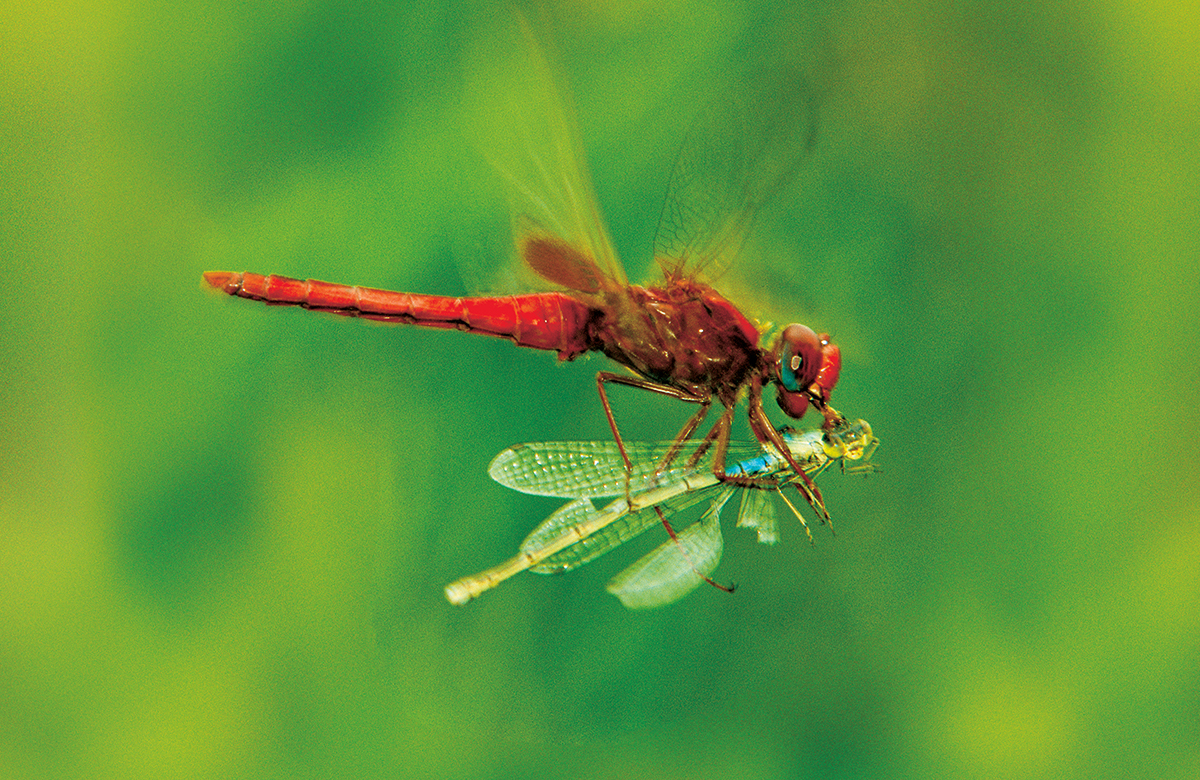
Final verdict: are dragonflies apex predators?
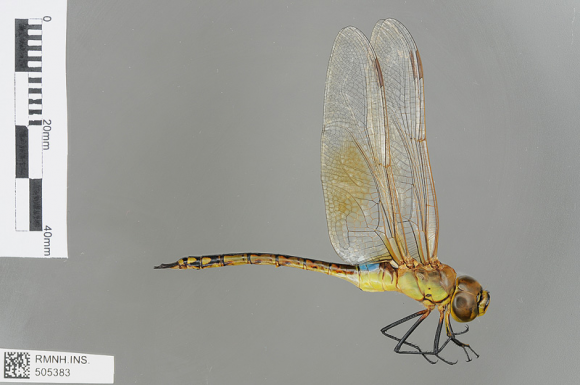
Dragonflies are not generally apex predators. They are highly capable predators that often occupy an upper position among insects, but they remain prey for fish, amphibians, birds, spiders and other insects.
Adult dragonflies are best described as efficient aerial insect predators or mesopredators in a broader food web. Dragonfly nymphs are major aquatic predators and may become locally dominant in fishless water bodies. The answer therefore depends on the boundaries of the food web, the species, the life stage and which larger predators are present.
The scientifically precise answer is more useful than calling dragonflies “nature’s ultimate predator”: they are exceptionally efficient hunters, but efficiency is not the same as apex status.
Frequently asked questions
Are dragonflies apex predators in the insect world?
Not as a universal rule. Dragonflies are high-level insect predators, but larger dragonflies, robber flies, spiders, birds and other animals prey on them. “Apex” must be defined within a specific food web.
Can a dragonfly nymph be an apex predator?
A large nymph may act as the top invertebrate predator in a small fishless pool. It may still be eaten by amphibians, birds or other predators, so the label remains local and conditional.
Do dragonflies really catch 95% of their prey?
Some controlled studies recorded capture success near 95–97% for particular dragonflies and prey. That figure is not a universal rate for every dragonfly species or natural hunting situation.
What do adult dragonflies eat?
Adults mainly eat flying insects, including midges, flies, mosquitoes, moths, small bees or wasps, damselflies and smaller dragonflies. Diet varies with species, size, habitat and prey availability.
What eats adult dragonflies?
Adult dragonflies are eaten by insectivorous birds, spiders, robber flies, larger dragonflies, frogs and sometimes fish when they fly close to the water.
Are dragonflies good for controlling mosquitoes?
They eat mosquitoes and mosquito larvae, so they contribute to natural predation. They are generalist predators, however, and should not be treated as a guaranteed stand-alone mosquito-control method.
Continue exploring dragonfly biology
References and further reading
- Combes, S. A., Salcedo, M. K., Pandit, M. M., & Iwasaki, J. M. (2013). Capture Success and Efficiency of Dragonflies Pursuing Different Types of Prey . Integrative and Comparative Biology.
- Olberg, R. M., Worthington, A. H., & Venator, K. R. (2000). Prey pursuit and interception in dragonflies . Journal of Comparative Physiology A.
- Mischiati, M., Lin, H.-T., Herold, P., Imler, E., Olberg, R., & Leonardo, A. (2015). Internal models direct dragonfly interception steering . Nature.
- Gonzalez-Bellido, P. T., Peng, H., Yang, J., Georgopoulos, A. P., & Olberg, R. M. (2012). Eight pairs of descending visual neurons in the dragonfly give wing motor centers accurate population vector of prey direction . Proceedings of the National Academy of Sciences.
- May, M. L. (2019). Odonata: Who They Are and What They Have Done for Us Lately—Classification and Ecosystem Services of Dragonflies . Insects.
- Johansson, F., & Brodin, T. (2003). Effects of Fish Predators and Abiotic Factors on Dragonfly Community Structure. Journal of Freshwater Ecology, 18(3), 415–423.
- Bybee, S. M., Córdoba-Aguilar, A., Duryea, M. C., Futahashi, R., Hansson, B., Lorenzo-Carballa, M. O., Schilder, R., Stoks, R., Suvorov, A., Svensson, E. I., Swaegers, J., Takahashi, Y., Watts, P. C., & Wellenreuther, M. (2016). Odonata as a bridge between ecology and evolutionary genomics . Frontiers in Zoology.
- University of Florida IFAS. Dragonflies and Damselflies (Odonata) .