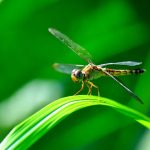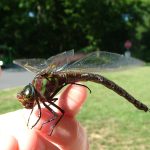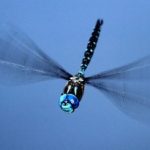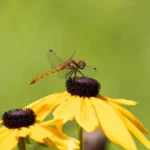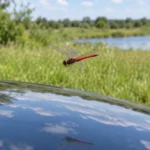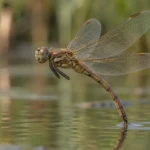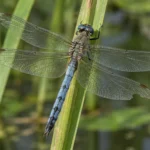
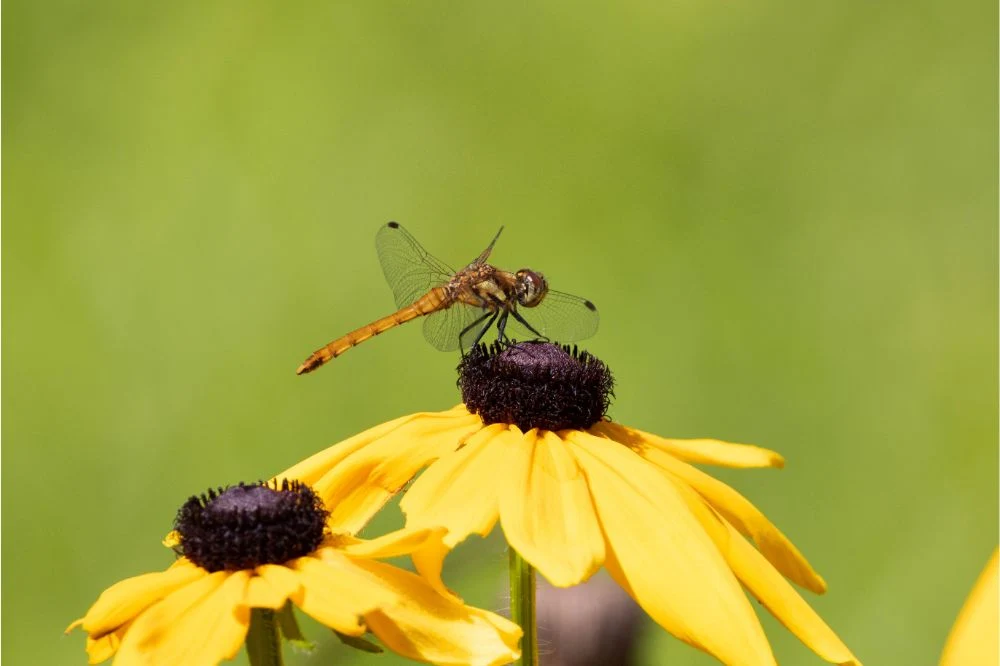
No, dragonflies do not pollinate flowers. Adult dragonflies are predators that catch other insects, mostly in flight. They don’t feed on nectar or pollen, so they have no reason to travel from one flower to the next the way bees and butterflies do. A dragonfly sitting on a flower is almost always using it as a perch.
The same is true of damselflies, their close relatives in the order Odonata. Neither group is counted among the animals that pollinate plants.
Why Dragonflies Aren’t Pollinators
Pollination happens when an animal carries pollen from one flower to another, usually while it is visiting flowers for food. Dragonflies lack the habits and the body features that make this work.
They eat insects, not nectar. Adult dragonflies are carnivores. They hunt by sight and seize small flying insects with their legs. Their mouthparts are strong chewing jaws (mandibles) for biting prey. They have no straw-like tongue for drinking nectar like a butterfly’s. The order name Odonata comes from the Greek word for “tooth,” a reference to those jaws. For a full picture of what adults and nymphs eat, see our dragonfly diet guide.
They have no reason to move between flowers. Bees, butterflies, many flies and some beetles visit flower after flower because each one offers food. Pollen moves along with them. Flowers offer a dragonfly nothing to eat, so it never builds up that pattern of repeated visits.
Their bodies aren’t built to carry pollen. Many bees have branched hairs that catch pollen grains easily, and many also have special areas on their legs or bodies for carrying pollen loads. Dragonflies have nothing like this.
Their young live underwater. A dragonfly spends most of its life as an aquatic nymph (larva) in a pond, stream or wetland. Nymphs never come into contact with flowers. The dragonfly life cycle runs egg → aquatic nymph → adult, and only the adult stage is spent in the air.
Why You See Dragonflies on Flowers
Seeing a dragonfly on a flower is still common, especially in gardens near water. The usual reasons have nothing to do with feeding on the plant:
- A lookout perch. Many dragonflies hunt from a perch. They sit on a tall stem, a seed head or a flower, dart out to catch passing insects, and often return to the same spot. A flower held up high on a stalk makes a good vantage point.
- Hunting near prey. Flowers attract small insects, and small insects attract predators. A dragonfly may stay in a flower bed because food is flying past.
- Resting and warming up. Dragonflies need warmth to fly well. They often rest in sunny, open spots, and flowers in a sunny garden fit that description.
Could a Dragonfly Move Pollen by Accident?
In theory, a dragonfly landing on an open flower might pick up a few pollen grains. Nothing suggests this matters to plants, though. The sources reviewed for this article contain no evidence of dragonflies regularly transferring pollen between flowers of the same species, which is what pollination requires. Pollinator guides from extension services list bees, wasps, butterflies, moths, flies, beetles, birds and bats, but not dragonflies.
Predator, Not Partner: Dragonflies and Pollinating Insects
Dragonflies don’t help flowers reproduce, and sometimes they do the opposite. Some of the insects they catch are pollinators.
Large dragonflies, including some hawkers and darners (family Aeshnidae), are known to catch honey bees. Beekeepers have reported losses near hives in several countries. Accounts in beekeeping literature describe these episodes as rare, seasonal and limited to a few places, not an everyday threat to colonies. The diet guide explains how bees fit into dragonfly diets more generally.
The best-known study of this effect comes from Florida. Researchers compared eight ponds at a University of Florida preserve: four with fish and four without. Fish eat dragonfly nymphs, so ponds with fish produced fewer adult dragonflies. Fish-free ponds had more than twice as many large adult dragonflies nearby. Shoreline plants of Hypericum fasciculatum, a St. John’s wort, growing near the fish ponds got more pollinator visits and were less limited by a shortage of pollen. Bees made up most of the visitors near the fish ponds. Near the fish-free ponds, flies made up most of the visitors. The team reported similar results with a second plant, Sagittaria latifolia. The study was published in Nature in 2005.
Keep this result in context. It shows that, in one wetland system, adult dragonflies reduced pollination for plants near the ponds they emerged from. It doesn’t mean dragonflies harm gardens in general, and it isn’t a reason to drive them away. In a healthy ecosystem, predators and pollinators coexist.
What About Damselflies?
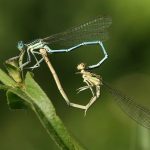
Damselflies (suborder Zygoptera) are not true dragonflies (suborder Anisoptera), but the answer for them is the same. Adult damselflies are small predators of other insects, their nymphs are aquatic, and they are not pollinators. You’ll often see them resting on plant stems and flowers near water for the same reasons dragonflies do.
Do Dragonflies Still Benefit a Garden?
Dragonflies play other roles, even though pollination isn’t one of them. Adults eat many small flying insects, including midges, flies and mosquitoes. Nymphs are important predators in ponds. Each emerging adult also carries energy from the water into the food web on land, where birds and other animals eat them.
Be careful with claims about pest control. Dragonflies do eat mosquitoes, but studies rarely show adults taking enough of them to reduce a local mosquito population in a measurable way. Our article on whether dragonflies can control mosquitoes looks at the evidence in more detail.
Can a Garden Support Dragonflies and Pollinators?
Yes. Most gardens can support both groups. Dragonflies need water to breed, and pollinators need flowers, so the two needs complement each other:
- Water for dragonflies. A pond with shallow edges and plants growing up out of the water gives nymphs a place to live and gives emerging adults something to climb. Our dragonfly habitat guide covers what different species need.
- Flowers for pollinators. Plant a variety of flowers that bloom at different times of year.
- Skip the pesticides. Insecticides can harm pollinators, dragonflies and the prey dragonflies rely on.
A dragonfly will sometimes catch a bee or a butterfly in a garden like this. That is ordinary predator-prey behavior. It isn’t a sign that something is wrong.
Frequently Asked Questions
Do dragonflies drink nectar?
No. Adult dragonflies eat other insects, and their chewing mouthparts aren’t adapted for drinking nectar.
Is a dragonfly on my flower harming the plant?
No. It is using the flower as a perch and doesn’t feed on the plant. It may catch insects visiting the flower.
Do dragonflies eat bees?
Some do, especially larger species. Bees are an occasional prey item, not the main diet of dragonflies in general.
What insects actually pollinate flowers?
Bees are the best-known pollinators. Flies (including hoverflies), butterflies, moths, beetles and wasps also pollinate flowers, and so do some birds and bats.
Are dragonflies good to have around?
Yes. They are native predators, an important part of freshwater food webs, and a sign that clean water with suitable habitat is nearby. To learn more about their role as hunters, see are dragonflies the top insect predator?
Sources and Further Reading
- Knight, T. M., McCoy, M. W., Chase, J. M., McCoy, K. A., & Holt, R. D. (2005). Trophic cascades across ecosystems. Nature, 437, 880–883.
- May, M. L. (2019). Odonata: Who they are and what they have done for us lately. Insects, 10(3), 62.
- University of Florida News (2005) and Washington University in St. Louis The Source (2005): press releases on the Florida pond study.
- CSIRO Australian National Insect Collection: Odonata overview.
- University of Arizona Cooperative Extension, Backyard Gardener: “Dragonflies and Damselflies” (2024).
- Phipps, J. (2019). “What’s Eating My Bees? Part 2.” American Bee Journal, 159(3).