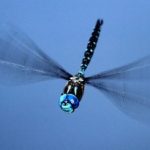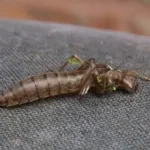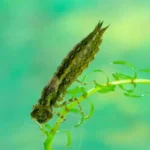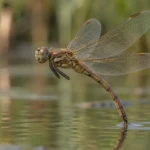
Dragonfly nymphs spend their early lives underwater, often for months or even years. But how do dragonfly nymphs breathe underwater without lungs or the obvious external gills of a fish? The answer lies in a remarkable respiratory system hidden inside the rear of their bodies.
Dragonfly nymphs breathe underwater using internal rectal gills. They draw water through an opening at the end of their abdomen, extract dissolved oxygen through specialized respiratory surfaces, and expel the water again. The same system can even produce a powerful jet that helps them swim away from danger.
This unusual adaptation allows young dragonflies to live, hunt, grow, and develop in freshwater habitats long before they become the flying insects we recognize.
How Do Dragonfly Nymphs Breathe Underwater?
Unlike adult dragonflies, which breathe atmospheric air through openings called spiracles, aquatic dragonfly nymphs normally obtain the oxygen they need from surrounding water.
They accomplish this through a process known as rectal gill respiration. The rear portion of the digestive tract is modified into a specialized chamber containing internal gill surfaces. Muscular movements repeatedly bring water into contact with these surfaces.
The Underwater Breathing Process, Step by Step
- Water enters the abdomen. Muscular movements draw surrounding water through the anus into a specialized chamber near the end of the digestive tract.
- Water passes over internal gills. The chamber contains numerous thin, folded respiratory surfaces associated with the insect’s tracheal system.
- Oxygen enters the respiratory system. Dissolved oxygen diffuses across the thin gill surfaces into fine air-filled tubes called tracheae and tracheoles, which deliver oxygen to tissues.
- Water is expelled. The nymph pushes the water back out through the same opening, allowing another cycle to begin. Carbon dioxide also moves out of the body through respiratory surfaces.
The movement of water into and out of the same opening is called tidal ventilation. It is an unusual respiratory strategy for an aquatic animal because water is much denser and more difficult to move than air.

What Are Rectal Gills?
Rectal gills are specialized respiratory structures found inside the hindgut of dragonfly nymphs. The modified chamber is sometimes called the branchial basket.
Its internal walls contain thin folds closely associated with branching tracheal tubes. These folds provide a substantial surface for exchanging gases between the water and the insect’s respiratory system.
Oxygen moves from an area of higher oxygen partial pressure in the surrounding water toward the lower oxygen partial pressure inside the respiratory system. This movement is called diffusion.
Although the chamber is associated with the digestive tract, its respiratory function is distinct from digestion. The insect does not obtain oxygen by drinking water or by digesting it.
Instead, the chamber temporarily holds and circulates water so dissolved oxygen can cross the gill surfaces.
Why Are the Gills Inside the Body?
Internal gills allow the nymph to exchange gases without having large, exposed respiratory appendages. Dragonfly larvae occupy many different freshwater environments, including places with submerged plants, mud, sand, stones, and aquatic debris.
However, internal gills are not automatically superior to external gills. Both are effective adaptations in different groups of aquatic insects.
The distinctive feature of dragonfly nymphs is that their respiratory chamber also serves a second purpose: rapid movement through water.
How Dragonfly Nymphs Use Their Breathing System for Jet Propulsion
One of the most fascinating aspects of dragonfly nymph anatomy is that the mechanism used for breathing can also work as a miniature water-jet engine.
During ordinary respiration, abdominal contractions move water through the chamber in repeated cycles. But when a nymph needs to move quickly, it can expel water much more forcefully.
The resulting jet pushes the body in the opposite direction, producing a short burst of movement.
This is known as jet propulsion.
Jet propulsion can help a dragonfly nymph:
- Escape an approaching aquatic predator.
- Move rapidly away from a disturbance.
- Reposition itself within its underwater habitat.
- Make a sudden burst of movement when ordinary crawling or swimming is insufficient.
Research has also demonstrated that the structures around the anal opening can influence the shape and direction of the expelled water jet.
Importantly, a nymph does not need to launch itself forward with every breath. Routine respiratory pumping and powerful escape jets are different uses of the same anatomical system.
Do Dragonfly Nymphs and Damselfly Nymphs Breathe the Same Way?
Dragonflies and damselflies both belong to the insect order Odonata, and both have aquatic juvenile stages. However, their typical respiratory structures are noticeably different.
| Feature | Dragonfly Nymphs | Damselfly Nymphs |
|---|---|---|
| Primary gill location | Inside a modified rectal chamber | Usually three external gill-like lamellae at the abdomen tip |
| Gill visibility | Internal gills are not normally visible | Tail lamellae are usually easy to see |
| Water movement | Water is pumped into and out of the rectal chamber | Water flows over external respiratory surfaces |
| Rapid movement | Can use rectal jet propulsion | Can swim using body movements and tail appendages |
| Typical body form | Often robust or relatively broad | Usually more slender |
If an aquatic insect has three long, leaf-like structures at the end of its abdomen, it is more likely to be a damselfly nymph than a dragonfly nymph. There are exceptions and variations, so identification should consider additional anatomical features.
For a broader guide to aquatic dragonfly anatomy, identification, feeding, and development, read our dragonfly larvae guide.
How Do Dragonfly Nymphs Breathe When Oxygen Levels Are Low?
Dragonfly nymphs depend on oxygen in their environment, but the amount of dissolved oxygen in freshwater is not constant.
Water temperature, biological activity, mixing, flow, and decomposition can all influence oxygen availability. Warm water generally holds less dissolved oxygen at saturation than cold water, while heavy microbial decomposition may consume oxygen faster than it is replenished.
When oxygen becomes scarce, many dragonfly nymphs can adjust their respiratory activity.
They Increase Their Ventilation Rate
A 2024 study published in Proceedings of the Royal Society B examined how dragonfly nymphs respond to progressively lower oxygen levels.
The researchers observed that the tested nymphs increased the frequency of their ventilation movements as oxygen availability declined.
In simple terms, they pumped water through their respiratory chamber more frequently to compensate for reduced oxygen availability.
The study also found that the nymphs maintained relatively stable oxygen extraction efficiency across the experimental oxygen treatments.
This does not mean that dragonfly nymphs can survive without oxygen. Increasing ventilation requires energy, and severe or prolonged oxygen deficiency can still threaten survival.
Different species and developmental stages may also differ in their tolerance of low-oxygen conditions.
Can Dragonfly Nymphs Breathe Air?
Although dragonfly nymphs are primarily aquatic, the answer is more complicated than a simple no.
During most of their underwater development, their rectal gills provide the oxygen needed for survival. However, research has demonstrated that certain dragonfly nymphs can also obtain oxygen from air under particular conditions.
Air Breathing Near the Final Molt
As a dragonfly approaches its final transformation into a winged adult, changes occur in its respiratory system.
Research published in the Journal of Insect Physiology in 2020 found that late-final-instar nymphs from the dragonfly families Aeshnidae and Libellulidae developed functional thoracic spiracles before emergence.
Some of these nymphs could exchange gases with the air while part of their bodies remained underwater.
The study also documented aerial gas exchange through the rectal gill system in certain aeshnid nymphs, including responses to low oxygen.
These findings show that the transition between breathing water and breathing air can begin before the final molt.
Nevertheless, these abilities should not be assumed to occur identically in every species or at every developmental stage.
For a detailed explanation of the transition from aquatic nymph to flying adult, see our dragonfly life cycle guide.
Can You See a Dragonfly Nymph Breathing Underwater?
Sometimes, but the process can be surprisingly difficult to observe.
Because the gills are internal, you will not see the large gill movements associated with many fish or the visible tail gills of most damselfly nymphs.
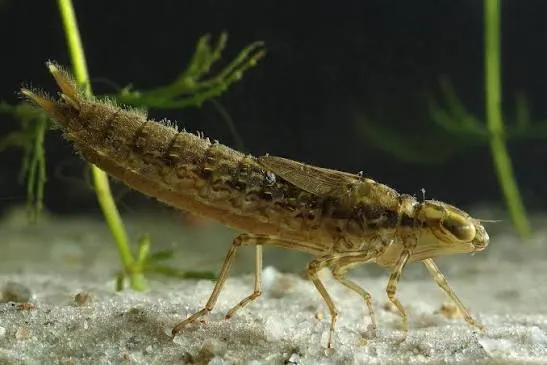
Instead, you may notice subtle movements near the abdomen as the nymph pumps water through its rectal chamber.
A resting nymph may appear almost completely motionless between movements, especially when it is concealed among vegetation or sediment.
What Should You Look For?
- Small, repeated movements of the abdomen while the nymph is resting.
- Occasional changes in posture associated with water movement.
- Sudden bursts of movement caused by forceful water expulsion.
- Repeated repositioning within submerged plants or other cover.
None of these behaviors alone is a reliable measurement of respiratory rate or proof that the surrounding water contains insufficient oxygen.
Handling or disturbing the insect may also change its behavior, so quiet observation is preferable.
Why Is Dissolved Oxygen Important in Dragonfly Nymph Habitats?
Dragonfly nymphs live in a wide variety of freshwater environments, from still ponds and marshes to rivers and streams. Their respiratory anatomy enables them to remain submerged while feeding and growing.
But the availability of oxygen still helps determine whether a habitat can support normal activity and development.
Several environmental factors are especially important:
- Water temperature: Higher temperatures generally reduce oxygen solubility while also affecting the metabolism of aquatic animals.
- Water movement: Mixing and turbulence can promote oxygen exchange with the atmosphere, although actual oxygen levels depend on several factors.
- Organic decomposition: Microorganisms breaking down organic matter consume oxygen and may produce low-oxygen conditions.
- Aquatic plants: Photosynthesis can add oxygen during daylight, while plant and microbial respiration consume oxygen, including at night.
- Species-specific adaptations: Nymphs from different habitats may vary in their tolerance of oxygen fluctuations.
It would be misleading to say that all dragonfly nymphs require perfectly clear or fast-flowing water. Some are adapted to vegetated ponds or muddy habitats, while others live in flowing water.
Respiratory needs should therefore be considered alongside the ecology of the particular species.
If you have discovered an unidentified aquatic insect in a tank, our guide to a dragonfly nymph in an aquarium explains how to recognize it and why it may pose risks to smaller tank inhabitants.
Frequently Asked Questions
Do dragonfly nymphs have gills?
Yes. Dragonfly nymphs possess internal rectal gills associated with a specialized chamber in the hindgut. These gills extract dissolved oxygen from water as it is pumped through the chamber.
Do dragonfly nymphs breathe through their tails?
In everyday language, you could describe it that way. Water enters and exits through the anus at the rear of the abdomen. However, the actual oxygen exchange occurs across internal gill surfaces rather than through an external tail.
Do dragonfly nymphs need to come up for air?
Normally, aquatic nymphs can obtain oxygen from the water without repeatedly visiting the surface. Some species, particularly near their final molt or during low-oxygen conditions, can also obtain oxygen from air.
How long can a dragonfly nymph stay underwater?
Dragonfly nymphs may spend months or years developing underwater, depending on their species and environment. There is no single maximum duration between visits to the surface because their usual respiratory system obtains oxygen directly from water.
Can dragonfly nymphs breathe underwater without oxygen?
No. Their gills extract oxygen dissolved in water; they do not create oxygen. Severe oxygen depletion can eventually prevent them from meeting their respiratory needs, even if they increase their ventilation movements.
Do dragonfly nymphs use jet propulsion to breathe?
They use the same rectal chamber for both functions. Gentle, repeated water movements support respiration, while forceful water expulsion can generate a jet that moves the nymph rapidly through water.
Can dragonfly nymphs survive outside water?
Some nymphs can tolerate temporary exposure to air, particularly as they prepare for emergence. However, tolerance varies by species and developmental stage. It is not safe to assume that an aquatic nymph can survive prolonged exposure to dry conditions.
The Bottom Line
So, how do dragonfly nymphs breathe underwater? They use internal rectal gills to extract dissolved oxygen from water pumped through a specialized chamber at the rear of the body.
This respiratory system is remarkable because it performs two different functions. Repeated water movement provides oxygen for underwater life, while powerful water expulsion can propel the nymph away from danger.
As the insect approaches adulthood, its respiratory system also undergoes important changes that prepare it for life above the water.
The result is one of the most distinctive aquatic respiratory adaptations among insects: a hidden breathing system that also doubles as a means of propulsion.
How This Article Was Prepared
This educational guide was prepared by reviewing university entomology materials, a government wildlife identification resource, and peer-reviewed research on dragonfly respiratory physiology. It distinguishes well-established aquatic breathing mechanisms from species-dependent air-breathing adaptations. No original laboratory measurements or field observations are claimed.
References
- North Carolina State University. General Entomology, Aquatic Respiration. Educational material explaining internal rectal gills, water circulation, and jet propulsion in dragonfly nymphs.
- Missouri Department of Conservation. Dragonfly Larvae. Field guide describing dragonfly larval anatomy, internal gills, and aquatic locomotion.
- Lee, D. J., & Matthews, P. G. D. (2024). Oxygen extraction efficiency of the tidally-ventilated rectal gills of dragonfly nymphs. Proceedings of the Royal Society B, 291, 20231699. DOI: 10.1098/rspb.2023.1699.
- de Pennart, A., & Matthews, P. G. D. (2020). The bimodal gas exchange strategies of dragonfly nymphs across development. Journal of Insect Physiology, 120, 103982. DOI: 10.1016/j.jinsphys.2019.103982.
- University of Hong Kong. Freshwater Macroinvertebrates in Hong Kong: Odonata. Educational identification resource describing dragonfly and damselfly larval respiratory anatomy.