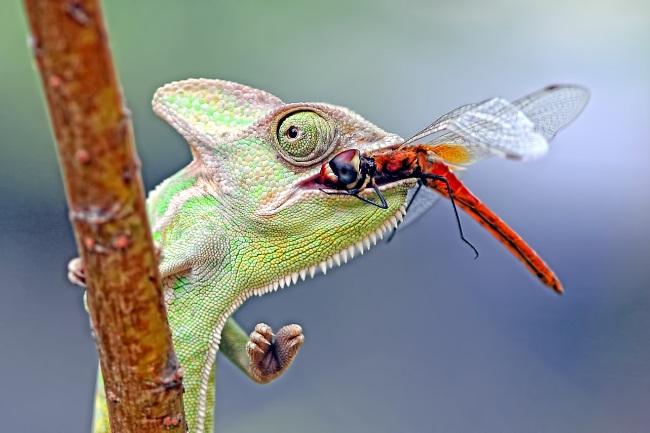
What Eats Dragonflies? Predators of Eggs, Nymphs and Adults
A dragonfly crosses two very different environments during its life. Its egg and nymph stages are associated with freshwater, while the winged adult lives mainly above water and on surrounding land. Each transition exposes it to a different set of predators.
“Predators” is also more scientifically accurate than “enemies.” A fish does not have to be hostile to a dragonfly nymph; it is simply feeding. Parasites, pathogens and human-caused environmental changes may also harm dragonflies, but they are not all forms of predation.
Dragonfly Predators at a Glance
| Life stage | Possible predators or mortality agents | Important qualification |
|---|---|---|
| Egg | Aquatic animals may consume exposed eggs; concealed eggs may also be vulnerable to specialized natural enemies | Dragonfly egg mortality is difficult to observe, and evidence differs among egg-laying strategies |
| Small nymph | Fish, amphibian larvae, aquatic insects, crustaceans and larger odonate nymphs | The predator community depends strongly on the water body |
| Large nymph | Fish, large aquatic insects, crayfish, amphibians, waterbirds and larger dragonfly nymphs | A large nymph is a formidable predator but is not immune to being eaten |
| Emerging dragonfly | Birds, spiders, ants, amphibians and occasional predatory insects | Mobility is restricted while the adult leaves the larval skin |
| Teneral adult | Birds, spiders, frogs, lizards and larger predatory insects | The wings and body are still soft, and flight performance may be limited |
| Mature adult | Birds, spiders, frogs, lizards, larger dragonflies and large predatory insects | No predator group is dominant in every habitat or region |
A Simplified Dragonfly Predator Web
This diagram shows when predator exposure changes. It is not a ranking of predators and does not imply that every dragonfly species encounters every animal shown on this page.
Why “Predators” Is More Accurate Than “Enemies”
In everyday language, people may call any animal that harms a dragonfly an enemy. Ecology uses more precise categories. A predator captures, kills and consumes prey. A parasite lives on or inside a host and takes resources from it, usually over a longer period. A parasitoid develops in or on one host and ultimately kills that host. A pathogen is a disease-causing biological agent, such as a fungus, bacterium or virus.
What Eats Dragonfly Eggs?
Dragonfly eggs are among the least visible parts of the life cycle. Some species release eggs into water or onto wet sediment. Others insert them into living or dead plant material. Eggs may be tiny, submerged, covered by debris or hidden inside tissue, making predation much harder to document than a bird catching an adult.
Exposed eggs may be consumed opportunistically by fish or aquatic invertebrates, but it is not appropriate to present one universal list of dragonfly egg predators. Evidence from one species, one water body or from damselflies cannot automatically be applied to all dragonflies.
Egg disappearance also does not always mean predation. Eggs may fail because they were not viable, became desiccated, experienced unsuitable water levels or did not complete development. Where egg parasitoids are reported in Odonata research, the host must be checked carefully: many better-known records concern damselflies rather than true dragonflies.
What Eats Dragonfly Nymphs?
Dragonfly nymphs are aquatic predators, but smaller individuals can become prey for many freshwater animals. Potential predators include fish, amphibian larvae or adults, diving beetle larvae and other large aquatic insects, crayfish and other crustaceans, waterbirds, and larger odonate nymphs.
Size changes the relationship. A small, newly hatched nymph may be vulnerable to predators that a large final-instar nymph could attack or repel. Large nymphs can still be swallowed by fish, captured by birds or overwhelmed by larger aquatic predators.
Cannibalism also occurs. A larger dragonfly nymph may eat a smaller member of its own species, while one dragonfly species may prey on another. This makes the same animal both predator and prey within the aquatic food web.
Why Fish Matter in Some Habitats
Fish can create strong predation pressure, but “fish eat dragonfly larvae” is only the beginning of the ecological story. Some dragonfly species regularly occur in permanent lakes and ponds containing fish. They may reduce movement, use vegetation or sediment as cover, forage at different times, or possess defensive structures that make capture or handling more difficult.
Other species are more characteristic of fishless ponds, temporary pools or shallow wetlands where large fish cannot persist. In those habitats, the dominant predator may instead be another dragonfly nymph, a large aquatic insect or an amphibian.
Research has shown that dragonfly larvae can change microhabitat use when exposed to fish and that fish presence can help shape dragonfly communities. Abdominal spines provide protection against fish in some studied taxa, but not all dragonfly nymphs have the same spine arrangement or antipredator strategy.
| Predator environment | Dragonfly stages exposed | Typical setting | Why no universal rule applies |
|---|---|---|---|
| Aquatic | Eggs and nymphs | Ponds, lakes, marshes, streams and temporary pools | Fish presence, permanence, vegetation, flow and depth vary greatly |
| Water margin | Final-instar nymphs, emerging adults and tenerals | Stems, rocks, banks, tree roots and other emergence supports | Predator access changes with emergence height, timing and shoreline structure |
| Aerial or terrestrial | Teneral and mature adults | Wetland margins, woodland edges, fields and open airspace | Bird, spider, amphibian and insect communities differ by region |
Why Emergence Is a Vulnerable Stage
When development is complete, a dragonfly nymph leaves the water and anchors itself to a stem, rock, bank or other support. The adult then pulls free from the larval skin, expands its wings and allows its new exoskeleton to harden.
During part of this process, the dragonfly cannot fly away effectively. Birds may pick emerging adults from vegetation, spiders may intercept them near emergence supports, and ants or other small predators may attack an immobilized individual. Amphibians near the waterline may also capture low-positioned nymphs or adults.
Which predator matters most is site-specific. A pond study in Malta found birds to be the principal observed predators of larvae, emerging individuals and teneral adults at that location, while spiders and frogs accounted for fewer observed captures. That result should not be converted into a worldwide predator ranking.
Predators of Teneral Adults
A newly emerged dragonfly is called a teneral adult. Its body may be soft and comparatively pale, and its flight muscles, wings and exoskeleton are not yet in mature condition. The insect may remain close to its emergence site before moving into shelter or away from the water.
Teneral adults can be caught by birds, spiders, frogs, lizards and predatory insects. Poor weather can prolong the period of limited activity, but risk still depends on species, temperature, vegetation and the local predator community.
What Eats Adult Dragonflies?
Birds
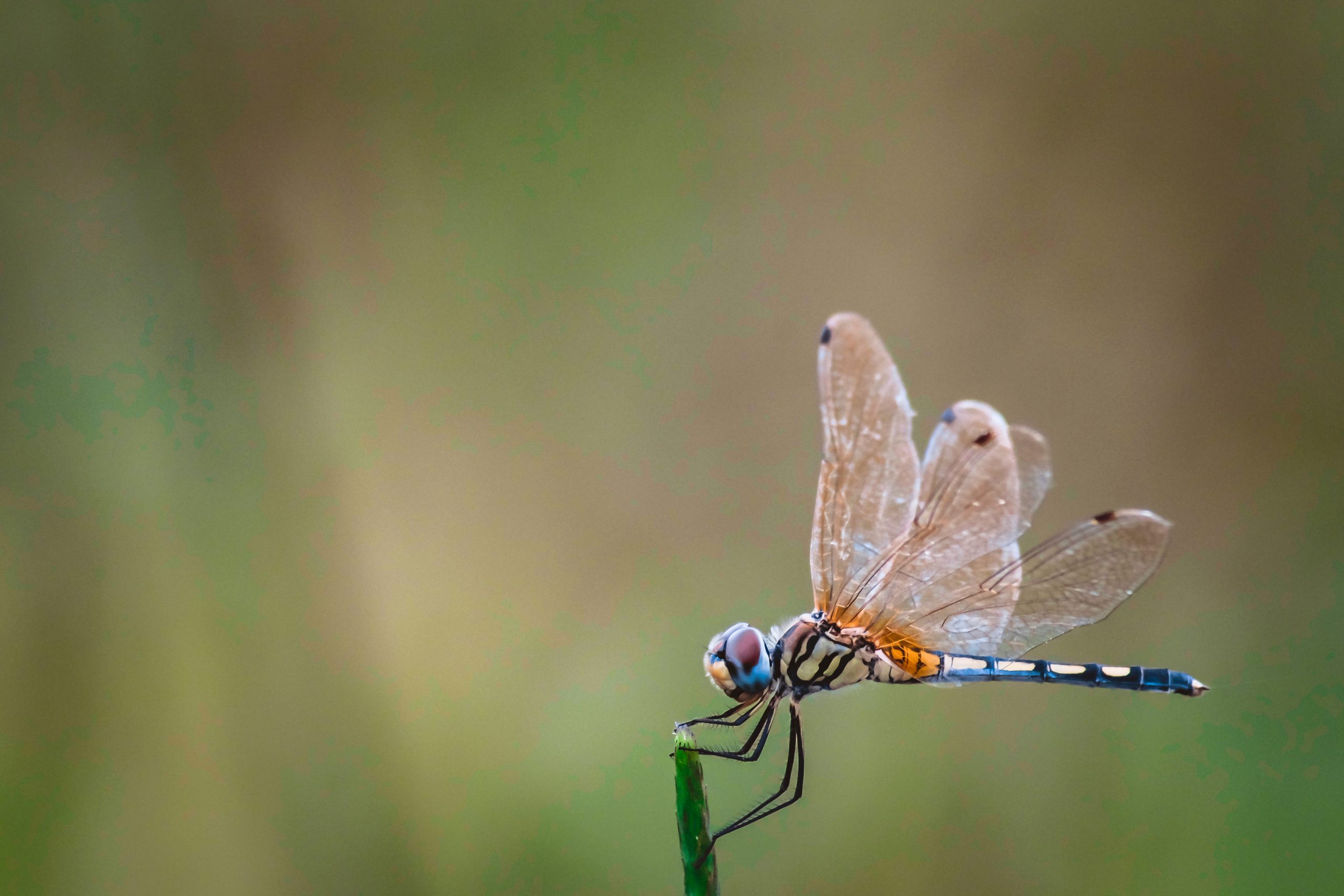
Yes, birds eat dragonflies. Insect-eating birds can take adults in flight, from exposed perches or during emergence. Falcons such as hobbies are especially well known for aerial captures, but smaller birds may also exploit dragonflies where they are abundant. A bird should not be described as too slow to catch a dragonfly simply because dragonflies are agile fliers.
Spiders
Orb webs and other aerial webs can intercept flying odonates. Hunting spiders may also capture resting or newly emerged individuals. Many published or photographed spider records involve small damselflies, so each observation should be identified before it is described specifically as dragonfly predation.
Frogs and Other Amphibians
Frogs can catch dragonflies when adults fly low, rest near the water or are temporarily restricted during emergence. Amphibians may therefore interact with more than one life stage, but they are not necessarily the leading predator in every pond.
Lizards and Large Predatory Insects
Lizards may capture perched or low-flying adults in regions where both occur. Robber flies, mantises, social wasps and other large predatory insects have also been recorded attacking odonates. These encounters are real, but their frequency varies and they should not be promoted to a universal “main predator” list without local evidence.
Do Larger Dragonflies Eat Smaller Dragonflies?
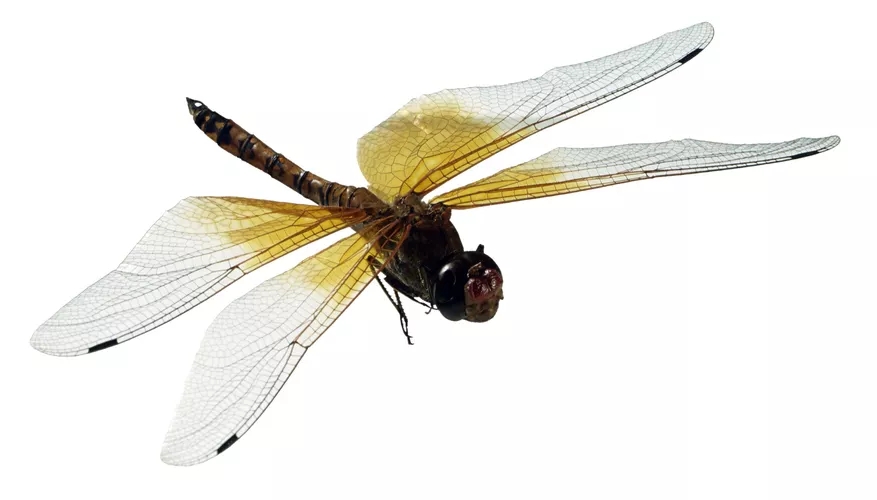
Yes. Adult dragonflies can capture smaller dragonflies, and large nymphs can eat smaller odonate nymphs. Cannibalism may occur within a species, while intraguild predation occurs when one predatory species consumes another.
This does not mean that dragonflies specialize on other dragonflies. Prey choice depends on size, opportunity, habitat and the predator’s ability to subdue the target. A full discussion of prey belongs in the dragonfly diet guide.
Dragonfly Parasites and Pathogens
Water mites are among the most visible dragonfly parasites. The parasitic larval mites may attach to an odonate around the time it transforms from an aquatic nymph into a flying adult. They feed externally and may appear as small red or orange bodies attached to the thorax, abdomen or wing bases.
Gregarines are internal protozoan parasites found in the digestive systems of various insects, including studied dragonflies and damselflies. Odonates may also host other internal parasites and encounter fungal or microbial pathogens.
Parasitism does not automatically mean that the host will die. Effects range from little detectable damage to reduced condition, performance or reproduction, depending on parasite species, parasite load, host species and environmental conditions. Broad Odonata studies must also be interpreted carefully because datasets may contain many more damselfly species than dragonfly species.
Can Carnivorous Plants Catch Dragonflies?
Carnivorous plants can occasionally trap odonates, but they should not be presented as important or widespread dragonfly predators. Sticky sundews may hold small flying insects, while aquatic bladderworts trap tiny organisms in submerged bladders.
One published bladderwort report documented early-stage coenagrionid larvae. Coenagrionidae are damselflies, not true dragonflies. That record demonstrates that a carnivorous aquatic plant can consume an odonate larva, but it does not establish carnivorous plants as common predators of dragonfly nymphs.
How Dragonflies Avoid Predators
Dragonflies do not rely on one universal defense. Their strategies change with life stage, habitat and evolutionary history.
| Defense | Life stage | How it may reduce risk | Limitation |
|---|---|---|---|
| Camouflage | Nymph | Body color and attached sediment can make a nymph difficult to detect | Appearance and effectiveness differ among habitats and taxa |
| Burrowing or hiding | Nymph | Reduces exposure in sediment, vegetation, roots or debris | Not every species is a burrower |
| Reduced movement | Nymph | May limit visual detection by fish or other predators | Behavior changes with predator type and feeding needs |
| Rapid swimming or jet propulsion | Nymph | Forceful expulsion of water can produce a rapid escape | An emergency response does not guarantee escape |
| Body spines | Some nymph taxa | May increase fish handling time or make swallowing more difficult | Spine form is not uniform across dragonflies |
| Microhabitat selection | Nymph | Vegetation, sediment or shallow water may reduce encounters | The safest habitat depends on the predator present |
| Visual detection | Adult | Large compound eyes help detect approaching objects | Webs and ambush predators may still succeed |
| Fast, maneuverable flight | Adult | Allows rapid changes in direction and escape from pursuit | Adults can still be taken by aerially agile birds and insects |
| Sheltered perching or roosting | Adult | May reduce exposure during inactivity or poor weather | Perching behavior varies by species and time of day |
Natural Predators vs. Human-Caused Threats
Humans can act as direct predators when dragonflies are deliberately caught or collected. However, habitat destruction, pollution, drainage, altered water flow and climate change are not predation. They are anthropogenic threats that can change breeding habitat, water quality, prey availability and the timing of development.
These pressures may affect an entire population even when no individual dragonfly is directly captured. Learn more about water requirements and environmental pressures in the dragonfly habitat guide.
Frequently Asked Questions
What is a dragonfly’s biggest predator?
There is no universal answer. Fish may exert strong pressure on nymphs in some permanent waters, while birds, spiders or other animals may be more important during emergence or adulthood. The answer changes with species, life stage, region and habitat.
Do birds eat dragonflies?
Yes. Birds can capture emerging, teneral and mature dragonflies. Some take them from vegetation, while agile aerial hunters can catch adults in flight. The importance of birds varies among locations.
Do fish eat dragonfly nymphs?
Yes. Fish eat dragonfly nymphs and can influence their behavior, morphology and distribution. Some dragonfly species are adapted to waters containing fish; others occur more often in fishless or temporary habitats.
Do frogs eat dragonflies?
Frogs can eat dragonfly nymphs, emerging adults or low-flying mature adults when size and opportunity allow. They should not automatically be described as the main predator in every wetland.
Do spiders catch dragonflies?
Yes. Web-building spiders may intercept flying or newly emerged dragonflies, and hunting spiders can attack resting individuals. Many spider records involve damselflies, so photographs should be identified carefully.
Do dragonflies eat each other?
Yes. Large adults may capture smaller dragonflies, and large nymphs may eat smaller nymphs. Cannibalism and predation between odonate species are parts of some freshwater and aerial food webs.
Can carnivorous plants eat dragonflies?
Incidental captures are possible, but carnivorous plants are not known as major dragonfly predators. Several commonly cited records or photographs actually involve damselflies and must be labeled accurately.
What parasites live on dragonflies?
Water mites are conspicuous external parasites of some adults. Gregarines are internal parasites, and other parasites and pathogens have also been recorded from Odonata. Infection does not always kill the host.
Are humans predators of dragonflies?
A person directly catching and consuming or collecting a dragonfly can be considered predation. Habitat loss, pollution, hydrological alteration and climate change are human-caused threats, not predation in the ecological sense.
Sources and Further Reading
- British Dragonfly Society. Life Cycle and Biology .
- British Dragonfly Society. Frequently Asked Questions .
- Pierce, C. L. (1988). Predator avoidance, microhabitat shift, and risk-sensitive foraging in larval dragonflies . Oecologia.
- Hopper, K. R. (2001). Flexible antipredator behavior in a dragonfly species that coexists with different predator types . Oikos.
- Johansson, F. and Samuelsson, L. (1994). Fish-induced variation in abdominal spine length of Leucorrhinia dubia larvae . Oecologia.
- Johansson, F. et al. (2017). Phylogeography and larval spine length of the dragonfly Leucorrhinia dubia . Ecology and Evolution.
- Gauci, C. (2020). Emergence of seven odonate species from four artificial ponds at Ghadira Nature Reserve, Malta . Journal of the British Dragonfly Society.
- Clarke, A., Prince, P. A. and Clarke, R. (1996). The energy content of dragonflies in relation to predation by falcons . Bird Study.
- Kaunisto, K. M. et al. (2018). Negative covariance between water mite and gregarine parasitism in Odonata . Ecological Entomology.
- Gonzaga da Silva, G., Poulin, R. and Guillermo-Ferreira, R. (2021). Do latitudinal and bioclimatic gradients drive parasitism in Odonata? International Journal for Parasitology.
- Martens, A. and Grabow, K. (2011). Early stadium damselfly larvae as prey of the aquatic carnivorous plant Utricularia australis . International Journal of Odonatology.