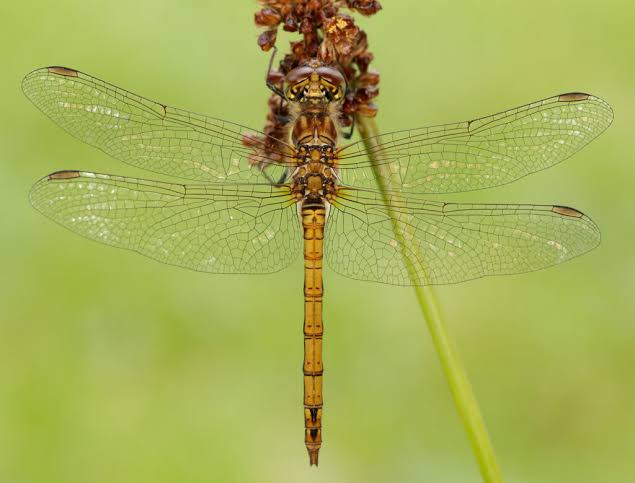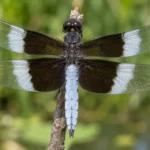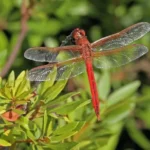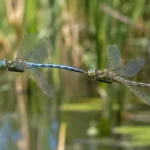
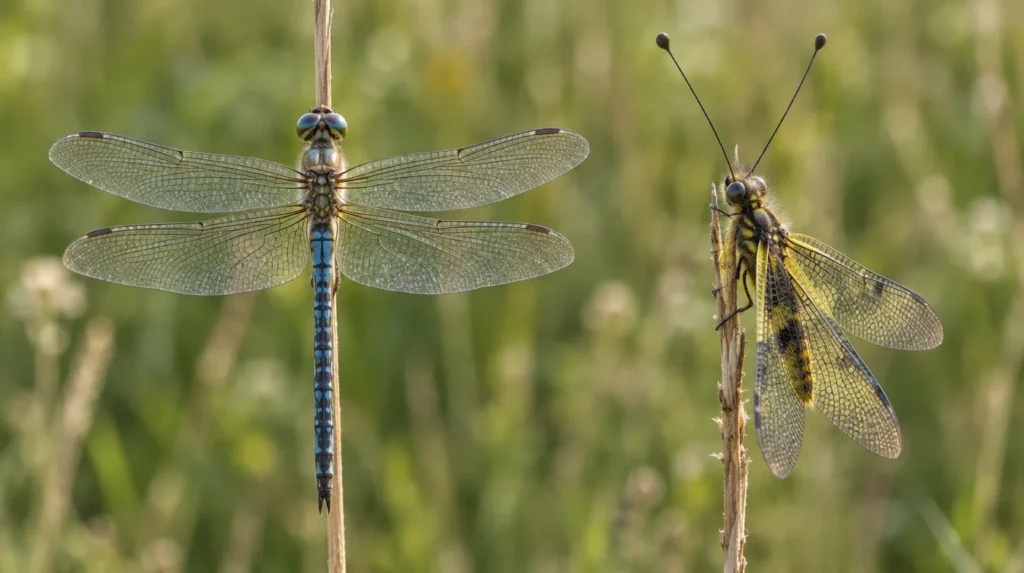
The insects most often mistaken for dragonflies are damselflies, owlflies, antlions, dobsonflies, alderflies, lacewings, mayflies, stoneflies, crane flies and robber flies. You can usually rule most of them out in seconds: a true dragonfly has four wings, tiny bristle-like antennae, no long tails, and typically rests with its wings held out flat.
A quick note on the word “bugs.” In everyday speech, any small creepy-crawly is a bug. To an entomologist, “true bugs” are a separate insect order (Hemiptera), and none of the insects on this page belong to it. This guide uses “bugs” in the everyday sense.
The Quick Check: Is It Really a Dragonfly?
Before comparing individual look-alikes, run through these five checks. They work best together, because each one has exceptions.
1. Count the wings. Dragonflies and damselflies have four wings. True flies, including crane flies and robber flies, have only two working wings. Their second pair is reduced to small knob-like structures called halteres.
2. Look at the antennae. This is the most useful single clue. Adult dragonflies have short, bristle-like antennae that are easy to miss (our guide to dragonfly antennae explains why). If the insect has long, obvious antennae—thread-like, feathery or ending in a club—it is not a dragonfly or damselfly.
3. Check how the wings sit at rest. Most true dragonflies perch with all four wings held out to the sides. Damselflies usually hold their wings together along or above the body. Many look-alikes fold their wings like a tent or roof over the back, lay them flat along the back, or hold them upright together like a butterfly.
4. Look for long tails. Adult dragonflies have only short appendages at the tip of the abdomen. Two or three long, thread-like tails point to a mayfly.
5. Look at the eyes. In most dragonflies, the large compound eyes wrap around the head and meet, or nearly meet, on top. Damselflies have eyes set wide apart at each side of the head. Clubtails are a known dragonfly exception: their eyes do not meet, although they are not as far apart as a damselfly’s. You can see this on species such as the Common Clubtail.
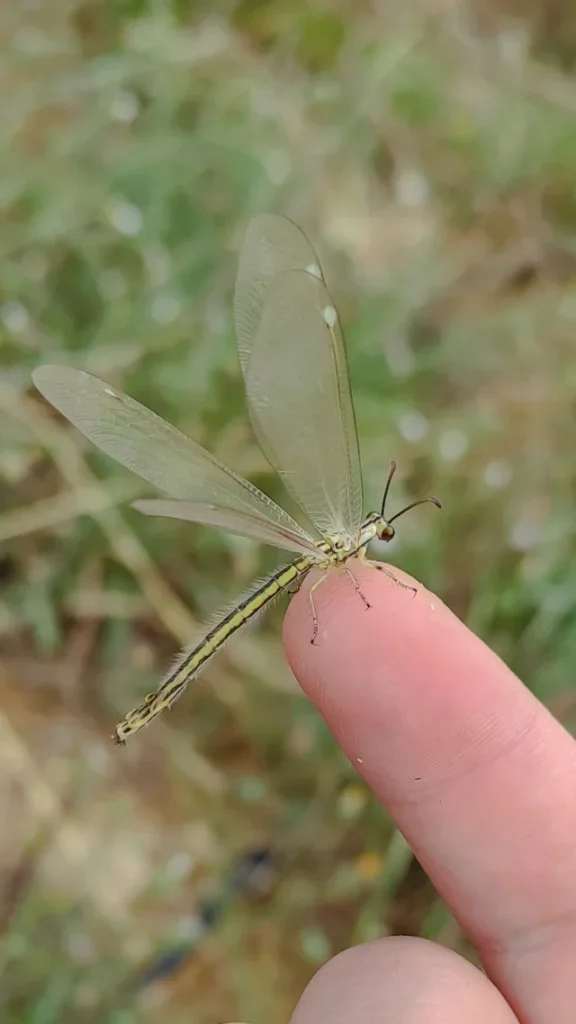
If an insect passes all five checks, it is very likely a dragonfly. From there, the dragonfly identification guide walks through the next steps toward a family or species.
Dragonfly Look-Alikes at a Glance
| Insect | Working wings | Antennae | Wings at rest | Other quick clue |
|---|---|---|---|---|
| True dragonfly | 4; hindwings broader at the base | Very short, bristle-like | Usually held out flat | Large eyes that usually meet |
| Damselfly | 4; all similar, narrow at the base | Very short, bristle-like | Usually held together along the body | Eyes widely separated |
| Owlfly | 4 | Long, ending in a club | Body pressed along a twig | Large bulging eyes; active at dusk in North America |
| Antlion | 4; often mottled | Clubbed or curved, short to medium | Variable; check the antennae | Weak, fluttering evening flight |
| Dobsonfly / fishfly | 4; large | Long; feathery or comb-like in fishflies | Folded roof-like along the body | Male dobsonflies have long tusk-like jaws |
| Alderfly | 4 | Long, thread-like | Folded roof-like | Small; active by day near water |
| Lacewing | 4; lacy | Long, thread-like | Folded roof-like | Small, often pale green with golden eyes |
| Mayfly | 4 (hindwings small, sometimes absent) | Short | Held upright together | Two or three long tails |
| Stonefly | 4 | Long, thread-like | Laid flat along the back | Weak flier near streams |
| Crane fly | 2 | Variable | Variable | Very long, fragile legs |
| Robber fly | 2 | Short | Folded down the back | “Bearded” face; perches and ambushes |
1. Damselflies: Close Relatives, Not Dragonflies
Damselflies cause more mix-ups than any other insect, and for good reason: they are close relatives. Dragonflies and damselflies both belong to the order Odonata. True dragonflies form the suborder Anisoptera, and damselflies form the suborder Zygoptera. So a damselfly is not a type of dragonfly, even though both are odonates.
How to tell them apart:
- Eyes: A damselfly’s head looks like a short dumbbell, with one rounded eye at each end. Most dragonflies have larger eyes that meet or nearly meet on top of the head.
- Wings at rest: Most damselflies hold their wings closed along the body. Most dragonflies hold them open and flat.
- Wing shape: In damselflies, the front and hind wings are similar in shape and narrow to a stalk-like base. In dragonflies, the hindwings are broader at the base than the forewings. The scientific names reflect this: Anisoptera means “unequal wings,” and Zygoptera means “paired” or “yoked” wings.
- Build: Damselflies are usually slimmer. Size alone is unreliable, though. Some damselflies, such as the demoiselles, are larger than small dragonflies.
Watch for exceptions. Spreadwing damselflies (family Lestidae) often rest with their wings partly open, and clubtail dragonflies have separated eyes. That is why it helps to check several features rather than one.
2. Owlflies: The Look-Alike With Long Clubbed Antennae
If you see what looks like “a dragonfly with long antennae,” an owlfly is a strong candidate. The Missouri Department of Conservation describes owlflies as similar to dragonflies in shape and size. They also hunt small flying insects in the air, which makes the resemblance even stronger.
What to check:
- Antennae: Owlflies have long antennae with a knob or club at the tip. Dragonfly antennae are barely visible.
- Eyes: Owlflies have large, bulging eyes. In some North American owlflies, each eye is divided by a groove.
- Resting posture: By day, owlflies rest on twigs and stems with the body pressed along the stem. Some hold the abdomen angled away from the perch, so they look like a small twig.
- Activity: Most North American owlflies are active at dusk or at night, and many come to lights. Some Old World species, such as Libelloides macaronius, fly by day.
Owlflies are not related to dragonflies. They are lacewing relatives in the order Neuroptera and are closely related to antlions. They have usually been placed in their own family, Ascalaphidae. Some recent studies group them within the antlion family instead, so you may see either arrangement. Their larvae live on land and ambush prey in leaf litter, which is very different from a dragonfly’s aquatic nymph.
3. Antlions: Slow, Fluttering Evening Flyers
Adult antlions are long, slender insects with four finely veined wings. The Missouri Department of Conservation describes them as looking like fragile, drab damselflies. Many species have brown or mottled wings, although a few are more boldly patterned.
- Antennae: Antlions have clubbed or curved antennae, roughly as long as the head and thorax together. They are shorter than an owlfly’s but far more visible than a dragonfly’s.
- Eyes: Their eyes are noticeably smaller than an owlfly’s.
- Flight: Adults flutter weakly, often on calm evenings, and are attracted to lights. Dragonflies are strong, fast daytime flyers.
Antlions are best known for their larvae. In some species, the larvae (often called doodlebugs) dig cone-shaped pits in dry sand and wait at the bottom for ants and other small insects to slide in.
4. Dobsonflies and Fishflies: Big, Night-Flying Look-Alikes
Dobsonflies are large enough to startle people. In Missouri, adult eastern dobsonflies (Corydalus cornutus) can be more than 3½ inches long, with a wingspan of about 5 inches. Fishflies are close relatives. Both belong to the order Megaloptera.
Key differences:
- Wings at rest: Dobsonflies and fishflies fold their wings lengthwise over the body like a roof. A perched dragonfly holds its wings out to the sides.
- Antennae: Both have long antennae. Fishfly antennae are often comb-like or feathery.
- Head: Male dobsonflies have very long, tusk-like mandibles. Females have short, stubby ones.
- Activity: Adults are mostly active at dusk or at night, are often found near streams, and come to lights. Their flight is slow and clumsy.
If you handle one, be gentle. According to the Missouri Department of Conservation, the males’ long jaws lack the leverage to hurt people, but females can give a painful bite. Dobsonflies are not venomous.
Their larvae, called hellgrammites, live in fast-flowing streams. They are sometimes confused with dragonfly nymphs; see the water section below.
5. Alderflies: Small, Dark and Active by Day
Alderflies are smaller members of the same order as dobsonflies. A University of British Columbia overview of the group gives their length as about 10 to 15 millimeters. Unlike dobsonflies, they are active during the day, usually near water.
- Wings at rest: Folded roof-like over the body, not held out flat.
- Antennae: Long and thread-like or bead-like.
- Flight: Slow and clumsy compared with a dragonfly’s.
6. Lacewings: Delicate Wings and Golden Eyes
Green lacewings are much smaller than most dragonflies. The Missouri Department of Conservation describes them as up to about ½ inch long. Their long, clear, net-veined wings can still give a dragonfly-like impression at a glance.
What to check:
- Wings at rest: Folded like a roof over the body.
- Antennae: Long and thread-like.
- Eyes: Often coppery or golden.
- Activity: They rest in vegetation by day, become active around sunset, and are attracted to lights.
Their larvae, sometimes called aphid lions, are well-known predators of aphids in gardens.
7. Mayflies: Upright Wings and Long Tails
Mayflies emerge from water, so they often appear in the same places as dragonflies. Like dragonflies, they also have short antennae, which means the antenna check alone will not separate them.
Key differences:
- Wings at rest: Mayflies hold their wings upright and together over the body, much like a butterfly. A dragonfly does not.
- Wing shape: The hindwings are much smaller than the forewings and are missing entirely in some species.
- Tails: Adults have two or three long, slender tails at the tip of the abdomen.
- Feeding: Adult mayflies have non-functional mouthparts and do not feed. They live only hours to a few days. Adult dragonflies are active predators.
Mayflies also have a unique winged stage called the subimago (anglers call it a “dun”). It has duller, cloudier wings and molts once more, often within a day, before becoming a fully mature adult.
8. Stoneflies: Wings Laid Flat Along the Back
Most stoneflies develop in clean, flowing streams and rivers, although some use lakes and ponds. Adults are weak fliers and tend to rest in shady spots near water.
- Wings at rest: Laid flat along the back, with the forewings covering the hindwings. Dragonflies hold theirs out to the sides.
- Antennae: Long and thread-like.
- Flight: Weak, often staying close to the water.
9. Crane Flies: The Two-Winged “Mosquito Hawk”
Crane flies are slender, long-legged flies that look like oversized mosquitoes. They are often confused with dragonflies partly because of a shared nickname. Merriam-Webster lists “mosquito hawk” as a chiefly Southern US name for a dragonfly and as a dialect name for a crane fly.
What gives it away:
- Wings: Crane flies have only two working wings. Like other true flies, their hind pair is reduced to halteres.
- Legs: Their legs are extremely long and fragile and break off easily.
Despite the nickname, crane flies do not eat mosquitoes and do not bite. Mississippi State University Extension notes that adults either do not feed or take only nectar and other liquids. Dragonflies, by contrast, really do catch flying insects, and our article on whether dragonflies control mosquitoes looks at how much that actually matters.
10. Robber Flies: Two-Winged Aerial Hunters
Robber flies hunt much like dragonflies. They perch in open areas, scan the air, dart out to catch flying insects, and often return to the same perch. Many have a long, tapering abdomen, which adds to the resemblance.
- Wings: Two working wings, not four. At rest, they fold them down the back.
- Face: Many robber flies have a bristly “beard” on the face.
- Eyes: The head has a dip between the two large eyes. A dragonfly’s eyes usually meet or nearly meet on top.
Robber flies even prey on dragonflies’ relatives. The Missouri Department of Conservation lists damselflies and their relatives among the prey of one group, the hanging thieves (Diogmites). Robber flies can also bite painfully if they are handled, so it is best to brush one off gently rather than grab it.
Where and When You Saw It Matters
Time of day and setting can narrow the possibilities before you even look closely.
- At a porch light or window at night: Owlflies (in North America), antlions, dobsonflies, fishflies and lacewings are all drawn to lights. Most dragonflies are active by day.
- Over a sunny pond or meadow by day: Dragonflies and damselflies are the usual suspects, but alderflies and robber flies are also active in daylight.
- Beside a fast, clean stream: Consider stoneflies, mayflies and dobsonflies alongside stream dragonflies.
These are only starting points. Some dragonflies fly at dusk, and some look-alikes fly by day, so always confirm with the physical features above.
Look-Alikes in the Water: Dragonfly Nymph or Something Else?
Some searches for dragonfly look-alikes are really about aquatic larvae found in ponds and streams. Dragonfly nymphs share the water with several other insect larvae.
- Dragonfly nymph: No long tails and no external gills. The abdomen ends in three short, wedge-shaped points. Dragonfly nymphs breathe with gills inside the rectum and can shoot water out to jet away from danger. They catch prey with a hinged lower lip called the labium.
- Damselfly nymph: Slimmer, with three leaf-like plates (caudal lamellae) at the tip of the abdomen.
- Mayfly nymph: Gills along the sides of the abdomen and usually three tails, sometimes two.
- Stonefly nymph: Two tails, with gills on the underside near the leg bases or elsewhere on the body.
- Hellgrammite (dobsonfly larva): Eight pairs of fleshy filaments along the sides of the abdomen, two hooked prolegs at the tail end and strong pincers that can bite.
- Alderfly larva: Seven pairs of side filaments and a single long filament at the tip of the abdomen.
For a closer look at the dragonfly side of this comparison, see what baby dragonflies look like and our hub on dragonfly larvae.
Why “Dragonfly Mimic” Is the Wrong Word
Some websites call these insects “dragonfly mimics.” That word implies that one insect evolved to copy another. For the look-alikes on this page, the resemblance is better described as superficial: a long, slender body and long, net-veined wings appear in several unrelated insect groups.
Owlflies are the most striking case, because they also hunt flying insects in the air. Even so, owlflies, antlions and lacewings are Neuroptera; dobsonflies and alderflies are Megaloptera; crane flies and robber flies are true flies (Diptera); and mayflies and stoneflies are separate aquatic insect orders. Only damselflies share the order Odonata with dragonflies.
When You Can’t Be Sure
Photos often hide the exact feature you need. If you cannot see the antennae, the wing count or the wing position, it is better to say “possibly a dragonfly” than to guess. A few habits help:
- Photograph the insect from the side and from above if you can.
- Get one clear view of the head, so the antennae and eyes are visible.
- Note the date, location, time of day and nearby water.
- Do not catch or handle the insect just for a photo, especially near a pond where newly emerged dragonflies may be resting.
Once you have confirmed a dragonfly, the next step is narrowing down which one. Our dragonfly facts hub covers basic anatomy, and the step-by-step identification guide explains how to use range, habitat, markings and wing details together, without relying on color alone.
Frequently Asked Questions
Is a damselfly a type of dragonfly?
No. Damselflies and dragonflies are close relatives in the same order, Odonata, but they belong to different suborders. True dragonflies are Anisoptera, and damselflies are Zygoptera. Damselflies usually have widely separated eyes and rest with their wings closed along the body.
What looks like a dragonfly but has long antennae?
Most often an owlfly, which has long antennae ending in a club. Antlions have shorter clubbed or curved antennae. Dobsonflies, fishflies, alderflies, lacewings and stoneflies have long thread-like or feathery antennae. A true dragonfly’s antennae are tiny and bristle-like.
Is a “mosquito hawk” a dragonfly or a crane fly?
It depends on where you are. In parts of the Southern United States, “mosquito hawk” usually means a dragonfly. In other places, people use it for crane flies. Crane flies do not eat mosquitoes; dragonflies do catch small flying insects.
Are any dragonfly look-alikes dangerous?
None of them are venomous, but a few can bite if handled. Female dobsonflies can give a painful bite, and robber flies can bite if grabbed. The best approach is simply to watch and photograph without handling.
Were there giant insects that looked like dragonflies?
Yes. Griffinflies were large, dragonfly-like insects that lived hundreds of millions of years ago. They were related to modern dragonflies but were not dragonflies themselves. Learn more in our article on griffinflies.
How this article was checked
This article was compiled from published sources; it does not describe firsthand specimen examination or field research. Identification features for each insect group were checked against Missouri Department of Conservation field guides, North Carolina State University’s general entomology course pages, the Australian Museum, the Scottish Wildlife Trust, University of British Columbia resources on Megaloptera and mayflies, Texas A&M AgriLife, Mississippi State University Extension and University of Florida/IFAS Extension. Larval features were checked against a New Hampshire Fish and Game macroinvertebrate key and British Dragonfly Society material. The “mosquito hawk” usage was checked against Merriam-Webster. Owlfly classification is unsettled in recent literature, and the article says so rather than choosing one arrangement. Sizes are given only for specific species or regions as reported by the source, not as universal figures.