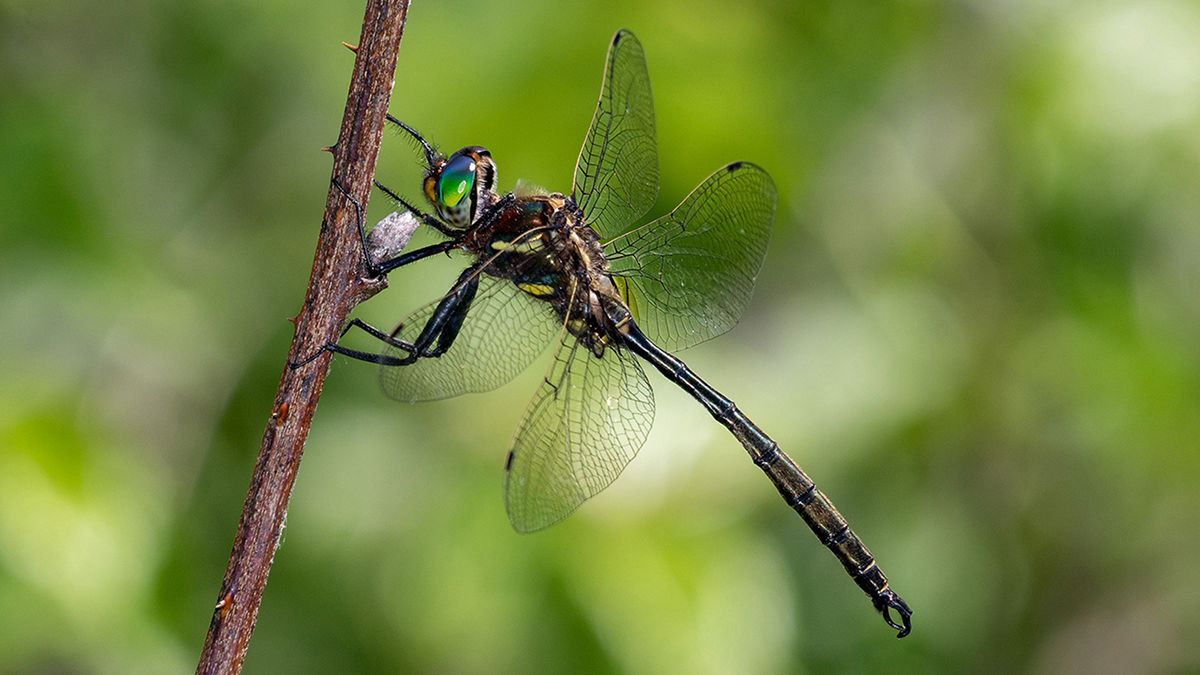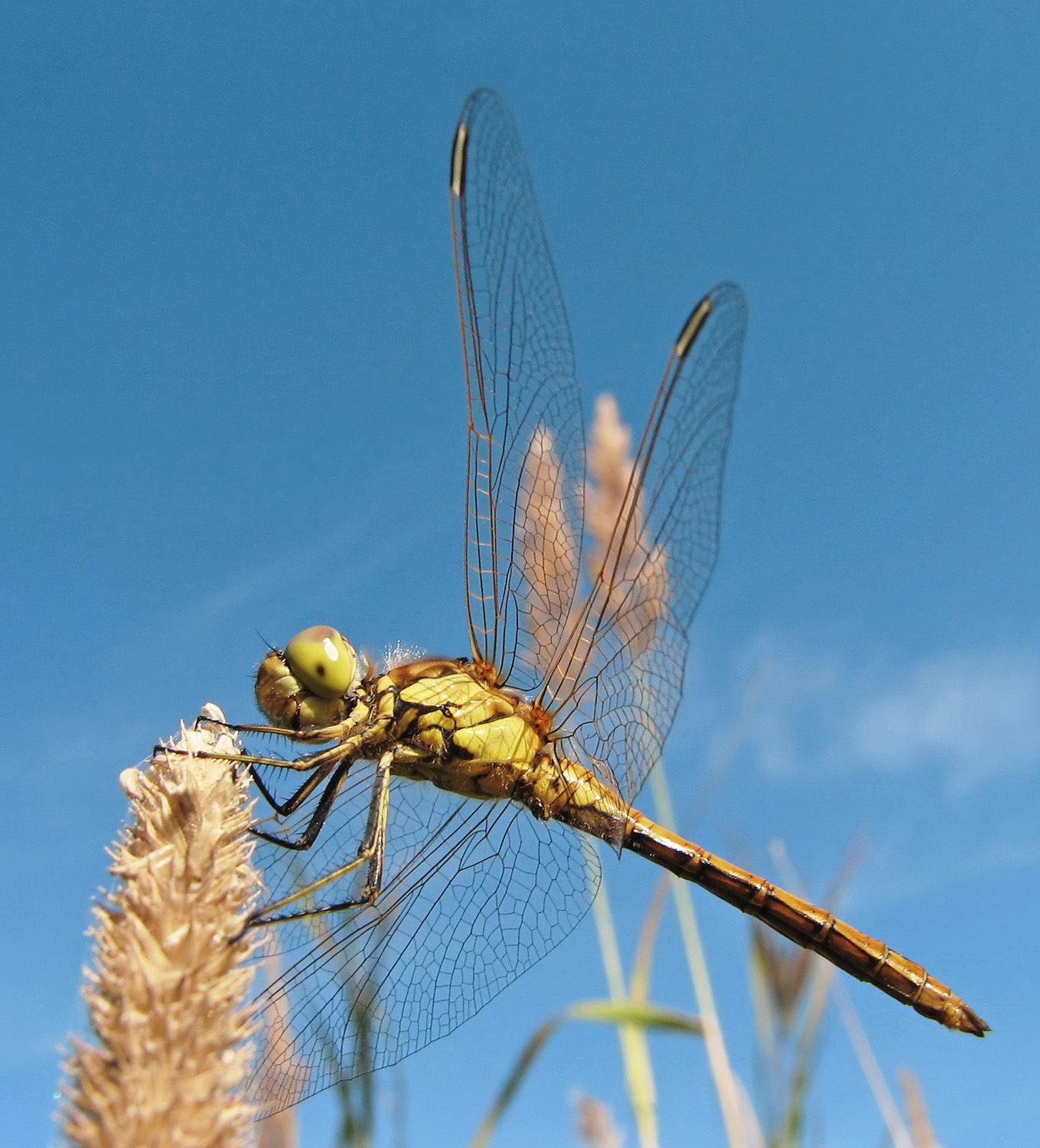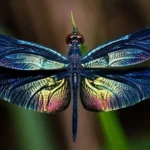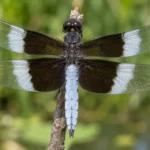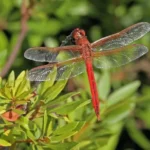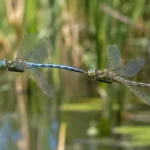
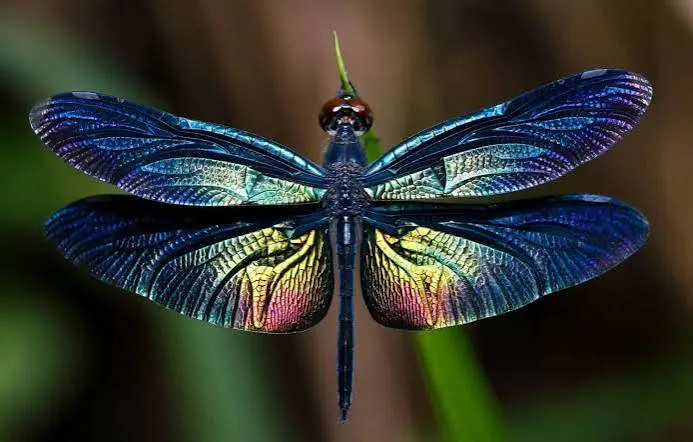
Yes, in an everyday sense: most adult dragonflies settle down and rest at night. They are mainly daytime insects, so they usually stop hunting and flying when light fades. They often spend the night clinging to grasses, reeds, shrubs, or other vegetation. But there is an important scientific distinction: watching a dragonfly remain still does not, by itself, establish that it is asleep in the same measurable sense used in laboratory studies of other insects.
The short answer is that dragonflies roost at night, while their precise sleep physiology is less well documented. And a few dragonflies break the usual daytime pattern by flying after dark.
Do Dragonflies Actually Sleep?
Scientists use the word sleep more carefully than we do in everyday conversation. In animal-behavior research, sleep is often identified through several clues:
- A sustained period of inactivity.
- Reduced responsiveness to ordinary disturbances.
- An ability to become active again when sufficiently stimulated.
- A tendency to make up for lost sleep after being kept awake.
These characteristics have been studied extensively in fruit flies and other insects. They show that sleep is not limited to mammals and birds. However, a finding about fruit flies is not automatically a finding about dragonflies.
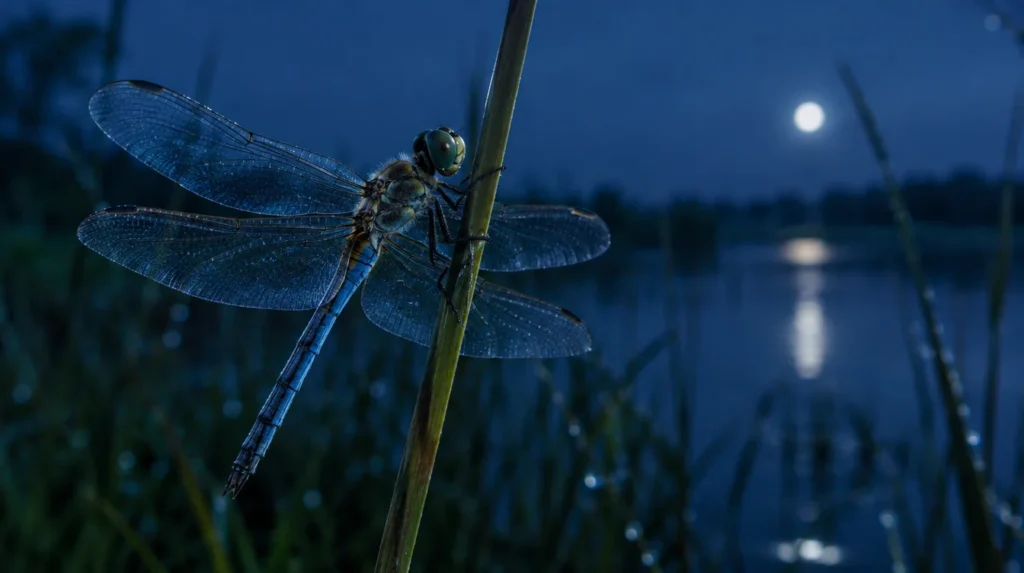
For dragonflies, nighttime roosting—settling onto a perch and becoming inactive—is well documented. It is reasonable to describe this as nighttime rest or sleep-like behavior. It is less precise to claim that all dragonflies enter a particular stage of sleep for an exact number of hours.
Resting and torpor should not be treated as interchangeable, either. Torpor refers to a physiological state involving substantially reduced activity or metabolism; a motionless dragonfly on a cool evening has not necessarily been shown to enter that state.
Where Do Dragonflies Sleep at Night?
A dragonfly does not need a nest, burrow, or bed. Most adults can remain attached to a suitable perch with their legs while they rest.
Nighttime roosts may include:
- Tall grasses and meadow plants.
- Reeds, rushes, and other upright stems.
- Shrubs and sheltered hedgerows.
- Tree branches or foliage.
- Dense vegetation along woodland edges.
The exact choice depends on the species and its surroundings. A stable perch can provide shelter from wind and make a resting insect less conspicuous to predators.
Do they always sleep beside a pond? No. Adults may move away from breeding water to feed, mature, or shelter. Our guide to dragonfly habitats explains why adult dragonflies can be found well beyond the water where they developed.
What a nighttime roosting study found
In a 2018 study, researchers tracked the dragonfly Sympetrum depressiusculum and compared the places used during the day with its nighttime roosts. The dragonflies frequently used pond habitats during daylight but avoided ponds and their immediate surroundings when selecting nighttime roosts.
The researchers suggested that cooler conditions near water and the shelter provided by certain vegetation were important factors. This is a useful reminder that a dragonfly you watched at a pond in the afternoon might spend the night somewhere quite different.
It is also a species-specific result, not proof that every dragonfly avoids water after sunset.
Why Do Dragonflies Become Less Active After Sunset?
Adult dragonflies catch flying prey using vision and rapid, controlled flight. Many are most active when there is enough daylight to detect and pursue other insects. You can read more about their hunting behavior in our dragonfly diet guide.
Temperature matters, too. Like other insects, dragonflies are ectothermic: their body temperature is strongly influenced by their environment. Their ability to take off and sustain flight depends partly on temperature, body size, and species-specific methods of warming up.
A cooler evening can therefore make flight less practical. Conversely, favorable conditions may allow some individuals to remain active around sunset.
This is why darkness and temperature both matter, but neither gives us one universal bedtime for every dragonfly.
Do dragonflies fly at dusk?
Yes. Some true dragonflies, including certain hawkers and darners, hunt during twilight. Dusk can bring swarms of small insects, giving these aerial predators a short feeding opportunity when many other daytime dragonflies have already settled.
Twilight flight is not the same as being regularly nocturnal. A dragonfly active shortly after sunset may still spend most of the night resting.
Can Dragonflies Fly at Night?
Surprisingly, yes—under particular circumstances.
A 2006 study in Ecological Entomology documented dragonflies migrating at night over the Bohai Sea in China. Researchers used radar observations and light-trap records; the migratory globe skimmer, Pantala flavescens, was prominent among the recorded dragonflies.
This research shows that the statement “dragonflies never fly at night” is false. However, long-distance nocturnal migration is not typical everyday behavior for most dragonflies seen around gardens and ponds.
Occasional appearances near outdoor lights are another exception. Reports reviewed by the International Dragonfly Fund suggest that some dragonflies approaching artificial lights may be disoriented rather than deliberately seeking light in the way people often imagine moths do.
Seeing a dragonfly at a porch light does not mean its species normally spends the night hunting there.
How Can You Tell If a Dragonfly Is Resting?
A resting dragonfly may remain almost motionless, hold tightly to a stem, and make little or no attempt to hunt. Its wings may be spread outward or held at an angle, depending on the species and posture.
Unlike humans, dragonflies do not close eyelids to announce that they are asleep. Their compound eyes remain externally visible, so open-looking eyes are not evidence that the insect is awake.
Nor is the ability to react to a disturbance proof that it was never resting. A roosting insect may respond to a threat.
If you want to look for one, the best approach is to observe without interfering:
- Check sheltered grasses and shrubs near a known dragonfly habitat at dusk or early in the morning.
- Look carefully for wings and a slender abdomen among the stems.
- Keep your distance and avoid shaking vegetation or handling the insect.
- If using a flashlight, keep the light brief and avoid repeatedly illuminating the animal.
You may have better luck away from the pond’s open edge than directly over the water. But a single unsuccessful search does not mean local dragonflies have left the area.
What Happens When Morning Comes?
As daylight returns and conditions become suitable, resting dragonflies can become active again. Some may spend time on a perch before their first flight, particularly when the air is cool.
Scientific work on dragonfly thermoregulation shows that temperature affects flight performance and that some species can warm their flight muscles before taking off. This helps explain why an individual may appear sluggish early in the morning and become a fast, agile hunter later in the day.
There is no reliable single time when all dragonflies wake up. Weather, season, species, and the location of the roost all affect activity.
For a wider introduction to the group, see our dragonfly facts resource.
Frequently Asked Questions
How many hours do dragonflies sleep?
There is no established universal number of sleeping hours for dragonflies. Many adults rest through much of the night, but the length of inactivity changes with daylight, weather, species, and individual circumstances. Roosting time should not be presented as a laboratory-measured sleep duration.
Do dragonflies sleep with their eyes open?
Their compound eyes remain visible because dragonflies do not have eyelids that close like human eyelids. You cannot determine whether a dragonfly is in a sleep state simply by looking at its eyes.
Do dragonflies sleep on the same plant every night?
Not necessarily. A suitable roost depends on shelter, vegetation, local conditions, and species. Do not assume that a dragonfly will return to the same stem every evening.
Are baby dragonflies asleep at night, too?
Dragonfly young are aquatic nymphs, not tiny winged adults. Their activity patterns differ from those of adult dragonflies, and some nymphs forage after dark. The nighttime resting behavior described here refers primarily to adult dragonflies. See our dragonfly life cycle guide for the distinction between nymphs and adults.
How This Article Was Researched
This article draws on peer-reviewed research on dragonfly roosting, flight, thermoregulation, and insect sleep. Studies involving a particular dragonfly species or a different insect group are identified as such. The article does not claim that the author personally tracked resting dragonflies or performed sleep experiments.
References and Further Reading
- Hykel, M., Harabiš, F., and Dolný, A. Diel changes in habitat use by dragonflies: Nocturnal roosting site selection by the threatened dragonfly Sympetrum depressiusculum (Odonata: Libellulidae). Entomological Science, 21, 154–163 (2018). DOI: 10.1111/ens.12292.
- Feng, H.-Q., Wu, K.-M., Ni, Y.-X., Cheng, D.-F., and Guo, Y.-Y. Nocturnal migration of dragonflies over the Bohai Sea in northern China. Ecological Entomology, 31, 511–520 (2006). DOI: 10.1111/j.1365-2311.2006.00813.x.
- May, M. L. Thermoregulation and Adaptation to Temperature in Dragonflies (Odonata: Anisoptera). Ecological Monographs, 46, 1–32 (1976). DOI: 10.2307/1942392.
- Helfrich-Förster, C. Sleep in Insects. Annual Review of Entomology, 63, 69–86 (2018). DOI: 10.1146/annurev-ento-020117-043201.
- Umar, D. M., Marinov, M. G., Schorr, M., and Chapman, H. M. Odonata attracted by light – a new topic for myth-busters. International Dragonfly Fund Report 43, 1–52 (2012).