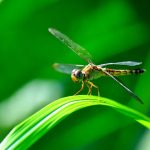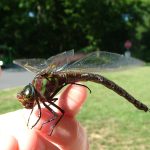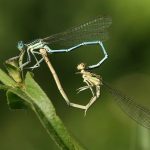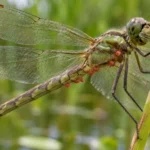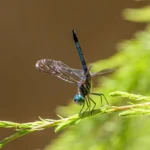
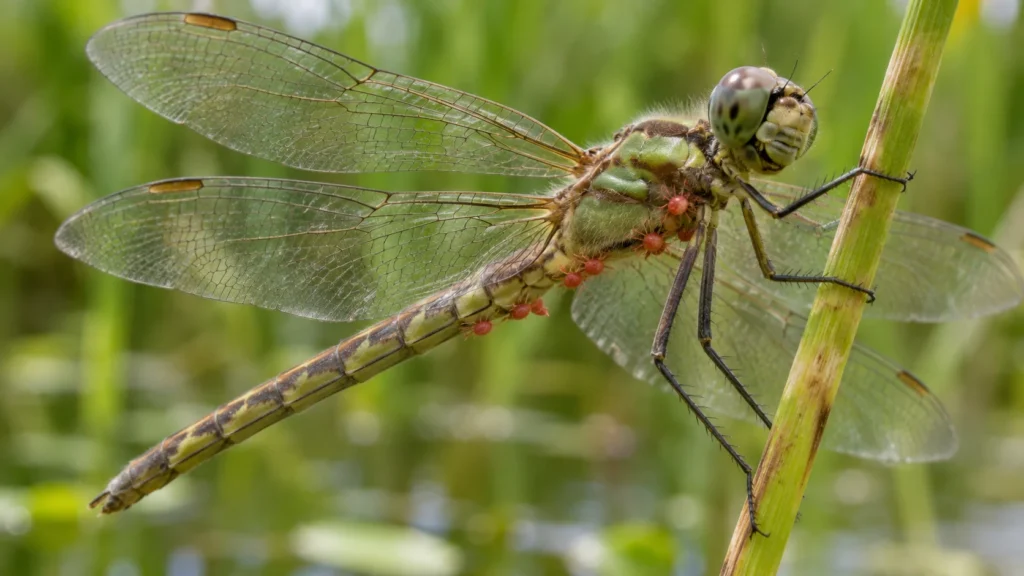
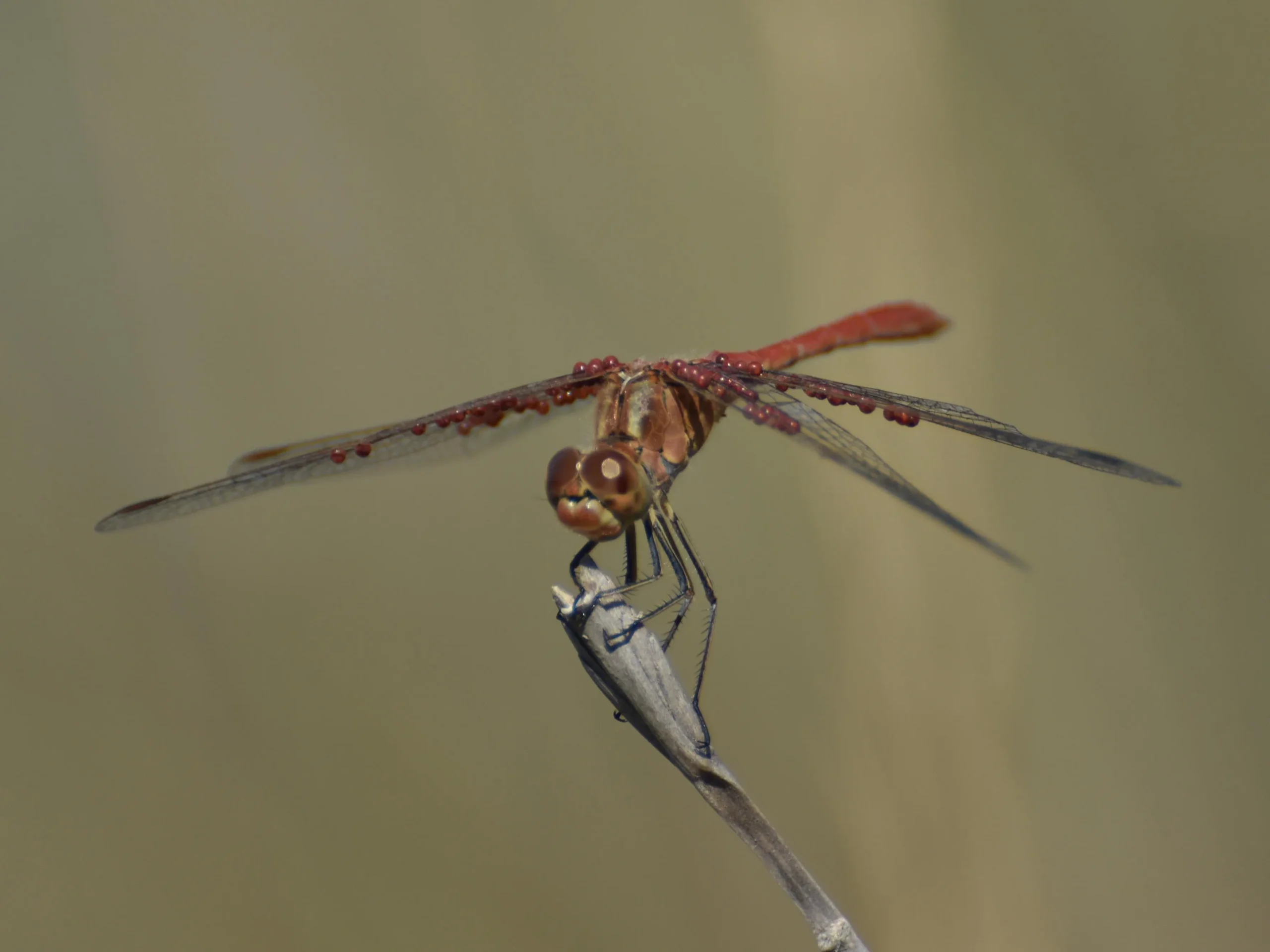
A dragonfly resting beside a pond may appear perfectly normal until you notice dozens of tiny red dots attached to its wings, thorax, or abdomen. Some look like miniature beads, while others resemble clusters of insect eggs. These unusual red objects are often living parasites rather than part of the dragonfly itself.
Dragonflies are remarkably effective predators, but they are also hosts to smaller organisms. Among their most conspicuous external parasites are water mites, whose unusual life cycle connects the underwater world with the lives of flying insects.
The tiny red mites on a dragonfly’s body are often parasitic water mite larvae, particularly members of the genus Arrenurus. Many attach during the dragonfly’s emergence from water and feed on its hemolymph and dissolved tissues. Small infestations may cause little obvious impairment, while heavy parasite loads can interfere with flight, survival, and reproduction. These insect-associated mites are not normally a threat to humans.
What Are the Tiny Red Mites on a Dragonfly?
The small red organisms found attached to dragonflies are frequently the larval stages of mites associated with freshwater environments. Water mites belong to the arachnid group, which also includes spiders and ticks. They are not insects, despite their small size and the fact that mite larvae normally have six legs.
Members of the genus Arrenurus are particularly well known for parasitizing dragonflies and damselflies. Other mite groups can also use these insects as hosts, so identifying every red parasite as Arrenurus without examining it would be inaccurate.
Feeding larvae can become rounded and swollen, giving them the appearance of tiny red, orange, or reddish-brown spheres. Their legs and mouthparts are often difficult to see without magnification.
| Characteristic | Parasitic Water Mites |
|---|---|
| Animal group | Arachnids (mites) |
| Common genus on dragonflies | Arrenurus |
| Parasitic life stage | Larva |
| Typical appearance | Small, rounded, sometimes red or orange bodies |
| Food during parasitism | Host hemolymph and dissolved tissue |
| Common attachment sites | Thorax, abdomen, and sometimes wings |
| Ecological relationship | Temporary external parasitism |
Why Do Dragonflies Get Red Mites?
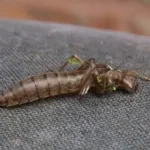
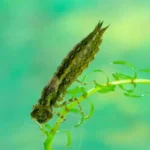
The explanation begins underwater. Dragonflies spend their immature lives as aquatic nymphs, sharing ponds, lakes, marshes, and other freshwater habitats with numerous small invertebrates, including water mites.
For many water mite species, an emerging dragonfly provides both access to nutrients and a means of transportation. Larval mites may locate a dragonfly nymph approaching its final molt and remain associated with it until the adult insect emerges.
During this transition, the mites move onto the newly exposed adult body and establish feeding sites. The timing is important because the dragonfly is changing from an aquatic animal into a flying insect.
Understanding the dragonfly life cycle helps explain why this particular stage presents an opportunity for parasites.
How Do Water Mites Attach and Feed?
Water mites do more than simply hold onto a dragonfly’s exterior. Once a suitable feeding site has been found, a parasitic larva anchors itself to the host and establishes a specialized feeding structure called a stylostome.
This tube-like structure allows the mite to obtain nutrients from the dragonfly’s hemolymph and dissolved tissue. Hemolymph is the circulating fluid of insects and many other invertebrates. It performs some functions comparable to blood, although insect and vertebrate circulatory systems differ considerably.
As the larva feeds, its body expands. A small parasite that was initially difficult to notice may eventually become a prominent, rounded structure on the insect’s surface.
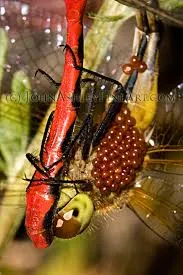
The Life Cycle of Dragonfly Water Mites
The association between a water mite and a dragonfly represents only one part of the mite’s development. A generalized life cycle for many Arrenurus species proceeds as follows.
- Eggs develop in freshwater Adult mites reproduce in aquatic habitats. Their eggs develop and eventually release small larvae.
- Larvae locate a host The young mites search for suitable aquatic insects. Many species associate with dragonfly or damselfly nymphs before adult emergence.
- Transfer during emergence When the dragonfly leaves the water and molts, the mites can move from the old larval surface onto the emerging adult.
- Parasitic feeding Attached mites obtain nutrients from the host and increase in size while the dragonfly continues its adult life.
- Return to freshwater After completing their parasitic feeding phase, mites can detach when the host returns to a suitable aquatic environment.
- Development into free-living mites Subsequent active developmental stages are generally aquatic predators that consume small invertebrates.
The precise timing and host association differ among mite species. Some species can also colonize adult dragonflies when they return to water, rather than relying exclusively on the emergence stage.
Where Do Red Mites Attach to Dragonflies?
Water mites are not necessarily distributed evenly across the dragonfly’s body. Depending on the parasite and host species, they may concentrate around particular body regions.
Thorax
The underside of the thorax is a frequent attachment site. Softer areas between hardened body plates may provide suitable locations for feeding.
Abdomen
Mites can occur along abdominal segments, including the region immediately behind the thorax.
Wings
Some dragonfly–mite associations produce conspicuous rows or clusters of parasites on the wings and around wing veins.
Wing Bases and Leg Bases
The junctions between body structures can provide relatively sheltered attachment locations, although preferences vary among mite species.
For a closer look at these structures, see our guide to dragonfly anatomy and body parts.
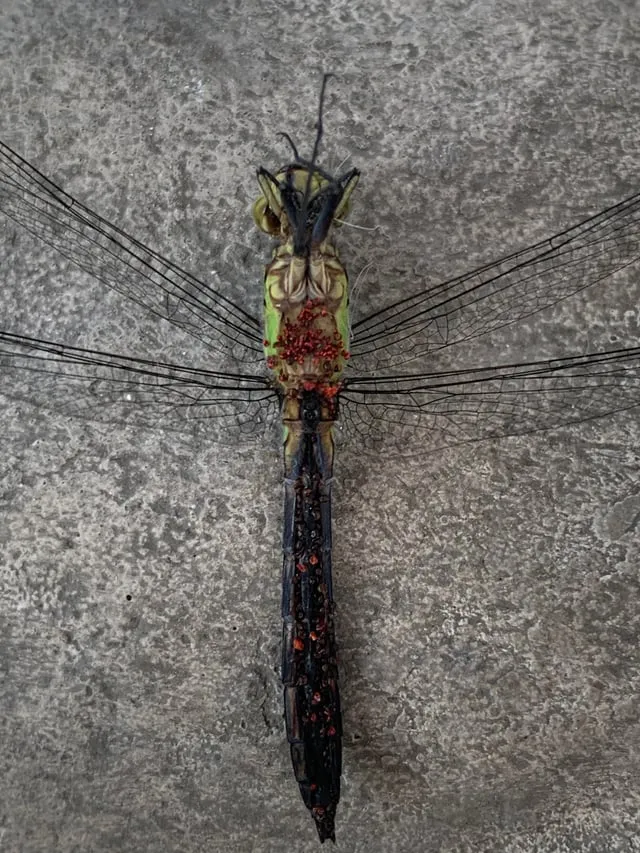
How Common Are Water Mites on Dragonflies?
The likelihood of finding mites on a dragonfly depends on the species, habitat, local mite population, season, and the availability of suitable hosts. Dragonflies occupying the same wetland may experience substantially different parasite loads.
A 2026 study of dragonflies in a semi-urban freshwater ecosystem in Bangladesh documented the occurrence and body distribution of parasitic Arrenurus water mites.
Distribution of Recorded Mites
Source: First record of water mite (Arrenurus spp.) ectoparasitism on dragonflies (Odonata: Anisoptera) in Bangladesh, 2026. The findings describe one sampled ecosystem and should not be interpreted as worldwide infestation rates.
Although wing infestations were unusual in this particular survey, photographs and other observations show that wings can be important attachment sites in certain host–parasite combinations.
Are Red Mites Harmful to Dragonflies?
Yes, parasitic water mites can harm dragonflies, but the severity of their effects varies. The presence of several visible mites does not automatically mean that a dragonfly is seriously weakened or unable to survive.
Parasitism creates a biological cost because the mites obtain resources from the host. Research on dragonflies and damselflies has associated mite infestations with changes in flight performance, body condition, reproductive success, and survival.
Reduced Flight Performance
A substantial parasite load may interfere with normal movement or increase the burden carried by the insect. This can matter for an animal whose survival depends on aerial hunting, escaping predators, and locating mates.
Loss of Nutritional Resources
Feeding parasites divert nutrients that would otherwise remain available for the host’s maintenance and other biological functions.
Reduced Reproductive Success
Studies of certain odonates have linked mite parasitism with reduced reproductive performance, including lower egg production or mating success. These effects are not necessarily identical across all dragonfly species.
Reduced Survival
Under some circumstances, particularly when parasite loads are substantial or hosts face additional environmental stress, parasitism can contribute to reduced survival.
Water mites are only one of the natural challenges faced by dragonflies. Other biological threats are discussed in our guide to dragonfly predators, parasites, and enemies.
Can Dragonflies Defend Themselves Against Water Mites?
Dragonflies are not completely defenseless against their parasites. Some species possess immune responses that can prevent attached water mites from feeding successfully.
One documented mechanism is melanotic encapsulation. The insect’s immune system deposits material around the parasite’s feeding structure, potentially blocking the transfer of nutrients. A mite that can no longer feed may shrivel and eventually die.
Scientists studying dragonfly and damselfly populations have found differences in resistance among species. A parasite that feeds successfully on one host species may be less successful on another.
This relationship illustrates the continuing evolutionary interaction between parasites and the defensive mechanisms of their hosts.
Are the Red Spots Mites, Eggs, or Natural Body Markings?
Not every red spot on a dragonfly is a parasite. Many dragonfly species naturally develop red, orange, or reddish-brown coloration on their abdomen, thorax, eyes, or wings.
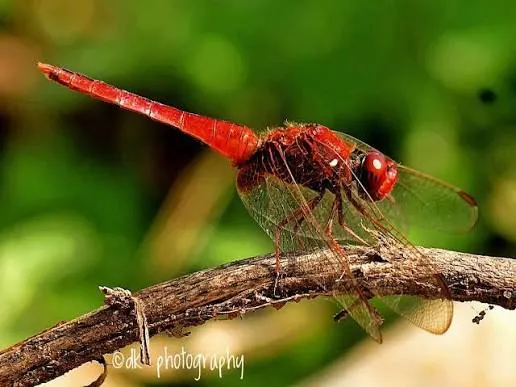
| Feature | How to Recognize It |
|---|---|
| Parasitic mites | Separate, raised, bead-like bodies attached to the insect’s surface. Small appendages may be visible under magnification. |
| Natural pigmentation | Color forming part of the dragonfly’s underlying body surface or normal markings. |
| Pterostigma | A naturally thickened, often colored region near the leading edge of each wing, usually toward the wingtip. |
| Eggs | Egg clusters require separate identification. Dragonflies normally deposit their own eggs into water, vegetation, or other suitable substrates rather than across their wings or thorax. |
| Debris or injury | Particles, surface damage, or discoloration that may lack recognizable mite structures. |
Close-up photographs from different angles are useful for distinguishing surface parasites from normal body coloration. However, identifying a mite to species generally requires specialist examination.
Can Dragonfly Red Mites Bite Humans?
The Arrenurus larvae commonly associated with dragonflies are adapted to using suitable insect hosts. Humans are not their normal hosts.
These parasites should not be confused with terrestrial mites such as chiggers, which can cause irritation after contacting human skin, or with blood-feeding ticks.
Simply observing a dragonfly carrying water mites is not a reason for concern. As with other wild insects, there is no need to handle the dragonfly unnecessarily.
Should You Remove Red Mites From a Dragonfly?
In most circumstances, it is best to leave a wild dragonfly and its parasites undisturbed.
Feeding mites may be firmly attached to the host. Attempting to pull them away could damage the dragonfly’s delicate cuticle, wings, or other structures. Handling the insect may also cause additional stress.
- Observe or photograph the dragonfly without capturing it.
- Avoid scraping or pulling attached mites from its body.
- Do not apply insecticides, oils, alcohol, or household chemicals.
- Never submerge an adult dragonfly in an attempt to remove its parasites.
- Allow the natural host–parasite relationship to proceed.
Although parasitism may appear unpleasant, it is a natural component of freshwater ecosystems. Removing parasites from individual wild insects is generally unnecessary.
The Ecological Role of Dragonfly Water Mites
Water mites occupy different ecological roles throughout their development. Their parasitic larvae obtain resources from insect hosts, while later active stages generally live as predators of small aquatic animals.
Dragonflies can also assist the dispersal of attached mites as they move around wetland habitats. This association connects the distribution of tiny aquatic arachnids with the movements of much larger flying insects.
Parasites may influence relationships among animal populations, including their interactions with predators, competitors, and potential mates. Studying them can therefore help researchers understand ecological processes that are easily overlooked during ordinary wildlife observation.
A dragonfly carrying red mites is not, by itself, evidence of polluted water or an unhealthy ecosystem. Interpreting environmental conditions requires considerably more information than the presence of parasites on an individual insect.
Frequently Asked Questions
What are the little red balls on a dragonfly?
They are often swollen parasitic mite larvae. Water mites belonging to the genus Arrenurus are among the best-known examples found on dragonflies.
Why does a dragonfly have red dots on its wings?
Raised, bead-like red dots along wing veins may be attached parasitic mites. Flat red markings, however, may represent natural coloration or another feature of the wing.
Are the red mites on dragonflies eggs?
Often they are not eggs. Engorged mite larvae can resemble small eggs because their bodies become rounded and swollen during feeding.
Do water mites suck dragonfly blood?
They feed on hemolymph and dissolved tissue. Hemolymph is the circulating fluid of insects, so the process is sometimes informally described as blood feeding.
Can a dragonfly fly with red mites attached?
Yes. Dragonflies can remain capable of flight while carrying mites, although larger parasite loads may reduce flight performance or affect other biological functions.
Can water mites kill a dragonfly?
Mite parasitism can contribute to reduced survival in some host species. However, finding mites on a dragonfly does not establish that the infestation will be fatal.
Do water mites eventually fall off dragonflies?
Yes. Successful parasitic larvae generally detach after feeding when they have an opportunity to return to an appropriate aquatic habitat.
How long do mites stay on a dragonfly?
Attachment duration varies with mite species, feeding conditions, development, and the host’s return to water. In some documented associations, the feeding phase lasts approximately ten days, but this is not a universal duration.
Do damselflies also carry red water mites?
Yes. Damselflies are well-known hosts for parasitic water mites, and their interactions have been extensively studied by researchers investigating host resistance and parasite ecology.
Can dragonfly water mites spread to humans?
The insect-associated Arrenurus mites discussed here do not normally use humans as hosts. Observing an infested dragonfly is not considered a typical route of human parasitism.
Does a dragonfly with red mites indicate dirty water?
No. Mite parasitism occurs naturally in freshwater ecosystems. An infested dragonfly alone is not a reliable indicator of water pollution or habitat quality.
Final Thoughts
The red mites found on a dragonfly’s body reveal a remarkable biological relationship that begins in freshwater and continues into the insect’s adult life. These tiny arachnids obtain nourishment and transportation from a host that is many times larger than themselves.
Although heavy infestations can impose significant biological costs, the outcome depends on the mite species, the dragonfly’s condition, and its ability to resist parasitism.
The next time you encounter a dragonfly covered in tiny red beads, take a closer look. What initially appears to be an unusual physical marking may be evidence of an entire hidden life cycle unfolding on the surface of another animal.
References
Worthen, W. B., & Hart, T. M. (2016). Resistance to Arrenurus spp. Parasitism in Odonates: Patterns Across Species and Comparisons Between a Resistant and Susceptible Host. Journal of Insect Science, 16(1), 37. DOI: 10.1093/jisesa/iew022.
Inter-annual variation in prevalence and intensity of mite parasitism relates to appearance and expression of damselfly resistance. BMC Ecology, 10, 5 (2010). DOI: 10.1186/1472-6785-10-5.
Parasitism of Sympetrum dragonflies by Arrenurus planus mites: maintenance of resistance particular to one species. International Journal for Parasitology (1999). PMID: 10501609.
First record of water mite (Arrenurus spp.) ectoparasitism on dragonflies (Odonata: Anisoptera) in Bangladesh (2026). PMID: 42926857.
Vermont Center for Ecostudies (2024). It’s Not Just a Ride, It’s Phoresy. Field Guide to July 2024.
Further reading: Peer-reviewed research on water mite parasitism and resistance in Odonata.